
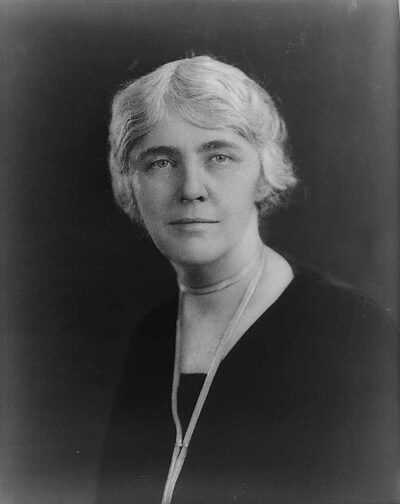
Lou Henry Hoover
Lou Henry Hoover was a First Lady of the United States from 1929 to 1933. Born March 29, 1874, in Waterloo. Died January 7, 1944, in New York City. Positions held include First Lady of the United States (1929–1933). Educated at San José State University and Stanford University. Awards include Iowa Women's Hall of Fame.
Facts
26 facts · 2 confirmed by two sources · 9 cited · 15 from one source
Where this comes from
Papalocal keeps its own record. It started from these sources; what each one said is kept here as it was copied, so a change on their side never changes this page by itself. Tap one to read its version.
What Wikidata says · copied November 13, 2026 · revision 2567393324
- Described as
- First Lady of the United States from 1929 to 1933
- Other names
- Lou Hoover, Lou Henry
- Born
- March 29, 1874 · 7 references
- Died
- January 7, 1944 · 7 references
- Born in
- Waterloo · 1 reference
- Died in
- New York City · 1 reference
- Buried in
- Iowa
- Cause of death
- myocardial infarction
- Name at birth
- Lou Henry
- Citizen of
- United States
- Occupation
- politician; geologist · 2 references; president · 1 reference
- Positions held
- First Lady of the United States (1929–1933)
- Political party
- Republican Party
- Education
- San José State University; Stanford University; University of California, Los Angeles
- Awards
- Iowa Women's Hall of Fame (1987) · 1 reference
- Field
- list of first ladies of the United States · 1 reference; geology · 1 reference; politics · 1 reference
- Spouse
- Herbert Hoover (1899–1944) · 1 reference
- Children
- Allan Hoover · 2 references; Herbert Hoover, Jr. · 1 reference
- Father
- Charles Delano Henry · 1 reference
- Mother
- Florence Weed · 1 reference
- Religion
- Quakers
- Wikipedias with a page
- 53
Wikidata item Q233669 (wikidata.org/wiki/Q233669), public domain (CC0). Copied November 13, 2026.
What Wikipedia says · copied November 13, 2026 · revision 1379664799
Lou Henry Hoover (née Henry; March 29, 1874 – January 7, 1944) was an American philanthropist, geologist, and the first lady of the United States from 1929 to 1933 as the wife of President Herbert Hoover. She was active in community organizations and volunteer groups throughout her life, including the Girl Scouts of the USA, which she led from 1922 to 1925 and from 1935 to 1937. Throughout her life, Hoover supported women's rights and women's independence. She was a polyglot, fluent in Mandarin Chinese and well-versed in Latin, and was the primary translator from Latin to English of the complex 16th-century metallurgy text De re metallica.
Hoover was raised in California while it was part of the American frontier. She attended Stanford University, and became the first woman to receive a degree in geology from the institution. She met fellow geology student Herbert Hoover at Stanford, and they married in 1899. The Hoovers first resided in China; the Boxer Rebellion broke out later that year, and they were at the Battle of Tientsin. In 1901 they moved to London, where Hoover raised their two sons and became a popular hostess between their international travels. During World War I, the Hoovers led humanitarian efforts to assist war refugees. The family moved to Washington, D.C. in 1917, when Herbert was appointed head of the Food and Drug Administration, and Lou became a food conservation activist in support of his work.
Hoover became the First Lady of the United States when her husband was inaugurated as president in 1929. Her invitation of Jessie De Priest to the White House for tea was controversial for its implied support of racial integration and civil rights. She refused to give interviews to reporters, but she became the first first lady to give regular radio broadcasts. Hoover was responsible for refurbishing the White House during her tenure, and saw to the construction of a presidential retreat at Rapidan Camp. She minimized her public role as White House hostess, dedicating her time as first lady to her volunteer work.
Hoover's reputation declined alongside her husband's during the Great Depression as she was portrayed as uncaring of the struggles faced by Americans. Both the public and those close to her were unaware of her extensive charitable work to support the poor while serving as first lady, as she believed that publicizing generosity was improper. After Herbert lost his reelection campaign in 1932, the Hoovers returned to California, and they moved to New York City in 1940. Hoover was bitter about her husband's loss, blaming dishonest reporting and underhanded campaigning tactics, and she strongly opposed the Roosevelt administration. She worked to provide humanitarian support with her husband during World War II until her sudden death of a heart attack in 1944.
- Born, in its opening lines
- March 29, 1874
- Died, in its opening lines
- January 7, 1944
From the Wikipedia article “Lou Henry Hoover” (en.wikipedia.org/wiki/Lou_Henry_Hoover), by its contributors, under CC BY-SA 4.0 (creativecommons.org/licenses/by-sa/4.0/). Copied November 13, 2026; not changed.
Confirmed Two sources agree. Cited One source, and it names where it got it. One source One source, without a reference of its own. Sources disagree The sources disagree. We show the best-supported value and keep theirs below.
