
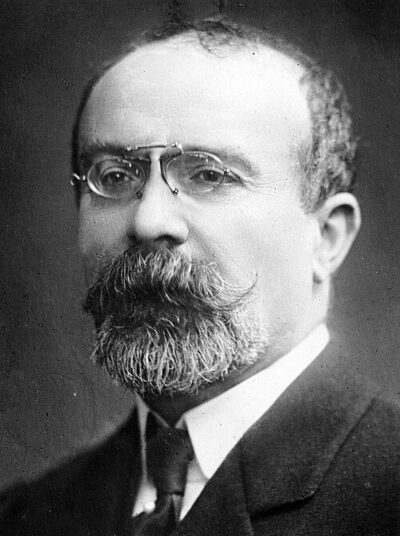
Louis Barthou
Louis Barthou was a French politician. Born August 25, 1862, in Oloron-Sainte-Marie. Died October 9, 1934, in Marseille. Positions held include Deputy of the French Third Republic (1889–1922), President of the Council (1913) and senator of the French Third Republic. Educated at Lycée Louis-Barthou. Awards include Grand Cross of the Military Order of the Tower and Sword, Grand Cross of the Military Order of Saint James of the Sword and Collar of the Order of the White Lion.
Facts
26 facts · 2 confirmed by two sources · 9 cited · 14 from one source · 1 where the sources disagree
What’s different
- Buried in: we show Père Lachaise Cemetery (Sources disagree). Wikidata also lists Grave of Barthou
Where this comes from
Papalocal keeps its own record. It started from these sources; what each one said is kept here as it was copied, so a change on their side never changes this page by itself. Tap one to read its version.
What Wikidata says · copied November 16, 2026 · revision 2567716041
- Described as
- French politician (1862-1934)
- Other names
- Jean Louis Barthou
- Born
- August 25, 1862 · 7 references
- Died
- October 9, 1934 · 12 references
- Born in
- Oloron-Sainte-Marie · 3 references
- Died in
- Marseille · 2 references
- Buried in
- Père Lachaise Cemetery · 1 reference; Grave of Barthou
- Citizen of
- France
- Occupation
- politician · 1 reference; diplomat; historian; lawyer; writer · 1 reference
- Positions held
- Deputy of the French Third Republic (1889–1922) · 1 reference; President of the Council (1913); senator of the French Third Republic · 1 reference; Member of the Académie française (1918–1934); president (1918–1934)
- Political party
- Democratic Republican Alliance
- Education
- Lycée Louis-Barthou
- Member of
- Académie de Béarn; Académie Française (1918–) · 1 reference; Romanian Academy
- Awards
- Grand Cross of the Military Order of the Tower and Sword · 2 references; Grand Cross of the Military Order of Saint James of the Sword · 1 reference; Collar of the Order of the White Lion (1924) · 1 reference
- Spouse
- Alice Mayeur
- Siblings
- Léon Barthou
- Wikipedias with a page
- 47
Wikidata item Q271887 (wikidata.org/wiki/Q271887), public domain (CC0). Copied November 16, 2026.
What Wikipedia says · copied November 16, 2026 · revision 1380598079
Jean Louis Barthou (French: [ʒɑ̃ lwi baʁtu]; 25 August 1862 – 9 October 1934) was a French politician of the Third Republic who served as Prime Minister of France for eight months in 1913. In social policy, his time as prime minister saw the introduction (in July 1913) of allowances to families with children.
In 1917 and in 1934, Barthou also served as Minister of Foreign Affairs. He was accidentally killed by the French police amid the Croatian Ustaše's organised assassination of the King of Yugoslavia, Alexander, in Marseille, in 1934.
- Born, in its opening lines
- August 25, 1862
- Died, in its opening lines
- October 9, 1934
From the Wikipedia article “Louis Barthou” (en.wikipedia.org/wiki/Louis_Barthou), by its contributors, under CC BY-SA 4.0 (creativecommons.org/licenses/by-sa/4.0/). Copied November 16, 2026; not changed.
Confirmed Two sources agree. Cited One source, and it names where it got it. One source One source, without a reference of its own. Sources disagree The sources disagree. We show the best-supported value and keep theirs below.
