
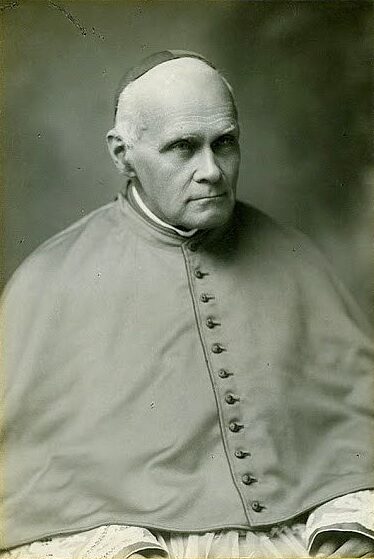
Louis Billot
Louis Billot was a Catholic cardinal. Born January 12, 1846, in Sierck-les-Bains. Died December 18, 1931, in Rome. Positions held include cardinal (1911–).
Facts
12 facts · 2 confirmed by two sources · 6 cited · 4 from one source
Where this comes from
Papalocal keeps its own record. It started from these sources; what each one said is kept here as it was copied, so a change on their side never changes this page by itself. Tap one to read its version.
What Wikidata says · copied November 18, 2026 · revision 2567328303
- Described as
- Catholic cardinal (1846–1931)
- Born
- January 12, 1846 · 3 references
- Died
- December 18, 1931 · 5 references
- Born in
- Sierck-les-Bains · 1 reference
- Died in
- Rome
- Buried in
- Campo Verano · 1 reference
- Citizen of
- France
- Occupation
- university teacher · 1 reference; Catholic priest (1869–) · 1 reference; theologian · 1 reference
- Positions held
- cardinal (1911–) · 2 references
- Worked for
- Pontifical Gregorian University
- Religion
- Catholic Church · 1 reference
- Wikipedias with a page
- 21
Wikidata item Q1361439 (wikidata.org/wiki/Q1361439), public domain (CC0). Copied November 18, 2026.
What Wikipedia says · copied November 18, 2026 · revision 1383615288
Louis Billot (English: bee-YOH, French: [lwi bijo]; 12 January 1846 in Sierck-les-Bains, Moselle, France – 18 December 1931 in Ariccia, Latium, Italy) was a French Jesuit priest and theologian. He became a cardinal in 1911 and resigned from that status in 1927, the only person to do so in the twentieth century. Billot was described as "the most important Thomistic speculative theologian of the late nineteenth century."
- Born, in its opening lines
- January 12, 1846
- Died, in its opening lines
- December 18, 1931
From the Wikipedia article “Louis Billot” (en.wikipedia.org/wiki/Louis_Billot), by its contributors, under CC BY-SA 4.0 (creativecommons.org/licenses/by-sa/4.0/). Copied November 18, 2026; not changed.
Confirmed Two sources agree. Cited One source, and it names where it got it. One source One source, without a reference of its own. Sources disagree The sources disagree. We show the best-supported value and keep theirs below.
