
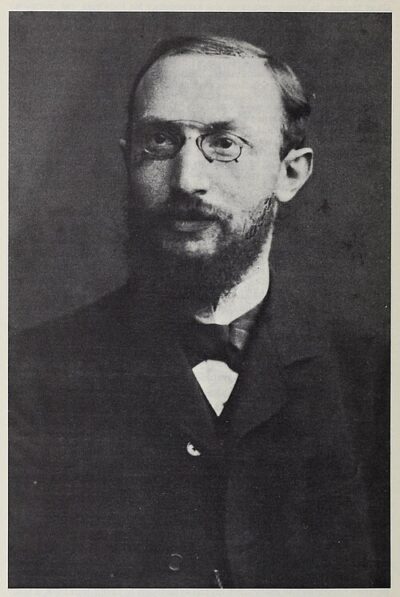
Louis Lewin
Louis Lewin was a German physician, botanist, and pharmacologist who lived from 1850 to 1929. He made significant contributions to the study of toxicology and pharmacology.
In 1887, Lewin received a sample of the Peyote cactus from an American physician. This led him to conduct the first systematic scientific examination of the plant. His research was so influential that a variety of the cactus was later named *Anhalonium lewinii* in his honor.
Facts
12 facts · 2 confirmed by two sources · 4 cited · 6 from one source
Where this comes from
Papalocal keeps its own record. It started from these sources; what each one said is kept here as it was copied, so a change on their side never changes this page by itself. Tap one to read its version.
What Wikidata says · copied November 13, 2026 · revision 2567482266
- Described as
- 1850-1929 German botanist and pharmacologist
- Other names
- L.Lewin
- Born
- November 9, 1850 · 1 reference
- Died
- December 1, 1929 · 1 reference
- Born in
- Tuchola · 1 reference
- Died in
- Berlin · 1 reference
- Citizen of
- Germany
- Occupation
- toxicologist; pharmacologist · 1 reference; university teacher; botanist; physician · 1 reference
- Worked for
- Technische Universität Berlin
- Education
- Humboldt-Universität zu Berlin · 1 reference
- Wikipedias with a page
- 12
Wikidata item Q72572 (wikidata.org/wiki/Q72572), public domain (CC0). Copied November 13, 2026.
What Wikipedia says · copied November 13, 2026 · revision 1373294381
Louis Lewin (9 November 1850 - 1 December 1929) was a German pharmacologist. In 1887 he received his first sample of the Peyote cactus from Dallas, Texas-based physician John Raleigh Briggs (1851-1907), and later published the first methodical analysis of it, causing a variant to be named Anhalonium lewinii in his honor.
Lewin was born in Tuchel, West Prussia. He received his education at the gymnasium and the University of Berlin (M.D. 1876). The two years following his graduation he spent at Munich, in the laboratories of von Voit and Pettenkofer. Returning to Berlin in 1878, he became an assistant at the pharmacological institute of the university, and in 1881 he was admitted to the medical faculty as Privatdozent. In 1897 he was finally appointed professor.
Louis Lewin's book "Die Nebenwirkungen der Arzneimittel" (1881) deals with the borderline between the pharmacological and the toxicological action of drugs with the untoward or side-effects of all kinds of medicaments. It was the first book of its kind. Another of his important books was Phantastica (1924), which began an era of ethnobotany that continues to the present day.
Lewin mentioned in his book "Gifte und Vergiftungen" (1929) the causal connection between dental amalgam fillings and illness. One of his famous patients were the well-known chemistry professor Alfred Stock (1876-1946), who suffered from mercury poisoning due to occupational exposure. Lewin informed him also about mercury exposure from dental amalgams. In 1926 in an article in Zeitschrift für Angewandte Chemie (Journal of Applied Chemistry), Stock claimed that released mercury from amalgam fillings caused poisoning and demanded the consumption stopped. This triggered a sharp and intense debate in Germany.
Lewin died in Berlin, where a street and the nearby underground train station were named in honour of Louis Lewin.
- Born, in its opening lines
- November 9, 1850
- Died, in its opening lines
- December 1, 1929
From the Wikipedia article “Louis Lewin” (en.wikipedia.org/wiki/Louis_Lewin), by its contributors, under CC BY-SA 4.0 (creativecommons.org/licenses/by-sa/4.0/). Copied November 13, 2026; not changed.
Confirmed Two sources agree. Cited One source, and it names where it got it. One source One source, without a reference of its own. Sources disagree The sources disagree. We show the best-supported value and keep theirs below.
