
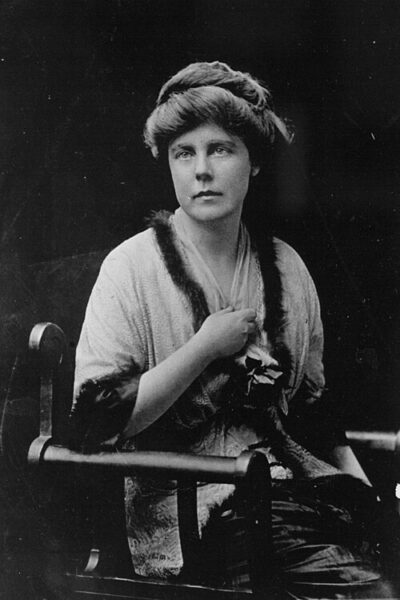
Lucy Burns
Lucy Burns was an American suffragist. Born July 28, 1879, in Brooklyn. Died December 22, 1966, in Brooklyn. Educated at University of Oxford and Columbia University. Awards include Hunger Strike Medal.
Facts
19 facts · 2 confirmed by two sources · 7 cited · 10 from one source
Where this comes from
Papalocal keeps its own record. It started from these sources; what each one said is kept here as it was copied, so a change on their side never changes this page by itself. Tap one to read its version.
What Wikidata says · copied November 15, 2026 · revision 2567674493
- Described as
- American suffragist (1879-1966)
- Born
- July 28, 1879 · 4 references
- Died
- December 22, 1966 · 2 references
- Born in
- Brooklyn · 2 references
- Died in
- Brooklyn · 1 reference
- Buried in
- Holy Cross Cemetery · 1 reference
- Citizen of
- United States · 1 reference
- Occupation
- teacher; suffragist · 1 reference; feminist · 1 reference
- Education
- University of Oxford; Columbia University; Yale University; Vassar College; Packer Collegiate Institute · 1 reference
- Member of
- Silent Sentinels; Women's Social and Political Union; National Woman's Party · 1 reference
- Awards
- Hunger Strike Medal
- Religion
- Catholic Church
- Wikipedias with a page
- 24
Wikidata item Q451583 (wikidata.org/wiki/Q451583), public domain (CC0). Copied November 15, 2026.
What Wikipedia says · copied November 15, 2026 · revision 1382849288
Lucy Burns (July 28, 1879 – December 22, 1966) was an American suffragist and women's rights advocate. She was an activist in the United States and the United Kingdom, who joined the militant suffragettes. Burns was a close friend of Alice Paul, and together they ultimately formed the National Woman's Party.
- Born, in its opening lines
- July 28, 1879
- Died, in its opening lines
- December 22, 1966
From the Wikipedia article “Lucy Burns” (en.wikipedia.org/wiki/Lucy_Burns), by its contributors, under CC BY-SA 4.0 (creativecommons.org/licenses/by-sa/4.0/). Copied November 15, 2026; not changed.
Confirmed Two sources agree. Cited One source, and it names where it got it. One source One source, without a reference of its own. Sources disagree The sources disagree. We show the best-supported value and keep theirs below.
