
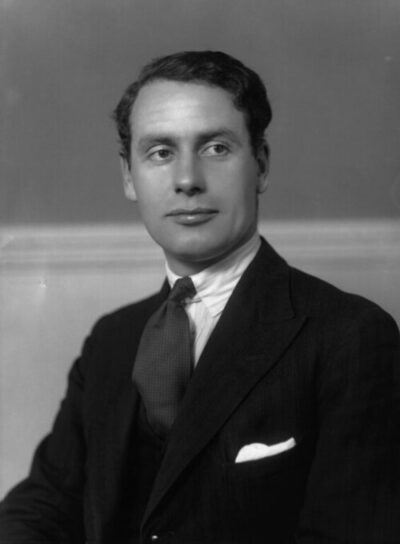
Malcolm MacDonald
Malcolm MacDonald was a British politician and diplomat. Born August 17, 1901, in Lossiemouth. Died January 11, 1981, in Maidstone. Positions held include Member of the Privy Council of the United Kingdom, member of the 37th Parliament of the United Kingdom (1936–1945) and member of the 36th Parliament of the United Kingdom (1931–1935). Educated at Bedales School. Awards include honorary doctor of the University of Hong Kong.
Facts
31 facts · 2 confirmed by two sources · 17 cited · 12 from one source
Where this comes from
Papalocal keeps its own record. It started from these sources; what each one said is kept here as it was copied, so a change on their side never changes this page by itself. Tap one to read its version.
What Wikidata says · copied November 18, 2026 · revision 2565549824
- Described as
- British politician and diplomat (1901-1981)
- Other names
- Malcolm John MacDonald
- Born
- August 17, 1901 · 4 references
- Died
- January 11, 1981 · 4 references
- Born in
- Lossiemouth · 1 reference
- Died in
- Maidstone · 1 reference
- Citizen of
- United Kingdom; United Kingdom of Great Britain and Ireland (–1927)
- Occupation
- politician · 1 reference; diplomat; university teacher
- Positions held
- Member of the Privy Council of the United Kingdom; member of the 37th Parliament of the United Kingdom (1936–1945) · 1 reference; member of the 36th Parliament of the United Kingdom (1931–1935) · 1 reference; member of the 35th Parliament of the United Kingdom (1929–1931) · 1 reference; Governor of Kenya (1963) · 1 reference; High Commissioner of the United Kingdom to Canada (1941–1946) · 1 reference; High Commissioner of the United Kingdom to India (1955–1960) · 1 reference; High Commissioner of the United Kingdom to Kenya (1965–1966) · 1 reference; Governor-General of Malaya (1946–1948) · 1 reference; Commissioner-General for South-East Asia (1948–1955) · 1 reference; Secretary of State for Health and Social Care (1940–1941) · 1 reference; member of London County Council; Chancellor of Durham University (1971–1980)
- Political party
- Labour Party
- Worked for
- Foreign Office · 1 reference
- Education
- Bedales School
- Awards
- honorary doctor of the University of Hong Kong
- Field
- politics · 1 reference; diplomacy · 1 reference
- Father
- Ramsay MacDonald · 1 reference
- Mother
- Margaret MacDonald · 1 reference
- Siblings
- Sheila Lochhead
- Wikipedias with a page
- 22
Wikidata item Q333507 (wikidata.org/wiki/Q333507), public domain (CC0). Copied November 18, 2026.
What Wikipedia says · copied November 18, 2026 · revision 1378230672
Malcolm John MacDonald (17 August 1901 – 11 January 1981) was a British politician and diplomat. He was initially a Labour Member of Parliament (MP), but in 1931 followed his father Ramsay MacDonald in breaking with the party and joining the National Government. He was consequently expelled from the Labour Party. He was a government minister during the Second World War and was later Governor of Kenya.
MacDonald's experience allowed him to take a unique approach to the decolonisation of British colonies in Asia and Africa. He had "done more for Southeast Asia than perhaps any other living person," according to Harold Macmillan, who also said that "not only Asia, but the whole Western World were indeed grateful to him." Making imperial control obsolete was his life's work, according former Commonwealth Secretary-General Shridath Ramphal. In 1957, he helped Malaya and Singapore get independence as Governor-General and Commissioner-General of Southeast Asia, respectively. In 1963, he helped Kenya achieve independence.
MacDonald served as High Commissioner to Brunei from 1946 to 1948 and as the Commissioner-General in Southeast Asia until 1955, played a significant role in Brunei's modern history. Despite leaving office, he continued to visit Brunei on official business until 1979, meeting with Sultans Ahmad Tajuddin, Omar Ali Saifuddien III, and Hassanal Bolkiah, and developed a deep affection for Malaya and Borneo. Unlike traditional colonial ambassadors, he approached local authorities with compassion and empathy, often demonstrating more respect than his London superiors preferred. His amiable relationship with Omar Ali reflected his strategy of "gentle persuasion," which, while not always successful in advancing Brunei toward federation, ensured a lasting connection leveraged by the British government, despite sometimes hindering democratic reforms advocated by his colleagues.
- Born, in its opening lines
- August 17, 1901
- Died, in its opening lines
- January 11, 1981
From the Wikipedia article “Malcolm MacDonald” (en.wikipedia.org/wiki/Malcolm_MacDonald), by its contributors, under CC BY-SA 4.0 (creativecommons.org/licenses/by-sa/4.0/). Copied November 18, 2026; not changed.
Confirmed Two sources agree. Cited One source, and it names where it got it. One source One source, without a reference of its own. Sources disagree The sources disagree. We show the best-supported value and keep theirs below.
