
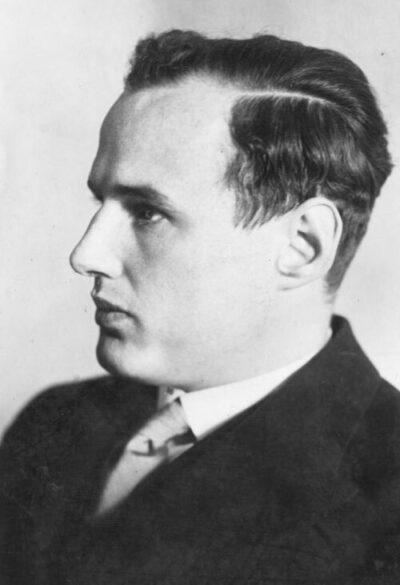
Manfred von Ardenne
Manfred von Ardenne was a German researcher and applied physicist. Born January 20, 1907, in Hamburg. Died May 26, 1997, in Dresden. Positions held include member of the Volkskammer (1963–1989). Educated at Humboldt-Universität zu Berlin. Awards include Stalin Prize, USSR State Prize and National Prize of East Germany (2 times).
Facts
33 facts · 2 confirmed by two sources · 4 cited · 27 from one source
Where this comes from
Papalocal keeps its own record. It started from these sources; what each one said is kept here as it was copied, so a change on their side never changes this page by itself. Tap one to read its version.
What Wikidata says · copied November 16, 2026 · revision 2568730468
- Described as
- German researcher and applied physicist (1907-1997)
- Other names
- M. von Ardenne, M von Ardenne, von Ardenne, von Ardenne M, von Ardenne M., Manfred baron von Ardenne
- Born
- January 20, 1907 · 7 references
- Died
- May 26, 1997 · 7 references
- Born in
- Hamburg · 1 reference
- Died in
- Dresden · 1 reference
- Buried in
- Waldfriedhof Weißer Hirsch
- Citizen of
- Germany; East Germany; Soviet Union; German Reich
- Occupation
- physicist · 2 references; inventor; politician; university teacher; scientist · 1 reference
- Positions held
- member of the Volkskammer (1963–1989)
- Worked for
- TU Dresden; Forschungsinstitut Manfred von Ardenne (1955–)
- Education
- Humboldt-Universität zu Berlin
- Member of
- International Academy of Astronautics
- Awards
- Stalin Prize (1953); USSR State Prize (1947); National Prize of East Germany (2 times) (1958, 1965); honorary citizen of Dresden (1989); Hervorragender Wissenschaftler des Volkes (1987); Rudolf-Diesel-Medaille (1988); Silver Leibniz medal (1941); honorary doctor of the Dresden University of Technology; Patriotic Order of Merit (honor clasp) · 1 reference; Stalin Prize, 2nd degree (1953) · 1 reference
- Field
- applied physics; nuclear physics
- Father
- Egmont Freiherr von Ardenne
- Lived in
- Hamburg · 1 reference
- Wikipedias with a page
- 30
Wikidata item Q70999 (wikidata.org/wiki/Q70999), public domain (CC0). Copied November 16, 2026.
What Wikipedia says · copied November 16, 2026 · revision 1319619106
Manfred Baron von Ardenne (German pronunciation: [ˈmanfʁeːt fɔn aʁˈdɛn]; 20 January 1907 – 26 May 1997) was a German researcher, autodidact in applied physics, and an inventor. He took out approximately 600 patents in fields including electron microscopy, medical technology, nuclear technology, plasma physics, and radio and television technology. From 1928 to 1945, he directed his self-funded and private research laboratory Forschungslaboratorium für Elektronenphysik, where he developed and invented many techniques used in modern physics.
After World War II, von Ardenne was held in Soviet custody and was one of many of the German nuclear physicists in the Soviet program of nuclear weapons, and later honored with the Stalin Prize.
Upon his return to the then East Germany, he started another private engineering firm, Forschungsinstitut Manfred von Ardenne. Ardenne is seen as one of the main inventors of the television.
- Born, in its opening lines
- January 20, 1907
- Died, in its opening lines
- May 26, 1997
From the Wikipedia article “Manfred von Ardenne” (en.wikipedia.org/wiki/Manfred_von_Ardenne), by its contributors, under CC BY-SA 4.0 (creativecommons.org/licenses/by-sa/4.0/). Copied November 16, 2026; not changed.
Confirmed Two sources agree. Cited One source, and it names where it got it. One source One source, without a reference of its own. Sources disagree The sources disagree. We show the best-supported value and keep theirs below.
