
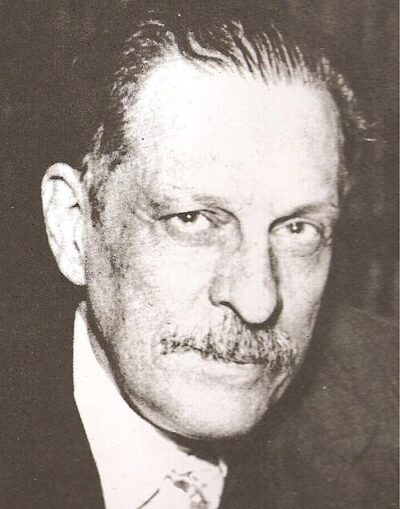
Manuel Márquez Sterling
Manuel Márquez Sterling was a Cuban journalist, diplomat and politician. Born August 28, 1872, in Lima. Died December 9, 1934, in Washington, D.C.. Positions held include Ambassadors of Cuba to Peru, ambassador of Cuba and Ambassadors of Cuba to Mexico.
Facts
19 facts · 2 confirmed by two sources · 7 cited · 10 from one source
Where this comes from
Papalocal keeps its own record. It started from these sources; what each one said is kept here as it was copied, so a change on their side never changes this page by itself. Tap one to read its version.
What Wikidata says · copied November 18, 2026 · revision 2569284236
- Described as
- Cuban journalist, diplomat and politician (1872-1934)
- Other names
- Manuel Marquez Sterling
- Born
- August 28, 1872 · 1 reference
- Died
- December 9, 1934
- Born in
- Lima · 1 reference
- Died in
- Washington, D.C. · 1 reference
- Name at birth
- Carlos Manuel Agustin Márquez Sterling y Loret de Mola
- Citizen of
- Republic of Cuba; Peru
- Occupation
- diplomat · 1 reference; chess player; politician · 1 reference; journalist · 1 reference; writer · 1 reference
- Positions held
- Ambassadors of Cuba to Peru; ambassador of Cuba; Ambassadors of Cuba to Mexico
- Political party
- Liberal Party of Cuba
- Worked for
- El Mundo · 1 reference
- Sport
- chess
- Religion
- Catholicism
- Wikipedias with a page
- 22
Wikidata item Q386478 (wikidata.org/wiki/Q386478), public domain (CC0). Copied November 18, 2026.
What Wikipedia says · copied November 18, 2026 · revision 1351534557
Manuel Márquez-Sterling (born Carlos Manuel Agustín Márquez-Sterling y Loret de Mola on August 28, 1872 in Lima, Peru – December 9, 1934, Washington, DC, United States) was a Cuban diplomat and interim President of Cuba for 6 hours on January 18, 1934. In an article published by Bohemia in December, 1934 (as a result of his death) he is credited with saving the life of Mexican President Francisco I. Madero, when the latter was hiding from the authorities of then Mexican President Porfirio Diaz, during the initial states of the Mexican Revolution.
He served in the Cuban War of Liberation and went to Washington in 1901 as member of the Cuban mission to protest the Platt Amendment. After a journalistic career he served in diplomatic service for many years. He resigned as Ambassador to Mexico in 1932 after differences with Machado. He later became ambassador to the United States under the presidency of Carlos Manuel de Cespedes y Quesada, acted as Cuban representative under Grau's presidency and also acted as Cuban ambassador under Mendieta's presidency.
He was married to his cousin, Mercedes Márquez Sterling y Ziburo. He was the uncle of Carlos Márquez Sterling, a figure in Cuban politics whom he adopted as his son.
He tied for 16-17th in the Paris 1900 chess tournament (Emanuel Lasker won) played during the world exhibition.
- Born, in its opening lines
- August 28, 1872
- Died, in its opening lines
- December 9, 1934
From the Wikipedia article “Manuel Márquez Sterling” (en.wikipedia.org/wiki/Manuel_Márquez_Sterling), by its contributors, under CC BY-SA 4.0 (creativecommons.org/licenses/by-sa/4.0/). Copied November 18, 2026; not changed.
Confirmed Two sources agree. Cited One source, and it names where it got it. One source One source, without a reference of its own. Sources disagree The sources disagree. We show the best-supported value and keep theirs below.
