
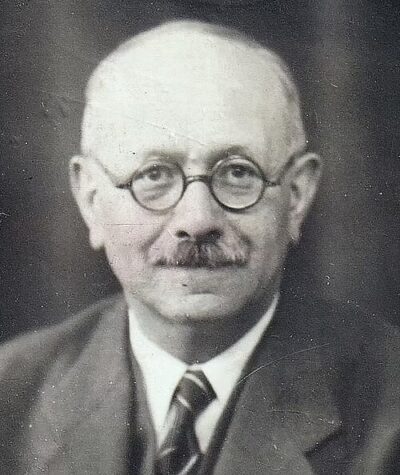
Marc Bloch
Marc Bloch was a French historian. Born July 6, 1886, in 2nd arrondissement of Lyon. Died June 16, 1944, in Saint-Didier-de-Formans. Positions held include teacher (1912–1914), senior lecturer (2 times) (1919–1937) and university teacher (1921–1936). Known for The royal touch; sacred monarchy and scrofula in England and France, Strange Defeat and The Historian's Craft. Educated at Lycée Louis-le-Grand and École Normale Supérieure. Awards include Knight of the Legion of Honour, Croix de guerre 1914–1918 and mort pour la France.
Facts
51 facts · 2 confirmed by two sources · 18 cited · 30 from one source · 1 where the sources disagree
What’s different
- Cause of death: we show execution (Sources disagree). Wikidata also lists gunshot wound
Where this comes from
Papalocal keeps its own record. It started from these sources; what each one said is kept here as it was copied, so a change on their side never changes this page by itself. Tap one to read its version.
What Wikidata says · copied November 16, 2026 · revision 2569861121
- Described as
- French historian (1886–1944)
- Other names
- Marc Léopold Benjamin Bloch, Marc Fougères, M. Fougères, M. Bloch
- Born
- July 6, 1886 · 11 references
- Died
- June 16, 1944 · 11 references
- Born in
- 2nd arrondissement of Lyon · 3 references
- Died in
- Saint-Didier-de-Formans · 4 references
- Buried in
- Le Bourg-d'Hem (1977–) · 1 reference; Panthéon (2026–)
- Cause of death
- execution; gunshot wound
- Name at birth
- Marc Léopold Benjamin Bloch · 1 reference
- Citizen of
- France · 3 references
- Occupation
- historian · 3 references; medievalist · 1 reference; professor (1919–1944) · 1 reference; French resistance fighter · 1 reference; lecturer; university teacher · 2 references; resistance fighter · 1 reference; author · 1 reference
- Positions held
- teacher (1912–1914); senior lecturer (2 times) (1919–1937); university teacher (1921–1936); lecturer (1941–1943); full professor (1937–1939)
- Worked for
- University of Strasbourg (1919–1936) · 1 reference; University of Paris (1936–1940); University of Montpellier (1941–1943); University of Strasbourg (1941)
- Education
- Lycée Louis-le-Grand; École Normale Supérieure (1904–1908); Leipzig University (1908–1909) · 1 reference; University of Strasbourg (1920)
- Member of
- Société de l'histoire de Paris et de l'Île-de-France; Operational Energy Service; Franc-Tireur (1943–); Mouvements Unis de la Résistance
- Known for
- The royal touch; sacred monarchy and scrofula in England and France; Strange Defeat; The Historian's Craft; Annales. Histoire, Sciences sociales; La societe feodale: Les classes et le gouvernement des hommes · 1 reference
- Awards
- Knight of the Legion of Honour (1920) · 1 reference; Croix de guerre 1914–1918; mort pour la France; Croix de guerre 1939–1945
- Field
- medieval history
- Spouse
- Simonne Vidal (1919–1944) · 2 references
- Children
- Étienne Bloch · 1 reference
- Father
- Gustave Bloch
- Siblings
- Louis Bloch
- Religion
- atheism · 2 references
- Military branch
- French Army
- Military rank
- capitaine
- Wikipedias with a page
- 64
Wikidata item Q156585 (wikidata.org/wiki/Q156585), public domain (CC0). Copied November 16, 2026.
What Wikipedia says · copied November 16, 2026 · revision 1384917775
Marc Léopold Benjamin Bloch ( BLOCK; French: [maʁk leɔpɔld bɛ̃ʒamɛ̃ blɔk]; 6 July 1886 – 16 June 1944) was a French historian. He was a founding member of the Annales School of French social history. Bloch specialised in medieval history and published widely on medieval France over the course of his career. As an academic, he worked at the University of Strasbourg (1920 to 1936 and 1940 to 1941), the University of Paris (1936 to 1939), and the University of Montpellier (1941 to 1944).
Born in Lyon to an Alsatian Jewish family, Bloch was raised in Paris, where his father—the classical historian Gustave Bloch—worked at Sorbonne University. Bloch was educated at various Parisian lycées and the École Normale Supérieure, and from an early age was affected by the antisemitism of the Dreyfus affair. During the First World War, he served in the French Army and fought at the First Battle of the Marne and the Somme. After the war, he was awarded his doctorate in 1918 and became a lecturer at the University of Strasbourg. There, he formed an intellectual partnership with modern historian Lucien Febvre. Together they founded the Annales School and began publishing the journal Annales d'histoire économique et sociale in 1929. Bloch was a modernist in his historiographical approach, and repeatedly emphasised the importance of a multidisciplinary engagement towards history, particularly blending his research with that on geography, sociology and economics, which was his subject when he was offered a post at the University of Paris in 1936.
During the Second World War Bloch volunteered for service, and was a logistician during the Phoney War. Involved in the Battle of Dunkirk and spending a brief time in Britain, he unsuccessfully attempted to secure passage to the United States. Back in France, where his ability to work was curtailed by new antisemitic regulations, he applied for and received one of the few permits available allowing Jews to continue working in the French university system. He had to leave Paris, and complained that the Nazi German authorities looted his apartment and stole his books; he was also persuaded by Febvre to relinquish his position on the editorial board of Annales. Bloch worked in Montpellier until November 1942 when Germany invaded Vichy France. He then joined the non-Communist section of the French Resistance and went on to play a leading role in its unified regional structures in Lyon. In 1944, he was captured by the Gestapo in Lyon and murdered in a summary execution after the Allied invasion of Normandy. Several works—including influential studies like The Historian's Craft and Strange Defeat—were published posthumously.
His historical studies and his death as a member of the Resistance together made Bloch highly regarded by generations of post-war French historians; he came to be called "the greatest historian of all time". By the end of the 20th century, historians were making a more critical assessment of Bloch's abilities, influence, and legacy, arguing that there were flaws to his approach.
- Born, in its opening lines
- July 6, 1886
- Died, in its opening lines
- June 16, 1944
From the Wikipedia article “Marc Bloch” (en.wikipedia.org/wiki/Marc_Bloch), by its contributors, under CC BY-SA 4.0 (creativecommons.org/licenses/by-sa/4.0/). Copied November 16, 2026; not changed.
Confirmed Two sources agree. Cited One source, and it names where it got it. One source One source, without a reference of its own. Sources disagree The sources disagree. We show the best-supported value and keep theirs below.
