
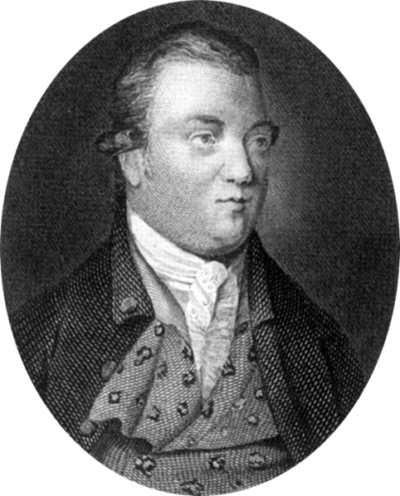
Marmaduke Tunstall was an English ornithologist;. Born 1743, in Burton Constable Hall. Died October 11, 1790, in Wycliffe. Awards include Fellow of the Royal Society and Fellow of the Society of Antiquaries.
Facts
11 facts · 2 confirmed by two sources · 0 cited · 9 from one source
Where this comes from
Papalocal keeps its own record. It started from these sources; what each one said is kept here as it was copied, so a change on their side never changes this page by itself. Tap one to read its version.
What Wikidata says · copied November 18, 2026 · revision 2564323124
- Described as
- English ornithologist; (1743-1790)
- Other names
- Tunstall
- Born
- 1743 · 9 references
- Died
- October 11, 1790 · 1 reference
- Born in
- Burton Constable Hall
- Died in
- Wycliffe
- Citizen of
- Kingdom of Great Britain
- Occupation
- ornithologist
- Member of
- Royal Society of London (1771–)
- Awards
- Fellow of the Royal Society; Fellow of the Society of Antiquaries
- Father
- Cuthbert Constable
- Mother
- Elizabeth Heneage
- Wikipedias with a page
- 22
Wikidata item Q262859 (wikidata.org/wiki/Q262859), public domain (CC0). Copied November 18, 2026.
What Wikipedia says · copied November 18, 2026 · revision 1370339995
Marmaduke Tunstall (1743 – 11 October 1790) was an English ornithologist and collector. He was the author of Ornithologia Britannica (1771), probably the first British work to use binomial nomenclature.
Tunstall was born at Burton Constable in Yorkshire. In 1760, he succeeded to the family estates of Scargill, Hutton, Long Villers and Wycliffe. Being a Catholic, he was educated at Douai in France. On completing his studies, he took up residence in Welbeck Street, London, where he formed an extensive museum, as well as a large collection of living birds and animals. He is known for formally describing the Peregrine falcon. After his marriage in 1776, the museum was moved to Wycliffe, and at the time, was one of the finest in England.
Tunstall became a fellow of the Society of Antiquaries of London at the age of twenty-one, and in 1771, was elected a fellow of the Royal Society.
Tunstall died at Wycliffe, and his estates passed to his half-brother, William Constable. Constable invited Thomas Bewick, whom Marmaduke had commissioned to engrave 'The Wild Bull of the Ancient Caledonian Breed, now in the park at Chilingham-Castle, Northumberland', to Wycliffe where he spent two months making drawings from the bird specimens. The museum, known as the Wycliffe Museum, was sold to George Allan of Blackwell Grange, Darlington who set up the contents in his home. The museum remained even after his death in 1800 at the Grange until 1822 when it was purchased by the Newcastle Literary and Philosophical Society, and becoming the "Newcastle Museum."
- Born, in its opening lines
- 1743
- Died, in its opening lines
- October 11, 1790
From the Wikipedia article “Marmaduke Tunstall” (en.wikipedia.org/wiki/Marmaduke_Tunstall), by its contributors, under CC BY-SA 4.0 (creativecommons.org/licenses/by-sa/4.0/). Copied November 18, 2026; not changed.
Confirmed Two sources agree. Cited One source, and it names where it got it. One source One source, without a reference of its own. Sources disagree The sources disagree. We show the best-supported value and keep theirs below.
