
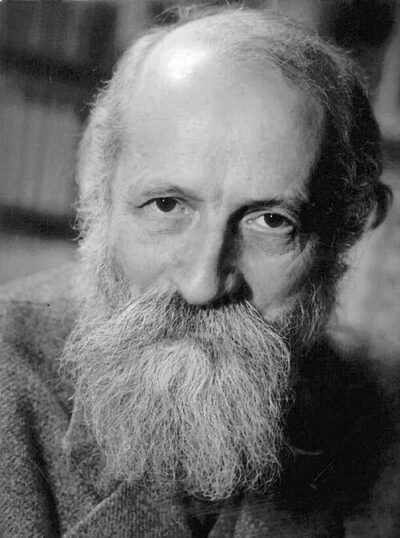
Martin Buber
Martin Buber was a German Jewish Existentialist philosopher and theologian. Born February 8, 1878, in Vienna. Died June 13, 1965, in Jerusalem. Known for I and Thou and A Land of Two Peoples. Educated at University of Vienna and Humboldt-Universität zu Berlin. Awards include Israel Prize, Bialik Prize and Erasmus Prize.
Facts
52 facts · 2 confirmed by two sources · 20 cited · 30 from one source
Where this comes from
Papalocal keeps its own record. It started from these sources; what each one said is kept here as it was copied, so a change on their side never changes this page by itself. Tap one to read its version.
What Wikidata says · copied November 16, 2026 · revision 2569335528
- Described as
- German Jewish Existentialist philosopher and theologian (1878–1965)
- Other names
- Buber
- Born
- February 8, 1878 · 15 references
- Died
- June 13, 1965 · 14 references
- Born in
- Vienna · 5 references
- Died in
- Jerusalem · 5 references
- Buried in
- Har HaMenuchot · 1 reference
- Citizen of
- Weimar Republic; Israel; Austria · 1 reference; Germany · 1 reference
- Occupation
- philosopher · 3 references; existentialist; pedagogue · 2 references; writer · 4 references; literary editor; university teacher · 2 references; Bible translator; Zionist
- Worked for
- Goethe University Frankfurt; Hebrew University of Jerusalem; Die Welt (1901–1902)
- Education
- University of Vienna; Humboldt-Universität zu Berlin; University of Zurich; Leipzig University
- Member of
- Israel Academy of Sciences and Humanities; American Academy of Arts and Sciences (1961–); Bavarian Academy of Fine Arts; Der Kraal; Brit Shalom
- Known for
- I and Thou; A Land of Two Peoples
- Awards
- Israel Prize (1958) · 1 reference; Bialik Prize (1961); Erasmus Prize (1963) · 2 references; Peace Prize of the German Publishers' and Booksellers' Association (1953) · 1 reference; Goethe Plaque of the City of Frankfurt (1958); honorary doctor of the Hebrew University of Jerusalem (1953) · 1 reference; honorary doctor of the University of Münster (1962); Honorary doctor of the Heidelberg University (1964); honorary citizen of Jerusalem; doctor honoris causa from the University of Paris (1958) · 1 reference
- Field
- ontology · 1 reference; Judaism · 1 reference; philosophy · 1 reference; literature · 1 reference; translation · 1 reference; educational system · 1 reference
- Spouse
- Paula Buber (1907–1958) · 1 reference
- Children
- Rafael Buber · 1 reference; Eva Strauss-Buber · 1 reference
- Father
- Carl Buber
- Mother
- Elise Buber
- Wikipedias with a page
- 79
Wikidata item Q84423 (wikidata.org/wiki/Q84423), public domain (CC0). Copied November 16, 2026.
What Wikipedia says · copied November 16, 2026 · revision 1384632519
Martin Buber (German: [ˈmaʁtiːn ˈbuːbɐ] ; Hebrew: מרטין בובר; Yiddish: מארטין בובער; 8 February 1878 – 13 June 1965) was an Austrian-Israeli philosopher best known for his philosophy of dialogue, a form of existentialism centered on the distinction between the I–Thou relationship and the I–It relationship.
Born in Vienna, Buber came from a family of observant Jews, but broke with Jewish custom to pursue secular studies in philosophy. He produced writings about Zionism and worked with various bodies within the Zionist movement extensively over a nearly 50-year period spanning his time in Europe and the Near East. In 1923, Buber wrote his famous essay on existence, Ich und Du (later translated into English as I and Thou), and in 1925 he began translating the Hebrew Bible into the German language.
He was nominated for the Nobel Prize in Literature ten times, and the Nobel Peace Prize seven times.
- Born, in its opening lines
- February 8, 1878
- Died, in its opening lines
- June 13, 1965
From the Wikipedia article “Martin Buber” (en.wikipedia.org/wiki/Martin_Buber), by its contributors, under CC BY-SA 4.0 (creativecommons.org/licenses/by-sa/4.0/). Copied November 16, 2026; not changed.
Confirmed Two sources agree. Cited One source, and it names where it got it. One source One source, without a reference of its own. Sources disagree The sources disagree. We show the best-supported value and keep theirs below.
