
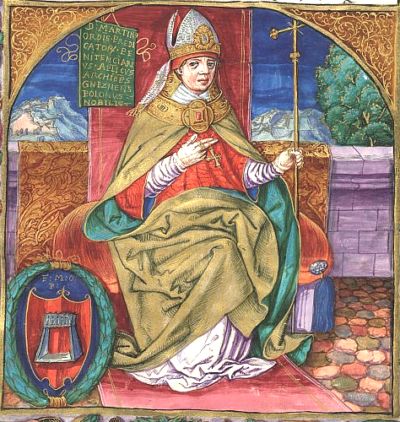
Martin of Opava
Martin of Opava was a Czech medieval chronicler (died 1279). Born 13th century, in Opava. Died December 23, 1279, in Bologna. Positions held include Roman Catholic Archbishop of Gniezno (1278–). Known for Chronicon pontificum et imperatorum, Margarita decreti and Promptuarium exemplorum.
Facts
20 facts · 0 confirmed by two sources · 6 cited · 14 from one source
Where this comes from
Papalocal keeps its own record. It started from these sources; what each one said is kept here as it was copied, so a change on their side never changes this page by itself. Tap one to read its version.
What Wikidata says · copied November 18, 2026 · revision 2563996142
- Described as
- Czech medieval chronicler (died 1279)
- Other names
- Martin of Troppau
- Born
- 13th century
- Died
- December 23, 1279
- Born in
- Opava · 1 reference
- Died in
- Bologna · 1 reference
- Buried in
- Basilica of San Domenico
- Citizen of
- Poland
- Occupation
- historian; Catholic priest; canon law jurist; Catholic bishop; friar; chronicler · 1 reference; archbishop · 1 reference; monk · 1 reference
- Positions held
- Roman Catholic Archbishop of Gniezno (1278–) · 2 references
- Known for
- Chronicon pontificum et imperatorum; Margarita decreti; Promptuarium exemplorum; Sermons
- Religion
- Catholic Church · 1 reference
- Wikipedias with a page
- 20
Wikidata item Q431054 (wikidata.org/wiki/Q431054), public domain (CC0). Copied November 18, 2026.
What Wikipedia says · copied November 18, 2026 · revision 1385561972
Martin of Opava, O.P. (died 1278) also known as Martin of Poland (Latin: Martinus Oppaviensis, Martinus Polonus, German: Martin von Troppau), was a 13th-century Dominican friar, bishop and chronicler.
From the Wikipedia article “Martin of Opava” (en.wikipedia.org/wiki/Martin_of_Opava), by its contributors, under CC BY-SA 4.0 (creativecommons.org/licenses/by-sa/4.0/). Copied November 18, 2026; not changed.
Confirmed Two sources agree. Cited One source, and it names where it got it. One source One source, without a reference of its own. Sources disagree The sources disagree. We show the best-supported value and keep theirs below.
