
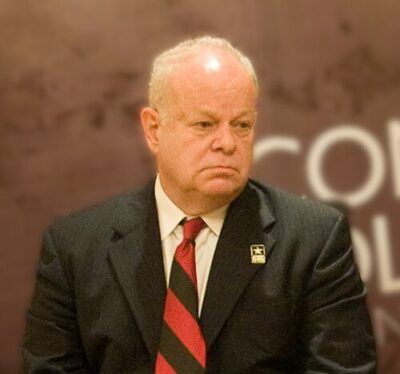
Martin Seligman
Martin Seligman is an American psychologist and writer. Born August 12, 1942, in Albany. Positions held include President of the American Psychological Association (1998). Educated at Princeton University and University of Pennsylvania. Awards include Guggenheim Fellowship, Joseph Zubin Award and William James Fellow Award.
Facts
28 facts · 1 confirmed by two sources · 13 cited · 14 from one source
Where this comes from
Papalocal keeps its own record. It started from these sources; what each one said is kept here as it was copied, so a change on their side never changes this page by itself. Tap one to read its version.
What Wikidata says · copied November 14, 2026 · revision 2563085845
- Described as
- American psychologist and writer
- Other names
- Martin E. P. Seligman, Martin E P Seligman, M. E. P. Seligman, M E P Seligman, M. Seligman, M Seligman, Seligman, Seligman M, Seligman M., Seligman M. E. P., Seligman MEP, Martin Elias Peter Seligman
- Born
- August 12, 1942 · 2 references
- Born in
- Albany · 2 references
- Citizen of
- United States
- Occupation
- psychologist · 1 reference; bridge player; writer; university teacher
- Positions held
- President of the American Psychological Association (1998) · 1 reference
- Worked for
- University of Pennsylvania · 1 reference
- Education
- Princeton University; University of Pennsylvania
- Member of
- Society of Experimental Psychologists; University of Pennsylvania Department of Psychology · 1 reference
- Sport
- contract bridge
- Awards
- Guggenheim Fellowship · 1 reference; Joseph Zubin Award (1997) · 1 reference; William James Fellow Award (1991) · 1 reference; APA Award for Distinguished Scientific Contributions to Psychology (2006) · 1 reference; honorary doctor of the University of Madrid Complutense (2004); Fellow of the Society of Experimental Psychologists; Fellow of the American Association for the Advancement of Science; James McKeen Cattell Fellow Award (1995) · 1 reference; APA Award for Outstanding Lifetime Contributions to Psychology (2017) · 1 reference; APA Distinguished Scientific Award for an Early Career Contribution to Psychology (1976) · 1 reference; Arthur W. Staats Lecture for Unifying Psychology (2000) · 1 reference
- Field
- psychology · 1 reference; positive psychology · 1 reference; learned helplessness · 1 reference
- Wikipedias with a page
- 40
Wikidata item Q320927 (wikidata.org/wiki/Q320927), public domain (CC0). Copied November 14, 2026.
What Wikipedia says · copied November 14, 2026 · revision 1383257055
Martin Elias Peter Seligman (; born August 12, 1942) is an American psychologist, educator, and author of self-help books. Seligman is a strong promoter within the scientific community of his theories of well-being and positive psychology. His theory of learned helplessness is popular among scientific and clinical psychologists. A Review of General Psychology survey, published in 2002, ranked Seligman as the 31st most cited psychologist of the 20th century.
Seligman is the Zellerbach Family Professor of Psychology in the University of Pennsylvania's Department of Psychology. He was previously the Director of the Clinical Training Program in the department, and earlier taught at Cornell University. He is the director of the university's Positive Psychology Center. Seligman was elected president of the American Psychological Association for 1998. He is the founding editor-in-chief of Prevention and Treatment (the APA electronic journal) and is on the board of advisers of Parents magazine.
Seligman has written about positive psychology topics in books such as The Optimistic Child, Child's Play, Learned Optimism, Authentic Happiness, and Flourish. His most recent book, Tomorrowmind, co-written with Gabriella Rosen Kellerman, was published in 2023.
- Born, in its opening lines
- August 12, 1942
From the Wikipedia article “Martin Seligman” (en.wikipedia.org/wiki/Martin_Seligman), by its contributors, under CC BY-SA 4.0 (creativecommons.org/licenses/by-sa/4.0/). Copied November 14, 2026; not changed.
Confirmed Two sources agree. Cited One source, and it names where it got it. One source One source, without a reference of its own. Sources disagree The sources disagree. We show the best-supported value and keep theirs below.
