
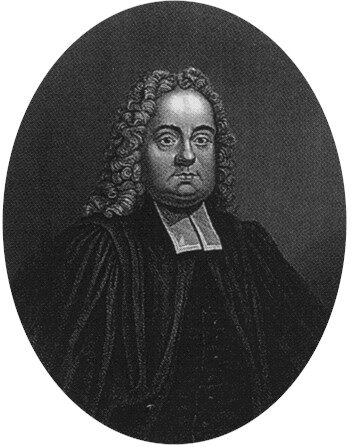
Matthew Henry
Matthew Henry was a Theologian from Wales;. Born October 18, 1662, in Isycoed. Died June 22, 1714, in Nantwich. Educated at Gray's Inn.
Facts
17 facts · 2 confirmed by two sources · 7 cited · 8 from one source
Where this comes from
Papalocal keeps its own record. It started from these sources; what each one said is kept here as it was copied, so a change on their side never changes this page by itself. Tap one to read its version.
What Wikidata says · copied November 17, 2026 · revision 2567928151
- Described as
- Theologian from Wales; (1662-1714)
- Other names
- Mathew Henry, Reverend Mathew Henry
- Born
- October 18, 1662 · 2 references
- Died
- June 22, 1714 · 2 references
- Born in
- Isycoed · 1 reference
- Died in
- Nantwich · 1 reference
- Citizen of
- Wales; Kingdom of Great Britain
- Occupation
- theologian · 1 reference; writer · 1 reference; Christian minister; parson · 1 reference
- Education
- Gray's Inn · 1 reference
- Children
- Katherine Henry · 1 reference
- Father
- Philip Henry · 1 reference
- Mother
- Katherine Henry · 1 reference
- Siblings
- Sarah Savage
- Religion
- Presbyterianism; Reformed Christianity
- Wikipedias with a page
- 25
Wikidata item Q663216 (wikidata.org/wiki/Q663216), public domain (CC0). Copied November 17, 2026.
What Wikipedia says · copied November 17, 2026 · revision 1384480053
Matthew Henry (18 October 1662 – 22 June 1714) was a British Nonconformist and Presbyterian minister and author who was born in Wales but spent much of his life in England. He is best known for the six-volume biblical commentary Exposition of the Old and New Testaments.
- Born, in its opening lines
- October 18, 1662
- Died, in its opening lines
- June 22, 1714
From the Wikipedia article “Matthew Henry” (en.wikipedia.org/wiki/Matthew_Henry), by its contributors, under CC BY-SA 4.0 (creativecommons.org/licenses/by-sa/4.0/). Copied November 17, 2026; not changed.
Confirmed Two sources agree. Cited One source, and it names where it got it. One source One source, without a reference of its own. Sources disagree The sources disagree. We show the best-supported value and keep theirs below.
