
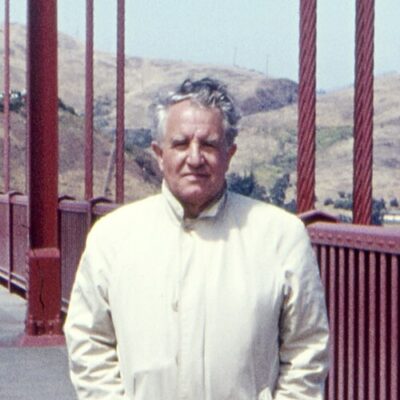
Max Bense
Max Bense was a German philosopher. Born February 7, 1910, in Strasbourg. Died April 29, 1990, in Stuttgart. Educated at University of Bonn.
Facts
30 facts · 2 confirmed by two sources · 17 cited · 11 from one source
Where this comes from
Papalocal keeps its own record. It started from these sources; what each one said is kept here as it was copied, so a change on their side never changes this page by itself. Tap one to read its version.
What Wikidata says · copied November 18, 2026 · revision 2569019554
- Described as
- German philosopher (1910-1990)
- Born
- February 7, 1910 · 12 references
- Died
- April 29, 1990 · 11 references
- Born in
- Strasbourg · 1 reference
- Died in
- Stuttgart · 1 reference
- Buried in
- Dornhaldenfriedhof
- Citizen of
- Germany
- Occupation
- writer; physicist · 1 reference; philosopher · 2 references; university teacher; art theorist · 1 reference; mathematician · 2 references; opinion journalist · 1 reference; geologist · 1 reference
- Political party
- Deutsche Friedens-Union
- Worked for
- University of Stuttgart (1949–1978); University of Jena (1945–1948); Bayer; Ulm School of Design
- Education
- University of Bonn
- Field
- philosophy · 1 reference; natural science · 1 reference; literature · 1 reference; opinion journalism · 1 reference; art theory · 1 reference; pedagogy · 1 reference
- Spouse
- Elisabeth Walther-Bense (1988–)
- Children
- Georg Bense · 1 reference; Caroline Walther · 1 reference
- Father
- Otto Bense · 1 reference
- Wikipedias with a page
- 22
Wikidata item Q62373 (wikidata.org/wiki/Q62373), public domain (CC0). Copied November 18, 2026.
What Wikipedia says · copied November 18, 2026 · revision 1379638733
Max Bense (7 February 1910 in Straßburg – 29 April 1990 in Stuttgart) was a German philosopher, writer, and publicist, known for his work in philosophy of science, logic, aesthetics, and semiotics. His thoughts combine natural sciences, art, and philosophy under a collective perspective and follow a definition of reality, which – under the term existential rationalism – is able to remove the separation between humanities and natural sciences.
- Born, in its opening lines
- February 7, 1910
- Died, in its opening lines
- April 29, 1990
From the Wikipedia article “Max Bense” (en.wikipedia.org/wiki/Max_Bense), by its contributors, under CC BY-SA 4.0 (creativecommons.org/licenses/by-sa/4.0/). Copied November 18, 2026; not changed.
Confirmed Two sources agree. Cited One source, and it names where it got it. One source One source, without a reference of its own. Sources disagree The sources disagree. We show the best-supported value and keep theirs below.
