
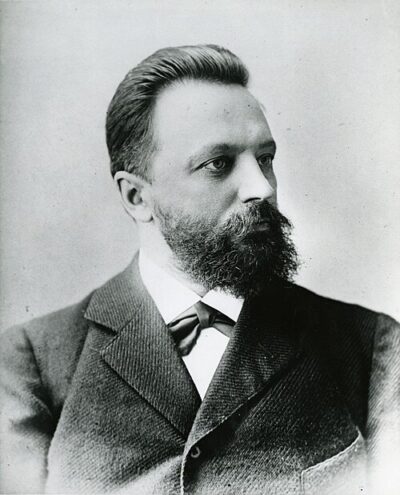
Mikhail Chigorin
Mikhail Chigorin was a Russian chess player. Born October 31, 1850, in Gatchina. Died January 12, 1908, in Lublin.
Facts
9 facts · 0 confirmed by two sources · 2 cited · 5 from one source · 2 where the sources disagree
What’s different
- Born: we show October 31, 1850 (Sources disagree). Wikipedia says November 12, 1850
- Died: we show January 12, 1908 (Sources disagree). Wikipedia says January 25, 1908
Where this comes from
Papalocal keeps its own record. It started from these sources; what each one said is kept here as it was copied, so a change on their side never changes this page by itself. Tap one to read its version.
What Wikidata says · copied November 16, 2026 · revision 2517675278
- Described as
- Russian chess player
- Born
- October 31, 1850
- Died
- January 12, 1908
- Born in
- Gatchina · 1 reference
- Died in
- Lublin · 1 reference
- Buried in
- Novodevichy Cemetery
- Cause of death
- diabetes
- Citizen of
- Russian Empire
- Occupation
- chess player
- Sport
- chess
- Wikipedias with a page
- 47
Wikidata item Q298286 (wikidata.org/wiki/Q298286), public domain (CC0). Copied November 16, 2026.
What Wikipedia says · copied November 16, 2026 · revision 1382049769
Mikhail Ivanovich Chigorin (also Tchigorin; Russian: Михаи́л Ива́нович Чиго́рин; 12 November [O.S. 31 October] 1850 – 25 January [O.S. 12 January] 1908) was a Russian chess player. He played two World Championship matches against Wilhelm Steinitz, losing both times. The last great player of the Romantic chess style, he also served as a major source of inspiration for the Soviet chess school, which dominated the chess world in the middle and latter parts of the 20th century.
- Born, in its opening lines
- November 12, 1850
- Died, in its opening lines
- January 25, 1908
From the Wikipedia article “Mikhail Chigorin” (en.wikipedia.org/wiki/Mikhail_Chigorin), by its contributors, under CC BY-SA 4.0 (creativecommons.org/licenses/by-sa/4.0/). Copied November 16, 2026; not changed.
Confirmed Two sources agree. Cited One source, and it names where it got it. One source One source, without a reference of its own. Sources disagree The sources disagree. We show the best-supported value and keep theirs below.
