
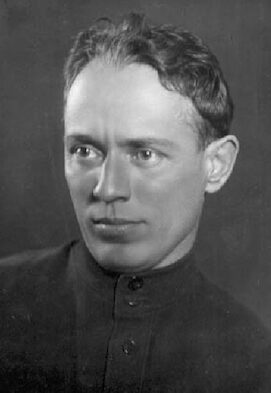
Mikhail Sholokhov
Mikhail Sholokhov was a Soviet writer. Born May 11, 1905, in Kruzhilin. Died February 21, 1984, in Vyoshenskaya. Positions held include deputy of the Supreme Soviet of the Soviet Union. Known for Fate of a Man, And Quiet Flows the Don and The New Land. Awards include State Stalin Prize, 1st degree, Medal "For the Victory over Germany in the Great Patriotic War 1941–1945" and Order of Lenin (6 times).
Facts
55 facts · 1 confirmed by two sources · 6 cited · 47 from one source · 1 where the sources disagree
What’s different
- Born: we show May 11, 1905 (Sources disagree). Wikipedia says May 24, 1905
Where this comes from
Papalocal keeps its own record. It started from these sources; what each one said is kept here as it was copied, so a change on their side never changes this page by itself. Tap one to read its version.
What Wikidata says · copied November 16, 2026 · revision 2568218784
- Described as
- Soviet writer (1905-1984)
- Other names
- Mikhail Aleksandrovich Sholokhov, Michail Sholokhov, Mijaíl Sholojov
- Born
- May 11, 1905 · 2 references
- Died
- February 21, 1984 · 8 references
- Born in
- Kruzhilin
- Died in
- Vyoshenskaya · 1 reference
- Buried in
- Vyoshenskaya
- Cause of death
- laryngeal cancer
- Citizen of
- Russian Empire; Soviet Union
- Occupation
- writer · 2 references; novelist; screenwriter; poet; prose writer; journalist; politician; short story writer
- Positions held
- deputy of the Supreme Soviet of the Soviet Union
- Political party
- Communist Party of the Soviet Union (1932–)
- Member of
- USSR Union of Writers; Serbian Academy of Sciences and Arts; Russian Academy of Sciences; Academy of Sciences of the USSR (1939–); Central Committee of the Communist Party of the Soviet Union
- Genre
- sketch story; feuilleton · 1 reference
- Known for
- Fate of a Man; And Quiet Flows the Don · 1 reference; The New Land · 1 reference; They Fought for their Country; Tales of the Don
- Awards
- State Stalin Prize, 1st degree (1941); Medal "For the Victory over Germany in the Great Patriotic War 1941–1945"; Order of Lenin (6 times) (1939, 1955, 1965, 1967, 1975, 1980) · 1 reference; Hero of Socialist Labour (2 times) (1967, 1980); Order of the October Revolution (1971); Order of the Patriotic War, 1st class (1945); Nobel Prize in Literature (1965) · 2 references; Medal "For the Defence of Moscow"; Medal "For the Defence of Stalingrad"; Medal "For Valiant Labour in the Great Patriotic War 1941–1945"; Alexander Fadeyev Medal (1972); Medal "Veteran of Labour"; Lenin Prize (1960); Jubilee Medal "Twenty Years of Victory in the Great Patriotic War 1941–1945"; Jubilee Medal "Thirty Years of Victory in the Great Patriotic War 1941–1945"
- Field
- prose · 1 reference; creative and professional writing · 1 reference; poetry · 1 reference; journalism · 1 reference; politics · 1 reference
- Spouse
- Maria Petrovna Gromoslavskaia
- Children
- Mikhail Mikhailovich Sholokhov; Svetlana Mikhailovna Sholokhova; Aleksandr Sholokhov
- Military rank
- colonel (1943–)
- Wikipedias with a page
- 118
Wikidata item Q42398 (wikidata.org/wiki/Q42398), public domain (CC0). Copied November 16, 2026.
What Wikipedia says · copied November 16, 2026 · revision 1383665185
Mikhail Aleksandrovich Sholokhov (Russian: Михаил Александрович Шолохов, IPA: [ˈʂoləxəf]; 24 May [O.S. 11 May] 1905 – 21 February 1984) was a Russian novelist and winner of the 1965 Nobel Prize in Literature. He is known for writing about life and fate of Don Cossacks during the Russian Revolution, the civil war and the period of collectivization, primarily in his most famous novel, And Quiet Flows the Don.
- Born, in its opening lines
- May 24, 1905
- Died, in its opening lines
- February 21, 1984
From the Wikipedia article “Mikhail Sholokhov” (en.wikipedia.org/wiki/Mikhail_Sholokhov), by its contributors, under CC BY-SA 4.0 (creativecommons.org/licenses/by-sa/4.0/). Copied November 16, 2026; not changed.
Confirmed Two sources agree. Cited One source, and it names where it got it. One source One source, without a reference of its own. Sources disagree The sources disagree. We show the best-supported value and keep theirs below.
