
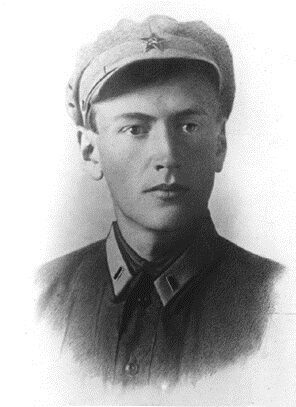
Mikhail Tikhonravov
Mikhail Tikhonravov was a Soviet spaceflight scientist. Born July 16, 1900, in Vladimir. Died March 4, 1974, in Moscow. Educated at Zhukovsky Air Force Engineering Academy. Awards include Order of the Red Banner, Order of Lenin and Hero of Socialist Labour.
Facts
23 facts · 0 confirmed by two sources · 3 cited · 18 from one source · 2 where the sources disagree
What’s different
- Born: we show July 16, 1900 (Sources disagree). Wikipedia says July 29, 1900
- Died: we show March 4, 1974 (Sources disagree). Wikipedia says March 3, 1974
Where this comes from
Papalocal keeps its own record. It started from these sources; what each one said is kept here as it was copied, so a change on their side never changes this page by itself. Tap one to read its version.
What Wikidata says · copied November 18, 2026 · revision 2568552113
- Described as
- Soviet spaceflight scientist
- Other names
- Mikhail Klavdievich Tikhonravov
- Born
- July 16, 1900
- Died
- March 4, 1974 · 1 reference
- Born in
- Vladimir · 1 reference
- Died in
- Moscow · 1 reference
- Buried in
- Novodevichy Cemetery
- Citizen of
- Russian Empire; Soviet Union
- Occupation
- engineer; military flight engineer · 1 reference; scientist
- Worked for
- Moscow Aviation Institute
- Education
- Zhukovsky Air Force Engineering Academy
- Awards
- Order of the Red Banner; Order of Lenin; Hero of Socialist Labour; Order of the Patriotic War, 2nd class; Lenin Prize; Honoured Worker of Science and Technology of the RSFSR; Medal "For the Victory over Germany in the Great Patriotic War 1941–1945" · 1 reference; Medal "For Valiant Labour in the Great Patriotic War 1941–1945" · 1 reference; International Space Hall of Fame (1976) · 2 references
- Field
- rocket science; aerospace engineering · 1 reference
- Wikipedias with a page
- 21
Wikidata item Q430359 (wikidata.org/wiki/Q430359), public domain (CC0). Copied November 18, 2026.
What Wikipedia says · copied November 18, 2026 · revision 1372653874
Mikhail Klavdievich Tikhonravov (29 July 1900 – 3 March 1974) was a Soviet engineer who was a pioneer of spacecraft design and rocketry.
Mikhail Tikhonravov was born in Vladimir, Russia. He attended the Zhukovsky Air Force Academy from 1922 to 1925, where he was exposed to Konstantin Tsiolkovsky's ideas of spaceflight. After graduation he worked in several aircraft industries and was engaged in developing gliders. From 1931 he devoted himself to rocketry. In 1932, he joined Group for the Study of Reactive Motion (GIRD), as one of the four brigade leaders. His brigade built the GIRD-09 rocket, fueled by liquid oxygen and jellied gasoline, and launched on 17 August 1933.
Tikhonravov became part of the Reactive Scientific Research Institute (RNII) when GIRD and the Gas Dynamics Laboratory (GDL) merged in 1933. From 1938 Tikhonravov researched rocket engines with liquid fuel and developed rockets for the purpose of upper atmosphere research. In the end of the 1930s, the development of rockets with liquid fuel was stopped and Tikhonravov concentrated on the development of the projectiles of the weapon system Katyusha rocket launcher.
In 1946, he became deputy chief of NII-4 in the Academy of Artillery Science and developed Project VR-190. Tikhonravov in 1948 proposed a type of multistage rocket in which the engines would work in parallel (packet) in order to achieve a greater flight range. His announcement was met with ridicule and skepticism by his scientific colleagues because at that time, it was believed that 1,000 km was the absolute limit for rocket range. In NII-4 he led a team of researchers that did important studies on packet rockets, satellite orbital motion, optimal pitch control programs for launching into orbit, reentry trajectories and heat shielding. This team designed Sputnik-3, Luna-1, Luna-3, Luna-4 and the early Venus and Mars probes. In 1956, Sergey Korolev had Tikhonravov and his team (including Mstislav Keldysh) transferred into his bureau, OKB-1.
After the launch of Sputnik-1 and a satellite with a dog on board, Tikhonravov (along with a number of other scientists) received the Lenin award (1957).
While he was not credited for much of his work, he was a lead scientist for the Sputnik 1 rocket and satellite.
He designed the first Soviet liquid-propellant rocket, he proposed the clustered-booster idea for the famous R-7 rocket, he oversaw the design of Yuri Gagarin’s Vostok rocket, and he supervised the development of the first Soviet moon probes. He also played a large role in the development of Sputnik 1.
The classically educated Tikhonravov has been credited for coining and popularizing the term cosmonaut ("space traveller"), to be distinct from the English astronaut.
Tikhonravov Crater on Mars is named after Mikhail Tikhonravov.
- Born, in its opening lines
- July 29, 1900
- Died, in its opening lines
- March 3, 1974
From the Wikipedia article “Mikhail Tikhonravov” (en.wikipedia.org/wiki/Mikhail_Tikhonravov), by its contributors, under CC BY-SA 4.0 (creativecommons.org/licenses/by-sa/4.0/). Copied November 18, 2026; not changed.
Confirmed Two sources agree. Cited One source, and it names where it got it. One source One source, without a reference of its own. Sources disagree The sources disagree. We show the best-supported value and keep theirs below.
