
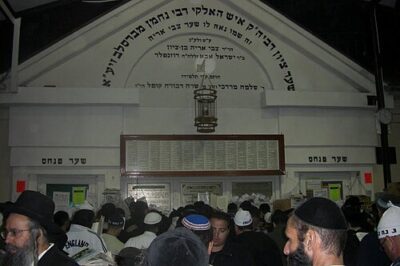
Nachman of Breslov
Nachman of Breslov was a Hasidic rabbi. Born April 4, 1772, in Medzhybizh. Died October 16, 1810, in Uman. Known for Likutei Moharan and Tikkun HaKlali.
Facts
15 facts · 2 confirmed by two sources · 2 cited · 11 from one source
Where this comes from
Papalocal keeps its own record. It started from these sources; what each one said is kept here as it was copied, so a change on their side never changes this page by itself. Tap one to read its version.
What Wikidata says · copied November 16, 2026 · revision 2567748379
- Described as
- Hasidic rabbi (1772–1810)
- Born
- April 4, 1772 · 3 references
- Died
- October 16, 1810 · 3 references
- Born in
- Medzhybizh
- Died in
- Uman · 1 reference
- Buried in
- Uman
- Cause of death
- tuberculosis
- Citizen of
- Polish–Lithuanian Commonwealth; Russian Empire
- Occupation
- rabbi; Rebbe; tzadik · 2 references
- Known for
- Likutei Moharan; Tikkun HaKlali
- Field
- rabbi
- Religion
- Judaism
- Wikipedias with a page
- 30
Wikidata item Q467182 (wikidata.org/wiki/Q467182), public domain (CC0). Copied November 16, 2026.
What Wikipedia says · copied November 16, 2026 · revision 1374678490
Nachman of Breslov (Hebrew: רַבִּי נַחְמָן מִבְּרֶסְלֶב Rabbī Naḥmān mīBreslev), also known as Rabbi Nachman of Breslev, Rabbi Nachman miBreslev, Reb Nachman of Bratslav, Reb Nachman Breslover (Yiddish: רבי נחמן ברעסלאווער Rebe Nakhmen Breslover), and Nachman from Uman (April 4, 1772 – October 16, 1810), was the founder of the Breslov Hasidic movement. He was particularly known for his creative parables, drawing on Eastern European folktales to infuse his teaching with deeply kabbalistic yet universally accessible remedies, pieces of advice, and parabolic stories. He emphasized finding and expressing one’s uniqueness while steering away from despair in a world he saw as becoming more and more uniform. Through Martin Buber's translation, his teaching is thought to have influenced some 20th-century writers, including Franz Kafka.
Rabbi Nachman, a great-grandson of the Baal Shem Tov, revived the Hasidic movement by combining the Kabbalah with in-depth Torah scholarship. He attracted thousands of followers during his lifetime, and his influence continues today in Breslover Hasidism and non-Hasidic movements. Rabbi Nachman's religious philosophy revolved around closeness to God, speaking to God in normal conversation "as you would with a best friend", and being happy. The concept of hitbodedut was central to his thinking.
Rabbi Nahman was born the 1st of Nisan and his day of passing (Yortzeit/Hilula) is on the 18th of Tishrei.
- Born, in its opening lines
- April 4, 1772
- Died, in its opening lines
- October 16, 1810
From the Wikipedia article “Nachman of Breslov” (en.wikipedia.org/wiki/Nachman_of_Breslov), by its contributors, under CC BY-SA 4.0 (creativecommons.org/licenses/by-sa/4.0/). Copied November 16, 2026; not changed.
Confirmed Two sources agree. Cited One source, and it names where it got it. One source One source, without a reference of its own. Sources disagree The sources disagree. We show the best-supported value and keep theirs below.
