
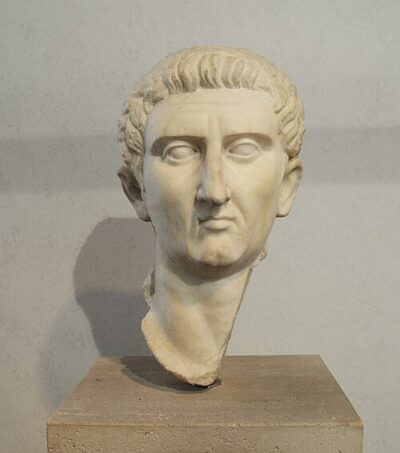
Nerva
Nerva was the 12th Roman Emperor. Born November 8, 30, in Narni. Died January 27, 98, in Gardens of Sallust. Positions held include Roman emperor (96–98), Roman consul and ancient Roman senator.
Facts
18 facts · 0 confirmed by two sources · 4 cited · 14 from one source
Where this comes from
Papalocal keeps its own record. It started from these sources; what each one said is kept here as it was copied, so a change on their side never changes this page by itself. Tap one to read its version.
What Wikidata says · copied November 16, 2026 · revision 2568841756
- Described as
- 12th Roman Emperor (96–98)
- Other names
- Marcus Cocceius Nerva
- Born
- November 8, 30
- Died
- January 27, 98 · 1 reference
- Born in
- Narni · 1 reference
- Died in
- Gardens of Sallust
- Buried in
- Mausoleum of Augustus
- Cause of death
- stroke
- Name at birth
- Marcus Cocceius Nerva
- Citizen of
- Ancient Rome
- Occupation
- politician
- Positions held
- Roman emperor (96–98) · 1 reference; Roman consul; ancient Roman senator
- Member of
- Five Good Emperors
- Children
- Trajan
- Father
- Marcus Cocceius Nerva · 1 reference
- Mother
- Octavia Sergia Plotilla
- Siblings
- Cocceia
- Religion
- ancient Roman religion
- Wikipedias with a page
- 84
Wikidata item Q1424 (wikidata.org/wiki/Q1424), public domain (CC0). Copied November 16, 2026.
What Wikipedia says · copied November 16, 2026 · revision 1375678712
Nerva (; born Marcus Cocceius Nerva; 8 November 30 – 27 January 98) was a Roman emperor from AD 96 to 98. Nerva became emperor when aged almost 66, after a lifetime of imperial service under Nero and the succeeding rulers of the Flavian dynasty.
Under Nero, he was a member of the imperial entourage and played a vital part in exposing the Pisonian conspiracy of 65. Later, as a loyalist to the Flavians, he attained consulships in 71 and 90 during the reigns of Vespasian and Domitian, respectively. After Domitian was assassinated in a palace conspiracy involving members of the Praetorian Guard and several of his freedmen on 18 September 96, Nerva was declared emperor by the Roman Senate. During his reign, he vowed to restore liberties which had been curtailed during the autocratic government of Domitian.
Nerva's brief reign was marred by financial difficulties and his inability to assert his authority over the Roman army. A revolt by the Praetorian Guard in October 97 essentially forced him to adopt an heir. After some deliberation Nerva adopted Trajan, a young and popular general, as his successor. After barely fifteen months in office, Nerva died of natural causes on 27 January 98. Upon his death he was succeeded and deified by Trajan. Although much of his life remains obscure, Nerva was considered a wise and moderate emperor by ancient historians. Nerva's greatest success was ensuring a peaceful transition of power after his death by selecting Trajan as his heir, thus founding the Nerva–Antonine dynasty. He was the first of the Five Good Emperors.
From the Wikipedia article “Nerva” (en.wikipedia.org/wiki/Nerva), by its contributors, under CC BY-SA 4.0 (creativecommons.org/licenses/by-sa/4.0/). Copied November 16, 2026; not changed.
Confirmed Two sources agree. Cited One source, and it names where it got it. One source One source, without a reference of its own. Sources disagree The sources disagree. We show the best-supported value and keep theirs below.
