
Roman emperor
Roman emperor is a ruler of the Roman Empire during the imperial period. It is an office of Ancient Rome.
- Office of
- Ancient Rome
- Country
- Ancient Rome
All 5 facts, and where they come from
Facts
5 facts · 0 confirmed by two sources · 0 cited · 5 from one source
Where this comes from
Papalocal keeps its own record. It started from these sources; what each one said is kept here as it was copied, so a change on their side never changes this page by itself. Tap one to read its version.
What Wikidata says · copied November 17, 2026 · revision 2555611787
- Described as
- ruler of the Roman Empire during the imperial period
- Other names
- Emperor of Rome, Cesar
- What it is
- position; noble title; historical position
- Country
- Ancient Rome
- Office of
- Ancient Rome
- Wikipedias with a page
- 61
Wikidata item Q842606 (wikidata.org/wiki/Q842606), public domain (CC0). Copied 2026-11-17.
What Wikipedia says · copied November 17, 2026 · revision 1382640190
The Roman emperor was the ruler of the Roman Empire, starting with the granting of the title augustus to Octavian in 27 BC. The title of imperator, originally a military honorific, was usually used alongside caesar, originally a cognomen. When a given Roman is described as becoming emperor in English, it generally reflects his accession as augustus, and later as basileus. Early emperors also used the title princeps ("first one") alongside other Republican titles, notably consul and pontifex maximus.
The legitimacy of an emperor's rule depended on his control of the Roman army and recognition by the Senate; an emperor would normally be proclaimed by his troops, by the Senate, or both. The first emperors reigned alone; later emperors would sometimes rule with co-emperors to secure the succession or to divide the administration of the empire between them. The office of emperor was thought to be distinct from that of a rex ("king"). Augustus, the first emperor, resolutely refused recognition as a monarch. For the first three hundred years of Roman emperors, efforts were made to portray the emperors as leaders of the Republic, fearing any association with the kings who ruled Rome prior to the Republic.
From Diocletian, whose reformed tetrarchy divided the position into one emperor in the West and one in the East, emperors ruled in an openly monarchic style. Although succession was generally hereditary, it was only hereditary if there was a suitable candidate acceptable to the army and the bureaucracy, so the principle of automatic inheritance was not adopted, which often led to several claimants to the throne. Despite this, elements of the republican institutional framework (Senate, consuls, and magistrates) were preserved even after the end of the Western Empire.
Constantine the Great, the first Christian emperor, moved the capital from Rome to Constantinople, formerly known as Byzantium, in 330 AD. Roman emperors had always held high religious offices, and some early emperors were even worshiped as gods, at least following their death when they were said to have become divine. Under Constantine, there arose the specifically Christian idea that the emperor was God's chosen ruler on earth, a special protector and leader of the Christian Church, a position later termed Caesaropapism. In practice, an emperor's authority on Church matters was frequently subject to challenge. In the later period, although theoretically one empire, there were two emperors, one in the east and one in the west. The Western Roman Empire collapsed in the late 5th century after multiple invasions by Germanic barbarian tribes, with no recognized claimant to Emperor of the West remaining after the death of Julius Nepos in 480. Instead, the Eastern emperor Zeno proclaimed himself as the sole emperor of a theoretically undivided Roman Empire (although in practice he had no authority in the West). The subsequent Eastern emperors ruling from Constantinople styled themselves as "Basileus of the Romans" (Ancient Greek: βασιλεύς Ῥωμαίων, Basileus Romaíon) but are often referred to in modern scholarship as Byzantine emperors.
The papacy and Christianised Germanic kingdoms of the West acknowledged the Eastern emperors until the accession of Empress Irene in 797. After this, the papacy created a rival lineage of Roman emperors in western Europe, the Holy Roman Emperors, which ruled the Holy Roman Empire for most of the period between 800 and 1806. These emperors were never recognized in Constantinople and their coronations resulted in the medieval problem of two emperors. The last Eastern emperor was Constantine XI Palaiologos, who died during the Fall of Constantinople to the Ottoman Empire in 1453. After conquering the city, Ottoman sultans adopted the title "Caesar of the Romans" (kayser-i Rûm). A Byzantine group of claimant emperors existed in the Empire of Trebizond until its conquest by the Ottomans in 1461, although they have used a modified title since 1282.
From the Wikipedia article “Roman emperor” (en.wikipedia.org/wiki/Roman_emperor), by its contributors, under CC BY-SA 4.0 (creativecommons.org/licenses/by-sa/4.0/). Copied 2026-11-17; not changed.
Confirmed Two sources agree. Cited One source, and it names where it got it. One source One source, without a reference of its own. Sources disagree The sources disagree. We show the best-supported value and keep theirs below.
People connected 82
Held this office 82
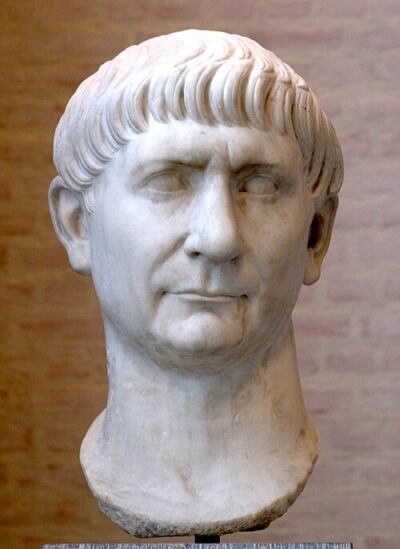 Trajan (98–117)13th Roman Emperor (98–117)
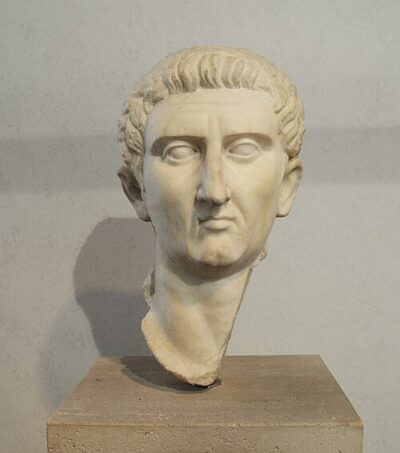 Nerva (96–98)12th Roman Emperor (96–98)
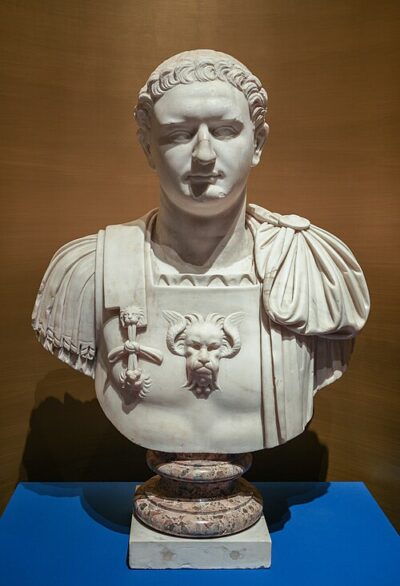 Domitian (81–96)11th Roman Emperor (81–96)
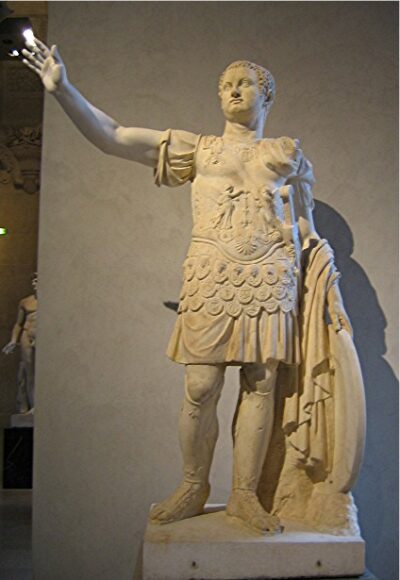 Titus (79–81)tenth Roman Emperor (79–81)
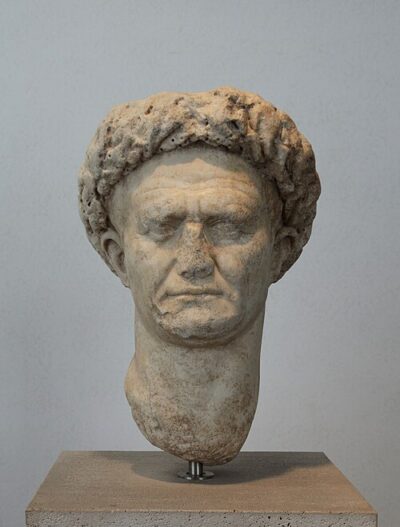 Vespasian (69–79)ninth Roman Emperor and founder of the Flavian dynasty (69–79)
 Otho (69)seventh Roman Emperor (69)
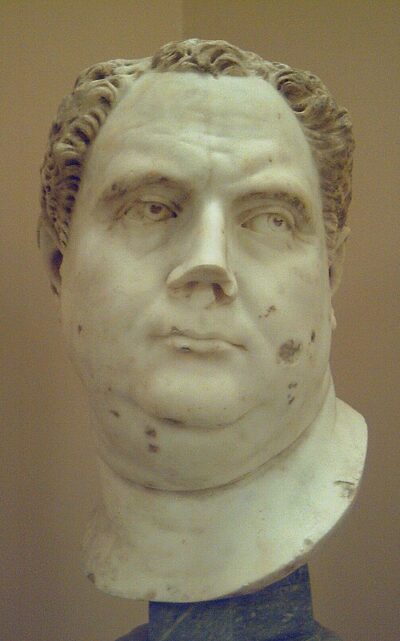 Vitellius (69)eighth Roman Emperor (69)
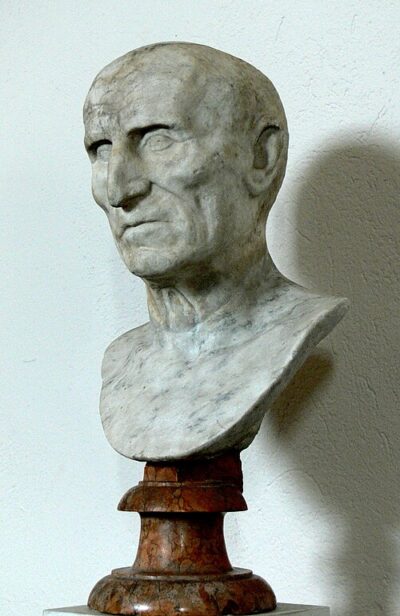 Galba (68–69)sixth Roman Emperor (68–69)
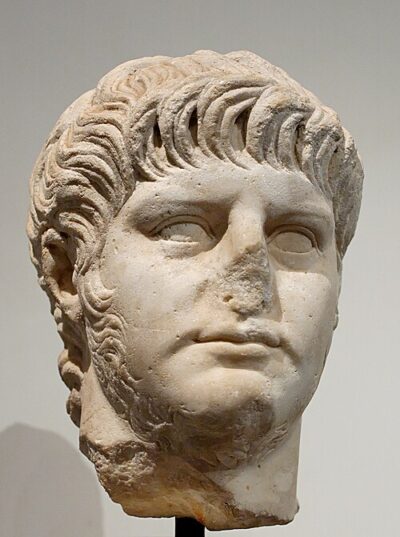 Nero (54–68)fifth and last Roman Emperor of Julio-Claudian dynasty (54–68)
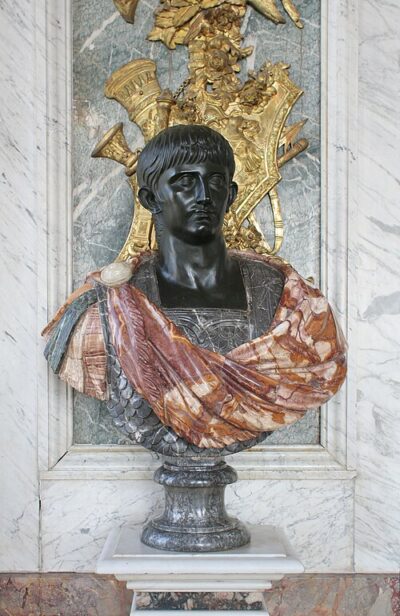 Claudius (41–54)fourth Roman emperor (41–54)
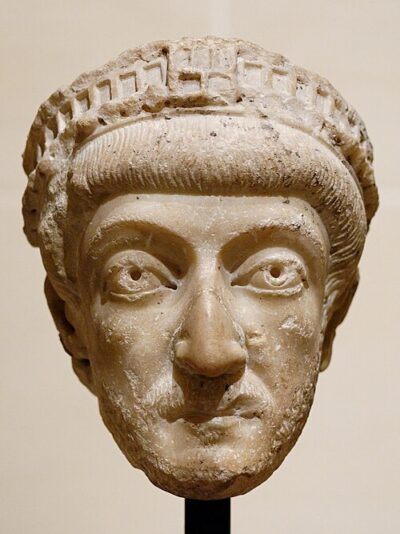 Theodosius II (402–450)Byzantine Emperor (401–450)
 Flavius Victor (384–388)emperor of the Western Roman Empire
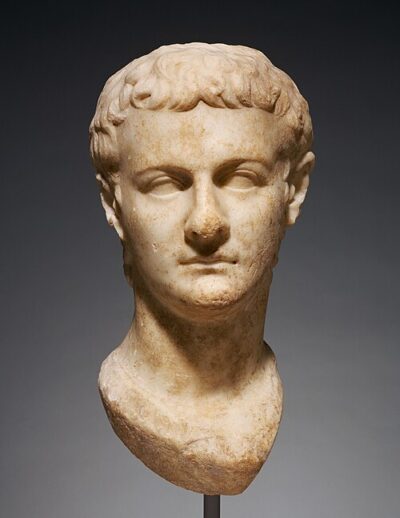 Caligula (37–41)third Roman emperor (37–41)
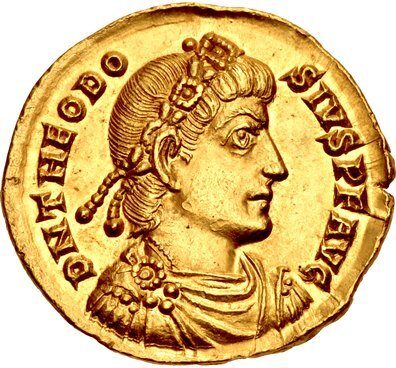 Theodosius I (379–395)Roman emperor from 379 to 395
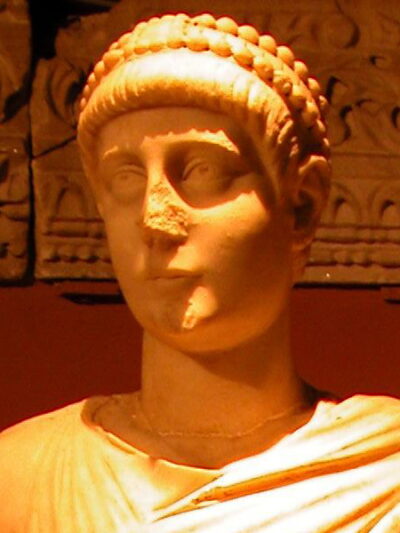 Valentinian II (375–392)Roman emperor from 375 to 392
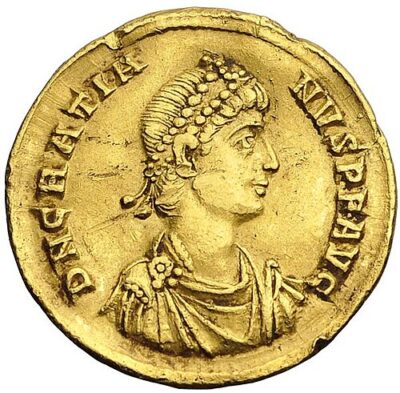 Gratian (367–383)Roman emperor from 367 to 383
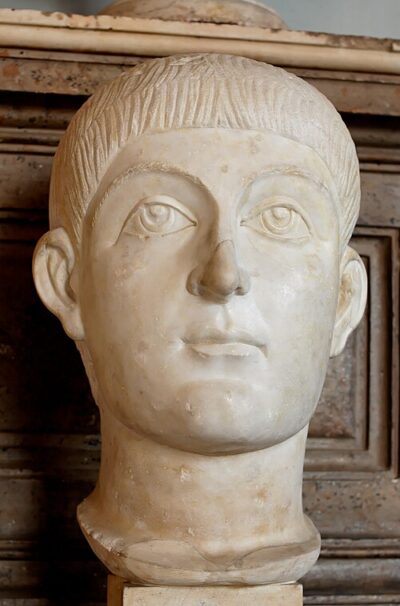 Valens (364–378)Roman emperor from 364 to 378
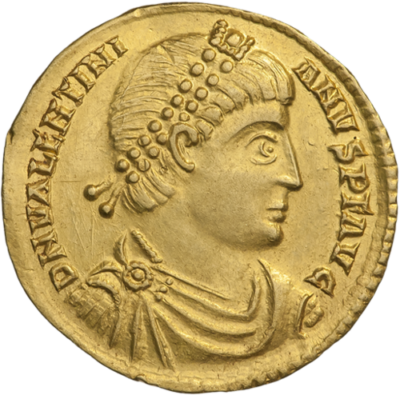 Valentinian I (364–375)Roman emperor from 364 to 375
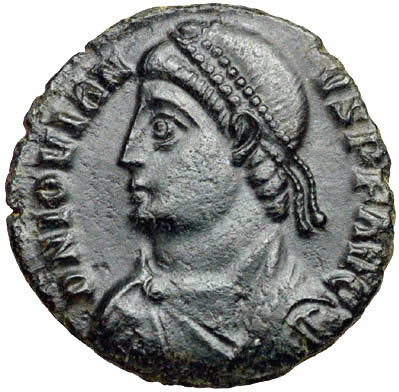 Jovian (363–364)Roman emperor from 363 to 364
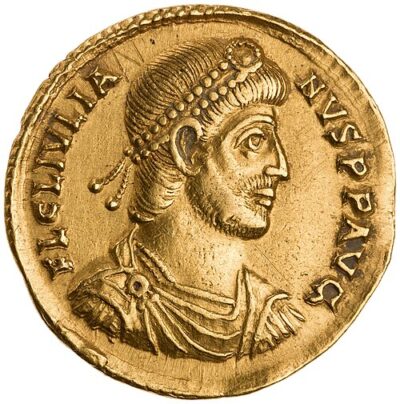 Julian (360–363)last Pagan Roman emperor, reigned 361 to 363
 Vetranio (350)Roman emperor
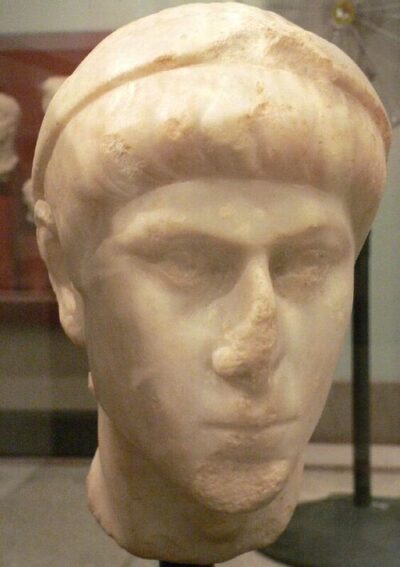 Constantius II (337–361)Roman emperor (317-361)
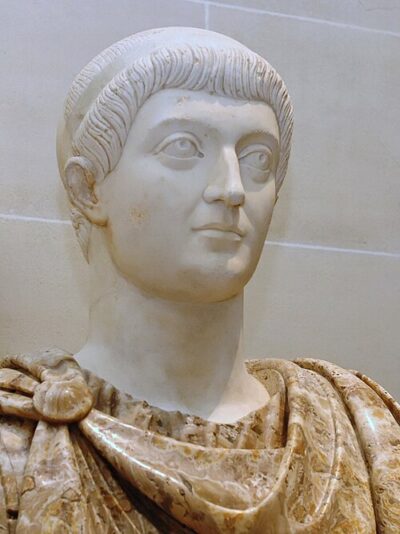 Constans (337–350)Roman emperor from 337 to 350
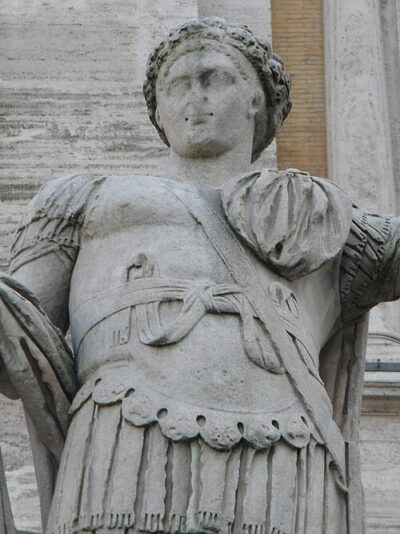 Constantine II (337–340)Roman emperor (316-340)
and 58 more
