
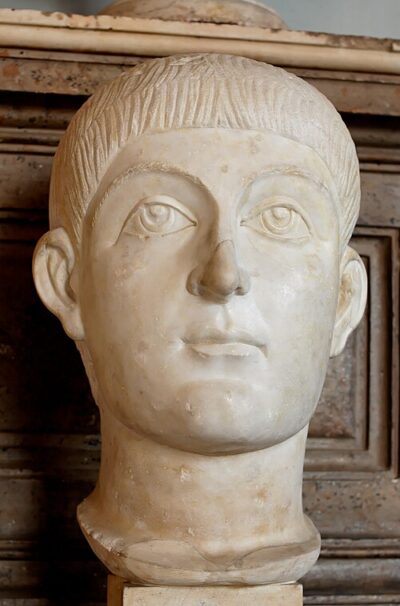
Valens
Valens was a Roman emperor from 364 to 378. Born 328, in Vinkovci. Died August 9, 378, in Edirne. Positions held include Roman emperor (364–378), ancient Roman senator and Byzantine emperor (364–378).
Facts
21 facts · 2 confirmed by two sources · 0 cited · 19 from one source
Where this comes from
Papalocal keeps its own record. It started from these sources; what each one said is kept here as it was copied, so a change on their side never changes this page by itself. Tap one to read its version.
What Wikidata says · copied November 16, 2026 · revision 2568003988
- Described as
- Roman emperor from 364 to 378
- Other names
- Flavius Valens, Valens II
- Born
- 328 · 1 reference
- Died
- August 9, 378 · 1 reference
- Born in
- Vinkovci
- Died in
- Edirne
- Cause of death
- Battle of Adrianople · 1 reference
- Citizen of
- Ancient Rome
- Occupation
- politician; military officer
- Positions held
- Roman emperor (364–378); ancient Roman senator; Byzantine emperor (364–378); Count of the Stable (364–); pontifex maximus (364–378); imperator (364–378); tribune of the plebs (364–378); Roman consul (6 times) (365–378)
- Spouse
- Dominica
- Children
- Valentinianus Galates; Anastasia
- Father
- Gratianus Funarius
- Siblings
- Valentinian I · 1 reference
- Wikipedias with a page
- 71
Wikidata item Q172471 (wikidata.org/wiki/Q172471), public domain (CC0). Copied November 16, 2026.
What Wikipedia says · copied November 16, 2026 · revision 1384901600
Valens (; Latin: Valens; 328 – 9 August 378) was Roman emperor from 364 to 378. Following a largely unremarkable military career, he was named co-emperor by his elder brother Valentinian I, who gave him the eastern half of the Roman Empire to rule. In 378, Valens was defeated and killed at the Battle of Adrianople against the invading Goths, which astonished contemporaries and marked the beginning of barbarian encroachment into Roman territory.
As emperor, Valens continually faced threats both internal and external. He defeated, after some dithering, the usurper Procopius in 366, and campaigned against the Goths across the Danube in 367 and 369. In the following years, Valens focused on the eastern frontier, where he faced the perennial threat of Persia, particularly in Armenia, as well as additional conflicts with the Saracens and Isaurians. Domestically, he inaugurated the Aqueduct of Valens in Constantinople, which was longer than all the aqueducts of Rome. In 376–77, the Gothic War broke out, following a mismanaged attempt to settle the Goths in the Balkans. Valens returned from the east to fight the Goths in person, but lack of coordination with his nephew, the western emperor Gratian (Valentinian I's son), as well as poor battle tactics, led to Valens and much of the eastern Roman army dying in a battle near Adrianople in 378.
A capable administrator who significantly relieved the burden of taxation on the population, Valens is also described as indecisive, impressionable, a mediocre general and overall "utterly undistinguished". His suspicious and fearful disposition resulted in numerous treason trials and executions which heavily stained his reputation. In religious matters, Valens favored a compromise between Nicene Christianity and the various non-trinitarian Christian sects, and interfered little in the affairs of the pagans.
- Born, in its opening lines
- 328
- Died, in its opening lines
- August 9, 378
From the Wikipedia article “Valens” (en.wikipedia.org/wiki/Valens), by its contributors, under CC BY-SA 4.0 (creativecommons.org/licenses/by-sa/4.0/). Copied November 16, 2026; not changed.
Confirmed Two sources agree. Cited One source, and it names where it got it. One source One source, without a reference of its own. Sources disagree The sources disagree. We show the best-supported value and keep theirs below.
