
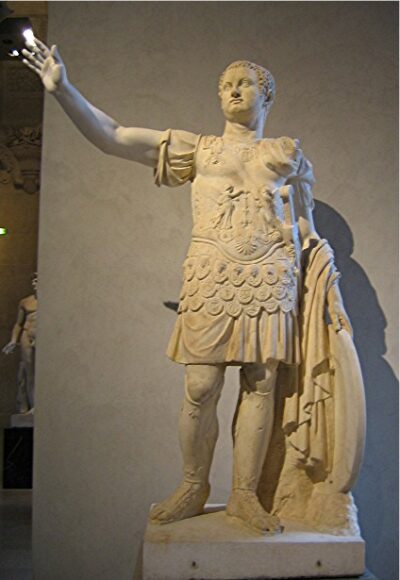
Titus
Titus was a tenth Roman Emperor. Born December 30, 39, in Rome. Died September 13, 81, in Aquae Cutiliae. Positions held include Roman emperor (79–81), ancient Roman senator and Praetorian prefect.
Facts
21 facts · 0 confirmed by two sources · 7 cited · 14 from one source
Where this comes from
Papalocal keeps its own record. It started from these sources; what each one said is kept here as it was copied, so a change on their side never changes this page by itself. Tap one to read its version.
What Wikidata says · copied November 16, 2026 · revision 2568846313
- Described as
- tenth Roman Emperor (79–81)
- Other names
- Titus Caesar Vespasianus, Titus Flavius Vespasianus, Titus Vespasianus Augustus, Titus Flavius Sabinus Vespasianus, Flavius Vespasianus Titus
- Born
- December 30, 39 · 3 references
- Died
- September 13, 81 · 5 references
- Born in
- Rome · 2 references
- Died in
- Aquae Cutiliae
- Buried in
- Mausoleum of Augustus
- Citizen of
- Ancient Rome
- Occupation
- politician; military personnel
- Positions held
- Roman emperor (79–81); ancient Roman senator; Praetorian prefect; Roman consul
- Spouse
- Arrecina Tertulla (62–63) · 1 reference; Marcia Furnilla (63–65) · 1 reference
- Children
- Julia Flavia · 1 reference; Flavia
- Father
- Vespasian · 2 references
- Mother
- Domitilla the Elder · 2 references
- Siblings
- Domitian · 1 reference; Domitilla the Younger · 1 reference
- Religion
- ancient Roman religion
- Wikipedias with a page
- 103
Wikidata item Q1421 (wikidata.org/wiki/Q1421), public domain (CC0). Copied November 16, 2026.
What Wikipedia says · copied November 16, 2026 · revision 1382447039
Titus Flavius Vespasianus ( ; 30 December AD 39 – 13 September 81) was Roman emperor from AD 79 to 81. A member of the Flavian dynasty, Titus succeeded his father, Vespasian, upon his death, becoming the first Roman emperor to succeed his biological father.
Before becoming emperor, Titus gained renown as a military commander, serving under his father in Judaea during the First Jewish–Roman War. The campaign came to a brief halt with the death of emperor Nero in AD 68, launching Vespasian's bid for the throne during the Year of the Four Emperors. When Vespasian was declared Emperor on 1 July 69, Titus was left in charge of ending the Jewish rebellion. In AD 70, he besieged and captured Jerusalem, during which he destroyed the city and the Second Temple. For this, he was awarded a triumph; the Arch of Titus—still standing today—was later erected to commemorate the victory.
During his father's rule, Titus gained notoriety in Rome serving as prefect of the Praetorian Guard and for carrying on a controversial relationship with the Jewish queen Berenice. He ruled to great acclaim following the death of Vespasian on 23 June 79 and was considered a good emperor by Suetonius and other contemporary historians.
As emperor, Titus is best known for completing the Colosseum and for his generosity in relieving the suffering caused by two disasters, the eruption of Mount Vesuvius in AD 79 and a fire in Rome in AD 80. After barely two years in office, Titus died of a fever on 13 September 81. He was deified by the Roman Senate and succeeded by his younger brother Domitian.
From the Wikipedia article “Titus” (en.wikipedia.org/wiki/Titus), by its contributors, under CC BY-SA 4.0 (creativecommons.org/licenses/by-sa/4.0/). Copied November 16, 2026; not changed.
Confirmed Two sources agree. Cited One source, and it names where it got it. One source One source, without a reference of its own. Sources disagree The sources disagree. We show the best-supported value and keep theirs below.
