
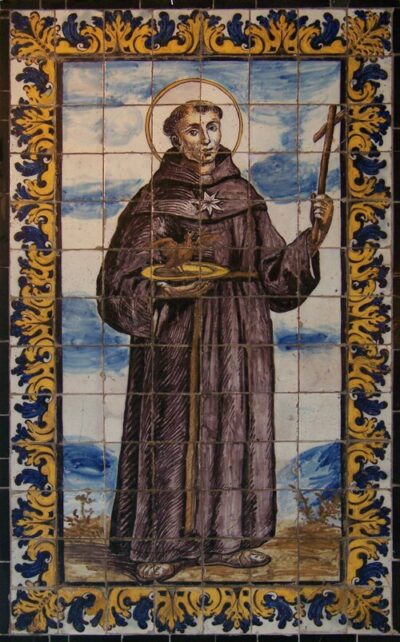
Nicholas of Tolentino
Nicholas of Tolentino was an Italian saint and mystic. Born 1245, in Sant'Angelo in Pontano. Died September 10, 1305, in Tolentino.
Facts
8 facts · 1 confirmed by two sources · 1 cited · 5 from one source · 1 where the sources disagree
What’s different
- Born: we show 1245 (Sources disagree). Wikipedia says c. 1246
Where this comes from
Papalocal keeps its own record. It started from these sources; what each one said is kept here as it was copied, so a change on their side never changes this page by itself. Tap one to read its version.
What Wikidata says · copied November 18, 2026 · revision 2569565099
- Described as
- Italian saint and mystic (1245–1305)
- Other names
- Nicholas Of Tolentine
- Born
- 1245 · 1 reference
- Died
- September 10, 1305 · 1 reference
- Born in
- Sant'Angelo in Pontano
- Died in
- Tolentino
- Occupation
- presbyter; friar; monk · 1 reference
- Religion
- Catholic Church
- Wikipedias with a page
- 21
Wikidata item Q470855 (wikidata.org/wiki/Q470855), public domain (CC0). Copied November 18, 2026.
What Wikipedia says · copied November 18, 2026 · revision 1374273254
Nicholas of Tolentino, OSA (Latin: S. Nicolaus de Tolentino, c. 1246 – September 10, 1305) known as the "Patron of Holy Souls", was an Italian Catholic mystic who is invoked as an advocate for the souls in Purgatory, especially during Lent and the month of November. He was a member of the Augustinians, whose churches today, together with those of the Discalced Augustinians, hold weekly devotions to St. Nicholas on behalf of the suffering souls. November 2, All Souls' Day, holds special significance for the devotees of St. Nicholas. He was canonized in 1446.
- Born, in its opening lines
- c. 1246
- Died, in its opening lines
- September 10, 1305
From the Wikipedia article “Nicholas of Tolentino” (en.wikipedia.org/wiki/Nicholas_of_Tolentino), by its contributors, under CC BY-SA 4.0 (creativecommons.org/licenses/by-sa/4.0/). Copied November 18, 2026; not changed.
Confirmed Two sources agree. Cited One source, and it names where it got it. One source One source, without a reference of its own. Sources disagree The sources disagree. We show the best-supported value and keep theirs below.
