
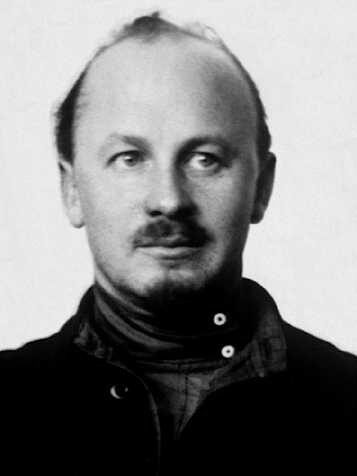
Nikolai Bukharin
Nikolai Bukharin was a Russian revolutionary and politician. Born October 9, 1888, in Moscow. Died March 15, 1938, in Kommunarka shooting ground. Positions held include Member of the Russian Constituent Assembly, Member of the Politburo of the CPSU Central Committee (1924–1929) and Candidate member of the Politburo of the CPSU Central Committee (1919–1924). Educated at First Moscow gymnasium and Moscow Imperial University, Faculty of Law.
Facts
28 facts · 2 confirmed by two sources · 12 cited · 14 from one source
Where this comes from
Papalocal keeps its own record. It started from these sources; what each one said is kept here as it was copied, so a change on their side never changes this page by itself. Tap one to read its version.
What Wikidata says · copied November 16, 2026 · revision 2567936362
- Described as
- Russian revolutionary and politician (1888–1938)
- Other names
- Nikolay Ivanovich Bukharin, Nikolai Ivanovich Bukharin, Nikolay Bukharin, Николай Иванович Бухарин, Bukharin
- Born
- October 9, 1888 · 2 references
- Died
- March 15, 1938 · 6 references
- Born in
- Moscow · 2 references
- Died in
- Kommunarka shooting ground · 1 reference
- Buried in
- Kommunarka shooting ground
- Cause of death
- gunshot wound
- Citizen of
- Russian Empire; Soviet Union
- Occupation
- politician · 2 references; economist · 2 references; philosopher; journalist; writer · 1 reference; editing staff · 2 references
- Positions held
- Member of the Russian Constituent Assembly; Member of the Politburo of the CPSU Central Committee (1924–1929); Candidate member of the Politburo of the CPSU Central Committee (1919–1924)
- Political party
- Communist Party of the Soviet Union (1906–1937) · 1 reference; Russian Social Democratic Labour Party
- Worked for
- Pravda (1917–1929) · 1 reference; Kommunist (1924–1929) · 1 reference; S.I. Vavilov Institute for the History of Natural Science and Technology · 1 reference
- Education
- First Moscow gymnasium (–1906) · 1 reference; Moscow Imperial University, Faculty of Law (1906–1911) · 1 reference
- Member of
- Academy of Sciences of the USSR (1929–) · 1 reference; All-Union Society of Old Bolsheviks
- Spouse
- Anna Larina
- Religion
- atheism
- Wikipedias with a page
- 77
Wikidata item Q186709 (wikidata.org/wiki/Q186709), public domain (CC0). Copied November 16, 2026.
What Wikipedia says · copied November 16, 2026 · revision 1384417207
Nikolai Ivanovich Bukharin (; Russian: Николай Иванович Бухарин, IPA: [nʲɪkɐˈlaj ɪˈvanəvʲɪdʑ bʊˈxarʲɪn]; 9 October [O.S. 27 September] 1888 – 15 March 1938) was a Russian revolutionary, Soviet politician, and Marxist theorist. A prominent Bolshevik described by Vladimir Lenin as a "most valuable and major theorist" of the Communist Party, Bukharin was active in the Soviet government from 1917 until his purge in 1937. His political and economic system of thought is known as Bukharinism.
Bukharin joined the Russian Social Democratic Labour Party in 1906, and studied economics at Moscow Imperial University. In 1910, he was arrested and internally exiled to Onega, but the following year he escaped abroad, where he met Lenin and Leon Trotsky and built his reputation with works such as Imperialism and World Economy (1915). After the February Revolution of 1917, Bukharin returned to Moscow and became a leading figure in the party, and after the October Revolution became editor of its newspaper, Pravda. He led the Left Communist faction in 1918, and during the civil war wrote The ABC of Communism (1920; with Yevgeni Preobrazhensky) and Historical Materialism: A System of Sociology (1921), among other works.
Bukharin was initially a proponent of war communism, but in 1921 supported the introduction of the New Economic Policy (NEP) and became its chief theorist and advocate, supporting the party leadership against Trotsky and the Left Opposition. By late 1924, this stance had positioned Bukharin favourably as Joseph Stalin's chief ally, with Bukharin soon elaborating Stalin's theory of "socialism in one country". From 1926 to 1929, Bukharin served as General Secretary of the Comintern's executive committee. Following Stalin's decision to proceed with agricultural collectivisation in the Great Break, Bukharin was labelled as the leader of the Right Opposition and was removed from Pravda, the Comintern, and the party leadership in 1929.
After a period in lower positions, in 1934 Bukharin was reelected to the Central Committee and became editor of the newspaper Izvestia. He was a principal architect of the 1936 Soviet Constitution. During the Great Purge, Bukharin was accused of treason in February 1937 and executed after a show trial in 1938.
- Born, in its opening lines
- October 9, 1888
- Died, in its opening lines
- March 15, 1938
From the Wikipedia article “Nikolai Bukharin” (en.wikipedia.org/wiki/Nikolai_Bukharin), by its contributors, under CC BY-SA 4.0 (creativecommons.org/licenses/by-sa/4.0/). Copied November 16, 2026; not changed.
Confirmed Two sources agree. Cited One source, and it names where it got it. One source One source, without a reference of its own. Sources disagree The sources disagree. We show the best-supported value and keep theirs below.
