
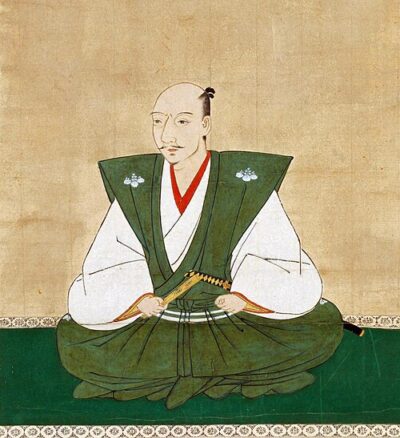
Oda Nobunaga
Oda Nobunaga was a Japanese samurai and warlord. Born June 23, 1534, in Shobata Castle. Died June 21, 1582, in former site of Honnō-ji. Positions held include Udaijin (1577–1578) and Konoe Daisho (1575–1578).
Facts
48 facts · 2 confirmed by two sources · 3 cited · 42 from one source · 1 where the sources disagree
What’s different
- Buried in: we show Honnō-ji Temple (Sources disagree). Wikidata also lists Sōken-in and Amida-ji Temple
Where this comes from
Papalocal keeps its own record. It started from these sources; what each one said is kept here as it was copied, so a change on their side never changes this page by itself. Tap one to read its version.
What Wikidata says · copied November 16, 2026 · revision 2569001017
- Described as
- Japanese samurai and warlord (1534–1582)
- Born
- June 23, 1534 · 1 reference
- Died
- June 21, 1582 · 2 references
- Born in
- Shobata Castle
- Died in
- former site of Honnō-ji
- Buried in
- Honnō-ji Temple; Sōken-in; Amida-ji Temple
- Cause of death
- seppuku
- Name at birth
- 吉法師
- Citizen of
- Japan
- Occupation
- daimyo; military leader · 1 reference
- Positions held
- Udaijin (1577–1578); Konoe Daisho (1575–1578)
- Field
- military art · 1 reference; war · 1 reference; ruler
- Spouse
- Nō-hime; Kitsuno; Harada Naoko; Kōun-in; Yokan-in; Hijikata (Concubine of Oda Nobunaga)
- Children
- Oda Nobutada; Oda Nobukatsu; Oda Nobutaka; Hashiba Hidekatsu; Oda Katsunaga; Toku-hime; Fuyu-hime; Tsuru-hime; Oda Nobutaka · 1 reference; Ofuri · 1 reference; Oda Nobuyoshi; Ei-hime
- Father
- Oda Nobuhide
- Mother
- Dota Gozen
- Siblings
- Oichi; Oinu no Kata; Oda Nobuhiro; Oda Nobuyuki; Oda Nobukane; Oda Nagamasu; Oda Shinji; Oda Nobutoki; Oda Hidetaka; Oda Nobuteru
- Religion
- Shinto; Nichiren Buddhism
- Military rank
- daimyo
- Wikipedias with a page
- 81
Wikidata item Q171411 (wikidata.org/wiki/Q171411), public domain (CC0). Copied November 16, 2026.
What Wikipedia says · copied November 16, 2026 · revision 1384707129
Oda Nobunaga (織田 信長; 23 June 1534 – 21 June 1582) was a Japanese samurai and daimyō and one of the leading figures of the Sengoku and Azuchi-Momoyama periods. He was the Tenka-bito (天下人; lit. 'person under heaven') and regarded as the first "Great Unifier" of Japan. He is sometimes referred as the "Demon Daimyō" and "Demon King of the Sixth Heaven".
Nobunaga was an influential figure in Japanese history and is regarded as one of the three great unifiers of Japan, along with his retainers, Toyotomi Hideyoshi and Tokugawa Ieyasu. Nobunaga paved the way for the successful reigns of Hideyoshi and Ieyasu by consolidating power, as head of the very powerful Oda clan, through a series of wars against other daimyō beginning in the 1560s. The period when Nobunaga and Hideyoshi were in power is called the Azuchi–Momoyama period. The name "Azuchi–Momoyama" comes from the fact that Nobunaga's castle, Azuchi Castle, was located in Azuchi, Shiga; while Fushimi Castle, where Hideyoshi lived after his retirement, was located in Momoyama.
Nobunaga emerged as the most powerful daimyō, overthrowing the nominally ruling shogun Ashikaga Yoshiaki and dissolving the Ashikaga Shogunate in 1573. He conquered most of Honshu by 1580, and defeated the Ikkō-ikki in the 1580s. Nobunaga's rule was noted for innovative military tactics, fostering of free trade, reforms of Japan's civil government, and the start of the Momoyama historical art period, but also for the brutal suppression of those who refused to cooperate or yield to his demands.
Nobunaga committed seppuku during the Honnō-ji Incident in 1582, when his retainer Akechi Mitsuhide ambushed and trapped him in a temple in Kyoto. Nobunaga was succeeded by Toyotomi Hideyoshi, who defeated Akechi Mitsuhide in the Battle of Yamazaki and completed Nobunaga's campaign of national unification along with Tokugawa Ieyasu shortly afterward.
- Born, in its opening lines
- June 23, 1534
- Died, in its opening lines
- June 21, 1582
From the Wikipedia article “Oda Nobunaga” (en.wikipedia.org/wiki/Oda_Nobunaga), by its contributors, under CC BY-SA 4.0 (creativecommons.org/licenses/by-sa/4.0/). Copied November 16, 2026; not changed.
Confirmed Two sources agree. Cited One source, and it names where it got it. One source One source, without a reference of its own. Sources disagree The sources disagree. We show the best-supported value and keep theirs below.
