
Udaijin
Udaijin is a government position in pre-modern Japanese imperial court.
- Country
- Japan
All 3 facts, and where they come from
Facts
3 facts · 0 confirmed by two sources · 0 cited · 3 from one source
Where this comes from
Papalocal keeps its own record. It started from these sources; what each one said is kept here as it was copied, so a change on their side never changes this page by itself. Tap one to read its version.
What Wikidata says · copied November 17, 2026 · revision 2475031698
- Described as
- government position in pre-modern Japanese imperial court
- Other names
- Minister of the Right
- What it is
- East Asian government position
- Country
- Japan
- Named after
- right
- Wikipedias with a page
- 21
Wikidata item Q1351174 (wikidata.org/wiki/Q1351174), public domain (CC0). Copied 2026-11-17.
What Wikipedia says · copied November 17, 2026 · revision 1345196546
Minister of the Right (右大臣, Udaijin) was a government position in Japan during the Asuka to Meiji era. The position was consolidated in the Taihō Code of 701. The Asuka Kiyomihara Code of 689 marks the initial appearance of the Udaijin in the context of a central administrative body called the Daijō-kan (Council of State). This early Daijō-kan was composed of the three ministers—the Daijō-daijin (Chancellor), the Sadaijin (Minister of the Left) and the Udaijin. The Udaijin was the Junior Minister of State, overseeing all branches of the Daijō-kan. He would be the deputy of the Sadaijin.
From the Kamakura period (1185–1333), when the warrior class came to power in Japan, this imperial court position became an honorary position with no real authority. Oda Nobunaga, who was a powerful daimyo in the Azuchi–Momoyama period, was a daimyo who held this imperial court position. This was the first time since Minamoto no Sanetomo in 1218 that a member of the warrior class had been appointed Udaijin. Previously, the only warrior class members appointed to higher positions than Udaijin were Taira no Kiyomori and Ashikaga Yoshimitsu as Daijō-daijin, and Ashikaga Yoshinori and Ashikaga Yoshimasa as Sadaijin. The warrior class was able to use the high imperial court positions of Daijō-daijin, Sadaijin, and Udaijin, which had originally belonged to the nobility, as a means of establishing their own authority.
From the Wikipedia article “Minister of the Right” (en.wikipedia.org/wiki/Minister_of_the_Right), by its contributors, under CC BY-SA 4.0 (creativecommons.org/licenses/by-sa/4.0/). Copied 2026-11-17; not changed.
Confirmed Two sources agree. Cited One source, and it names where it got it. One source One source, without a reference of its own. Sources disagree The sources disagree. We show the best-supported value and keep theirs below.
People connected 14
Held this office
 Sugawara no Michizane (899–)Japanese poet
 Toyotomi Hideyori (1605–1607)Japanese samurai (1593-1615)
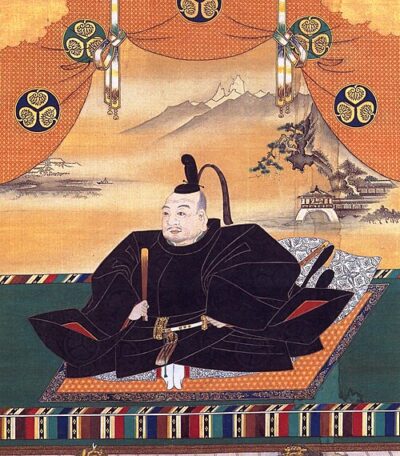 Tokugawa Ieyasu (1603)founder and first shogun of the Tokugawa shogunate of Japan (1543–1616)
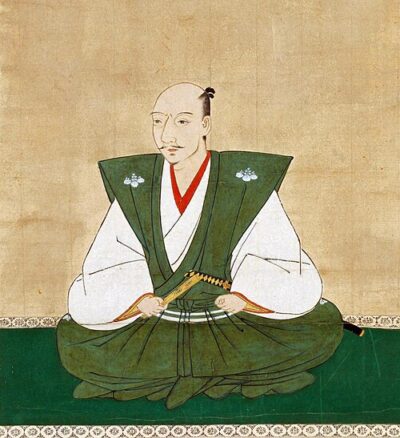 Oda Nobunaga (1577–1578)Japanese samurai and warlord (1534–1582)
 Tokugawa YoshimuneThe eighth shogun of the Tokugawa shogunate of Japan (1684-1751)
 Tokugawa HidetadaThe second shogun of the Tokugawa shogunate of Japan (1579–1632)
 Tokugawa IemochiJapanese shogun (1846–1866)
 Tokugawa TsunayoshiThe fifth shogun of the Tokugawa shogunate of Japan (1646-1709)
 Sanjō SanetomiJapanese politician (1837-1891)
 Tokugawa IeharuJapanese shogun
 Tokugawa IeshigeTokugawa shogun (1712-1761)
 Tokugawa IenariJapanese shogun
 Tokugawa IetsunaTokugawa shogun (1641-1680)
 Iwakura TomomiJapanese politician (1825-1883)
