
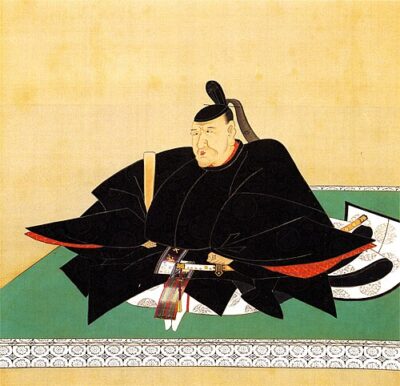
Tokugawa Ieshige
Tokugawa Ieshige was a Tokugawa shogun. Born January 28, 1712, in Akasaka. Died July 13, 1761. Positions held include Konoe Daisho, Naidaijin and shogun (1745–1760).
Facts
22 facts · 2 confirmed by two sources · 0 cited · 20 from one source
Where this comes from
Papalocal keeps its own record. It started from these sources; what each one said is kept here as it was copied, so a change on their side never changes this page by itself. Tap one to read its version.
What Wikidata says · copied November 16, 2026 · revision 2562777242
- Described as
- Tokugawa shogun (1712-1761)
- Born
- January 28, 1712
- Died
- July 13, 1761
- Born in
- Akasaka
- Buried in
- Zōjō-ji Temple
- Citizen of
- Japan; Tokugawa shogunate
- Occupation
- samurai
- Positions held
- Konoe Daisho; Naidaijin; shogun (1745–1760); Udaijin
- Spouse
- Masuko-joō; Shishin'in; Anjō-in
- Children
- Tokugawa Ieharu; Tokugawa Shigeyoshi
- Father
- Tokugawa Yoshimune
- Mother
- Shintokuin
- Siblings
- Tokugawa Munetake; Tokugawa Munetada; Tokugawa Yorimoto
- Military rank
- shogun
- Wikipedias with a page
- 30
Wikidata item Q323443 (wikidata.org/wiki/Q323443), public domain (CC0). Copied November 16, 2026.
What Wikipedia says · copied November 16, 2026 · revision 1381307688
Tokugawa Ieshige (徳川 家重; 28 January 1712 – 13 July 1761) was a Japanese samurai and daimyo, who served as the ninth shōgun of the Tokugawa shogunate of Japan.
The first son of Tokugawa Yoshimune, his mother was the daughter of Ōkubo Tadanao, known as Osuma no kata. His mother died in 1713 when he was only 2 years old, so he was raised by Yoshimune's concubine, Okon no Kata; Okon later gave birth to Tokugawa Munetake, so he was raised by another of Yoshimune's concubines, Okume no Kata, as her biological son.
His childhood name was Nagatomi-maru (長福丸). He underwent the genpuku coming-of-age ceremony in 1725. His first wife, Nami-no-miya, was the daughter of Prince Fushimi-no-miya Kuninaga (伏見宮 邦永親王). In 1733, Nami-no-Miya Masuko had a miscarriage and died. His second wife, Okō, was the daughter of one of the courtiers who had followed his first wife from the Imperial Court to the Shogunal Court in Edo. This famously good-natured second wife was the mother of Ieharu, who would become Ieshige's heir. In Enkyō 2 or 1745, Ieshige was made shogun.
Ieshige suffered from chronic ill health and a severe speech defect which rendered his speaking nearly incomprehensible. Yoshimune's choice of Ieshige as his heir created considerable controversy within the shogunate as his younger brothers Tokugawa Munetake and Tokugawa Munetada appeared to be far more suitable candidates. Yoshimune continued to insist on his decision, favoring the Confucian principle of primogeniture; and Ieshige continued in the role of formal head of the shogunate. Yoshimune directed affairs after his official retirement in 1745. This attention was designed to ensure that Ieshige was secure in his office. Ieshige remained shogun until 1760.
Uninterested in government affairs, Ieshige left all decisions in the hands of his chamberlain, Ōoka Tadamitsu (1709–1760). He officially retired in 1760 and assumed the title of Ōgosho, appointed his first son Tokugawa Ieharu as the 10th shōgun, and died the following year.
Ieshige's second son Tokugawa Shigeyoshi became the founder of the Shimizu Tokugawa clan, which together with the Tayasu and Hitotsubashi (established by Ieshige's younger brothers) became the gosankyō, three cadet branches of the Tokugawa family from which future shoguns might be selected if the main line were to die out. They joined the existing three cadet branches, the gosanke, to which Ieshige's father Yoshimune had been born.
Ieshige's reign was beset by corruption, natural disasters, periods of famine and the emergence of the mercantile class, and his clumsiness in dealing with these issues greatly weakened the rule of Tokugawa.Ieshige died in 1761. His posthumous title is Junshin-in; and his grave is at the Tokugawa family mausoleum at Zōjō-ji in Shiba. His remains were disinterred and underwent scientific investigation from 1958 to 1960. It was discovered that his teeth were crooked and badly deformed, confirming historical references to his speech defect.
- Born, in its opening lines
- January 28, 1712
- Died, in its opening lines
- July 13, 1761
From the Wikipedia article “Tokugawa Ieshige” (en.wikipedia.org/wiki/Tokugawa_Ieshige), by its contributors, under CC BY-SA 4.0 (creativecommons.org/licenses/by-sa/4.0/). Copied November 16, 2026; not changed.
Confirmed Two sources agree. Cited One source, and it names where it got it. One source One source, without a reference of its own. Sources disagree The sources disagree. We show the best-supported value and keep theirs below.
