
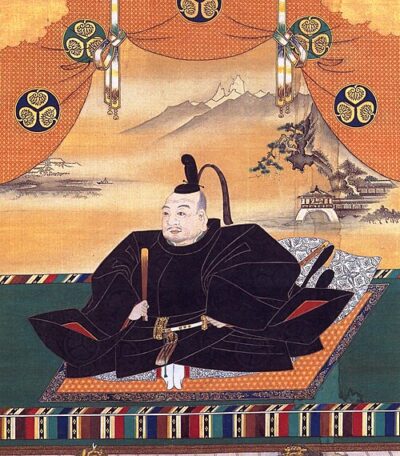
Tokugawa Ieyasu
Tokugawa Ieyasu was a founder and first shogun of the Tokugawa shogunate of Japan. Born January 31, 1543, in Okazaki Castle. Died June 1, 1616, in Sunpu Castle. Positions held include shogun (1603–1605), Daijō-daijin (1616) and Udaijin (1603).
Facts
41 facts · 2 confirmed by two sources · 1 cited · 37 from one source · 1 where the sources disagree
What’s different
- Buried in: we show Kunōzan Tōshō-gū (Sources disagree). Wikidata also lists Nikkō Tōshō-gū
Where this comes from
Papalocal keeps its own record. It started from these sources; what each one said is kept here as it was copied, so a change on their side never changes this page by itself. Tap one to read its version.
What Wikidata says · copied November 16, 2026 · revision 2562777293
- Described as
- founder and first shogun of the Tokugawa shogunate of Japan (1543–1616)
- Other names
- Matsudaira Takechiyo, Ieyasu
- Born
- January 31, 1543 · 1 reference
- Died
- June 1, 1616 · 3 references
- Born in
- Okazaki Castle · 1 reference
- Died in
- Sunpu Castle
- Buried in
- Kunōzan Tōshō-gū; Nikkō Tōshō-gū
- Cause of death
- stomach cancer
- Name at birth
- 松平竹千代
- Citizen of
- Japan; Tokugawa shogunate
- Occupation
- samurai
- Positions held
- shogun (1603–1605); Daijō-daijin (1616); Udaijin (1603); ōgosho (1605–)
- Spouse
- Tsukiyama-dono; Asahihime; Shimoyama-dono; Yōju-in; Chōshō-in; Lady Saigō
- Children
- Matsudaira Nobuyasu; Tokugawa Hidetada; Yūki Hideyasu; Matsudaira Tadayoshi; Matsudaira Tadateru; Matsudaira Matsuchiyo; Matsudaira Senchiyo; Tokugawa Yoshinao; Tokugawa Yorinobu; Tokugawa Yorifusa; Kame-hime; Toku-hime
- Father
- Matsudaira Hirotada
- Mother
- Odai no kata
- Siblings
- Takehime; Ichiba-hime; Matsudaira Yasutoshi; Matsudaira Yasumoto; Matsudaira Sadakatsu
- Military rank
- general
- Lived in
- Edo Castle · 1 reference
- Wikipedias with a page
- 85
Wikidata item Q171977 (wikidata.org/wiki/Q171977), public domain (CC0). Copied November 16, 2026.
What Wikipedia says · copied November 16, 2026 · revision 1382875742
Tokugawa Ieyasu (born Matsudaira Takechiyo; January 31, 1543 – June 1, 1616) was a Japanese samurai, daimyo and the founder and first shogun of the Tokugawa shogunate of Japan, which ruled from 1603 until the Meiji Restoration in 1868. He was the third of the three "Great Unifiers" of Japan, along with his former lord Oda Nobunaga and fellow Oda subordinate Toyotomi Hideyoshi. The son of a minor daimyo, Ieyasu once lived as a hostage under daimyo Imagawa Yoshimoto on behalf of his father. He later succeeded as daimyo after his father's death, serving as ally, vassal, and general of the Oda clan, and building up his strength under Oda Nobunaga.
After Oda Nobunaga's death, Ieyasu was briefly a rival of Toyotomi Hideyoshi, before declaring his allegiance to Toyotomi and fighting on his behalf. Under Toyotomi, Ieyasu was relocated to the Kanto plains in eastern Japan, away from the Toyotomi power base in Osaka. He built his castle in the fishing village of Edo (now Tokyo). He became the most powerful daimyo and the most senior officer under the Toyotomi regime. Ieyasu preserved his strength during Toyotomi's failed attempts to conquer Korea. After Hideyoshi's death and the Battle of Sekigahara, Ieyasu seized power in 1600.
He received appointment as shōgun in 1603, and voluntarily resigned from his position in 1605, although he still held the de facto control of government until his death in 1616. He implemented a set of careful rules known as the bakuhan system. This system used precisely graded rewards and punishments to encourage (or compel) the daimyo and samurai to live in peace with each other under the Tokugawa shogunate. Following his death, his successors shifted the government to Edo in 1638 and enacted the sakoku policy of isolationism in 1639 which closed off Japan from the outside world for over 200 years (with some exceptions) until the Meiji era began in 1868.
- Born, in its opening lines
- January 31, 1543
- Died, in its opening lines
- June 1, 1616
From the Wikipedia article “Tokugawa Ieyasu” (en.wikipedia.org/wiki/Tokugawa_Ieyasu), by its contributors, under CC BY-SA 4.0 (creativecommons.org/licenses/by-sa/4.0/). Copied November 16, 2026; not changed.
Confirmed Two sources agree. Cited One source, and it names where it got it. One source One source, without a reference of its own. Sources disagree The sources disagree. We show the best-supported value and keep theirs below.
