
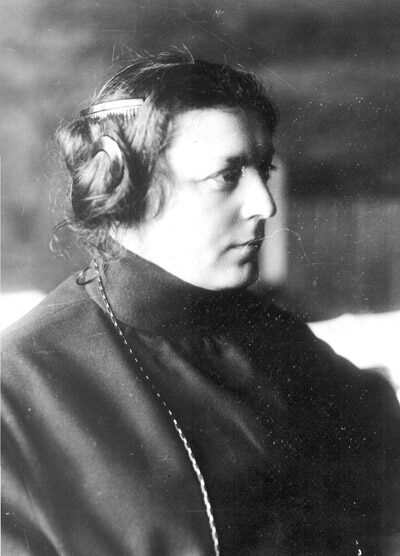
Olga Kameneva was a Russian revolutionary. Born 1883, in Bereslavka. Died September 11, 1941, in Oryol.
Facts
16 facts · 2 confirmed by two sources · 1 cited · 13 from one source
Where this comes from
Papalocal keeps its own record. It started from these sources; what each one said is kept here as it was copied, so a change on their side never changes this page by itself. Tap one to read its version.
What Wikidata says · copied November 18, 2026 · revision 2567197216
- Described as
- Russian revolutionary
- Other names
- Olga Davidovna Kameneva
- Born
- 1883 · 1 reference
- Died
- September 11, 1941 · 1 reference
- Born in
- Bereslavka · 1 reference
- Died in
- Oryol · 1 reference
- Cause of death
- gunshot wound
- Name at birth
- Ольга Давидовна Бронштейн
- Citizen of
- Russian Empire; Soviet Union
- Occupation
- salonnière
- Political party
- Russian Social Democratic Labour Party
- Member of
- Union of Soviet Societies for Friendship and Cultural Relations with Foreign Countries
- Spouse
- Lev Kamenev
- Children
- Aleksandr Kamenev
- Father
- David Bronstein
- Mother
- Anna Bronstein
- Siblings
- Leon Trotsky
- Wikipedias with a page
- 20
Wikidata item Q452517 (wikidata.org/wiki/Q452517), public domain (CC0). Copied November 18, 2026.
What Wikipedia says · copied November 18, 2026 · revision 1375446778
Olga Davidovna Kameneva (Russian: Ольга Давыдовна Каменева, Ukrainian: Ольга Давидiвна Каменева; 19 November [O.S. 7 November] 1883 – 11 September 1941) (née Bronstein — Бронште́йн) was a Russian Bolshevik revolutionary and a Soviet politician. She was the sister of Leon Trotsky and the first wife of Lev Kamenev.
- Born, in its opening lines
- November 19, 1883
- Died, in its opening lines
- September 11, 1941
From the Wikipedia article “Olga Kameneva” (en.wikipedia.org/wiki/Olga_Kameneva), by its contributors, under CC BY-SA 4.0 (creativecommons.org/licenses/by-sa/4.0/). Copied November 18, 2026; not changed.
Confirmed Two sources agree. Cited One source, and it names where it got it. One source One source, without a reference of its own. Sources disagree The sources disagree. We show the best-supported value and keep theirs below.
