
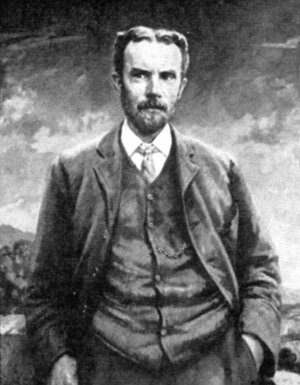
Oliver Heaviside
Oliver Heaviside was an electrical engineer, mathematician and physicist. Born May 18, 1850, in Camden Town. Died February 3, 1925, in Mount Stuart Hospital. Known for Maxwell's equations, Kennelly-Heaviside layer and Heaviside step function. Awards include Fellow of the Royal Society and Faraday Medal.
Facts
27 facts · 2 confirmed by two sources · 20 cited · 5 from one source
Where this comes from
Papalocal keeps its own record. It started from these sources; what each one said is kept here as it was copied, so a change on their side never changes this page by itself. Tap one to read its version.
What Wikidata says · copied November 16, 2026 · revision 2569256511
- Described as
- electrical engineer, mathematician and physicist (1850–1925)
- Born
- May 18, 1850 · 11 references
- Died
- February 3, 1925 · 12 references
- Born in
- Camden Town · 2 references
- Died in
- Mount Stuart Hospital · 1 reference
- Buried in
- Paignton Cemetery · 3 references
- Citizen of
- United Kingdom of Great Britain and Ireland
- Occupation
- mathematician; physicist · 1 reference; engineer; telegraphist (1868–1874) · 1 reference; electrician · 1 reference
- Worked for
- GN Store Nord (1868–1874) · 1 reference
- Member of
- Royal Society of London (1891–) · 1 reference; Maxwellians · 1 reference; American Academy of Arts and Sciences (1899–) · 1 reference
- Known for
- Maxwell's equations (1884) · 1 reference; Kennelly-Heaviside layer; Heaviside step function
- Awards
- Fellow of the Royal Society (1891) · 2 references; Faraday Medal (1922) · 1 reference
- Field
- electromagnetism · 1 reference; vector algebra · 1 reference
- Father
- Thomas Heaviside · 1 reference
- Lived in
- Newcastle upon Tyne (1867–1874) · 1 reference; Paignton (1889–1897) · 1 reference; Newton Abbot (1897–1908) · 1 reference; Torquay (1908–1925) · 1 reference
- Wikipedias with a page
- 66
Wikidata item Q154345 (wikidata.org/wiki/Q154345), public domain (CC0). Copied November 16, 2026.
What Wikipedia says · copied November 16, 2026 · revision 1383790712
Oliver Heaviside ( HEV-ee-syde; 18 May 1850 – 3 February 1925) was a British mathematician and electrical engineer who invented a new technique for solving differential equations (equivalent to the Laplace transform), independently developed vector calculus, and rewrote Maxwell's equations in the form commonly used today. He significantly shaped the way Maxwell's equations were understood and applied in the decades following Maxwell's death. Also, in 1893, he extended them to gravitoelectromagnetism, which was confirmed by Gravity Probe B in 2005. His formulation of the telegrapher's equations became commercially important during his own lifetime, after their significance went unremarked for a long while, as few others were versed at the time in his novel methodology. Although at odds with the scientific establishment for most of his life, Heaviside's work altered much of telecommunications, mathematics, and science.
- Born, in its opening lines
- May 18, 1850
- Died, in its opening lines
- February 3, 1925
From the Wikipedia article “Oliver Heaviside” (en.wikipedia.org/wiki/Oliver_Heaviside), by its contributors, under CC BY-SA 4.0 (creativecommons.org/licenses/by-sa/4.0/). Copied November 16, 2026; not changed.
Confirmed Two sources agree. Cited One source, and it names where it got it. One source One source, without a reference of its own. Sources disagree The sources disagree. We show the best-supported value and keep theirs below.
