
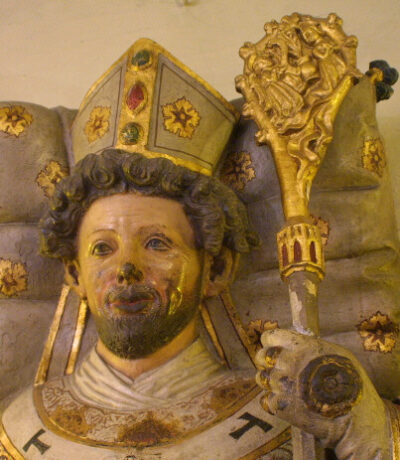
Otto of Bamberg
Otto of Bamberg was the 12th‑century German bishop and missionary, Catholic saint, mediator during the Investiture Controversy and known as the ‘Apostle of Pomerania‘. Born 1060, in Mistelbach. Died June 30, 1139, in Bamberg. Positions held include Roman Catholic Bishop of Bamberg (1102–).
Facts
15 facts · 0 confirmed by two sources · 9 cited · 6 from one source
Where this comes from
Papalocal keeps its own record. It started from these sources; what each one said is kept here as it was copied, so a change on their side never changes this page by itself. Tap one to read its version.
What Wikidata says · copied November 16, 2026 · revision 2569156652
- Described as
- 12th‑century German bishop and missionary, Catholic saint, mediator during the Investiture Controversy and known as the ‘Apostle of Pomerania‘
- Other names
- Apostle of Pomerania
- Born
- 1060 · 2 references
- Died
- June 30, 1139 · 2 references
- Born in
- Mistelbach
- Died in
- Bamberg · 1 reference
- Buried in
- Michaelsberg Abbey
- Citizen of
- Germany
- Occupation
- diplomat; Catholic priest; writer · 1 reference; Catholic bishop (1106–) · 1 reference; ecclesiastical prince · 1 reference; missionary · 1 reference; bishop · 1 reference
- Positions held
- Roman Catholic Bishop of Bamberg (1102–) · 2 references
- Religion
- Catholic Church · 1 reference
- Wikipedias with a page
- 29
Wikidata item Q77259 (wikidata.org/wiki/Q77259), public domain (CC0). Copied November 16, 2026.
What Wikipedia says · copied November 16, 2026 · revision 1364240920
Otto of Bamberg (1060 or 1061 – 30 June 1139) was a German missionary and papal legate who converted much of medieval Pomerania to Christianity. He was the bishop of Bamberg from 1102 until his death. He was canonized in 1189.
From the Wikipedia article “Otto of Bamberg” (en.wikipedia.org/wiki/Otto_of_Bamberg), by its contributors, under CC BY-SA 4.0 (creativecommons.org/licenses/by-sa/4.0/). Copied November 16, 2026; not changed.
Confirmed Two sources agree. Cited One source, and it names where it got it. One source One source, without a reference of its own. Sources disagree The sources disagree. We show the best-supported value and keep theirs below.
