
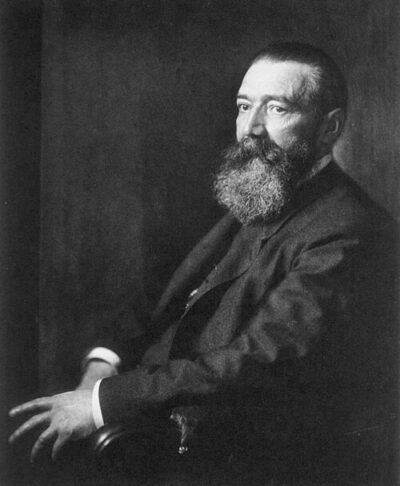
Paul Julius Möbius
Paul Julius Möbius was a German neurologist. Born January 24, 1853, in Leipzig. Died January 8, 1907, in Leipzig. Positions held include Privatdozent. Known for Über den physiologischen Schwachsinn des Weibes and Die Hoffnungslosigkeit aller Psychologie. Educated at University of Jena and Leipzig University.
Facts
21 facts · 2 confirmed by two sources · 10 cited · 9 from one source
Where this comes from
Papalocal keeps its own record. It started from these sources; what each one said is kept here as it was copied, so a change on their side never changes this page by itself. Tap one to read its version.
What Wikidata says · copied November 18, 2026 · revision 2569019607
- Described as
- German neurologist (1853-1907)
- Born
- January 24, 1853 · 8 references
- Died
- January 8, 1907 · 5 references
- Born in
- Leipzig · 1 reference
- Died in
- Leipzig · 1 reference
- Citizen of
- Kingdom of Saxony · 1 reference
- Occupation
- scientist · 1 reference; psychiatrist · 1 reference; university teacher; neurologist · 1 reference
- Positions held
- Privatdozent · 1 reference
- Worked for
- Leipzig University · 1 reference
- Education
- University of Jena · 1 reference; Leipzig University · 1 reference; University of Marburg · 2 references; Thomasschule zu Leipzig
- Known for
- Über den physiologischen Schwachsinn des Weibes; Die Hoffnungslosigkeit aller Psychologie
- Field
- neurology · 1 reference; psychiatry · 1 reference; psychotherapy · 1 reference
- Father
- Paul Möbius
- Wikipedias with a page
- 20
Wikidata item Q62402 (wikidata.org/wiki/Q62402), public domain (CC0). Copied November 18, 2026.
What Wikipedia says · copied November 18, 2026 · revision 1386381143
Paul Julius Möbius (German: [ˈmøːbi̯ʊs]; 24 January 1853 – 8 January 1907) was a German neurologist born in Leipzig. His grandfather was the German mathematician and theoretical astronomer August Ferdinand Möbius (1790–1868).
Prior to entering the medical field in 1873, he studied philosophy and theology at the Universities of Leipzig, Jena and Marburg. After earning his medical doctorate in 1876, he enlisted in the army, attaining the rank of Oberstabsarzt (senior staff surgeon). After leaving the army, he returned to Leipzig, where he opened a private practice and worked as an assistant to neurologist Adolph Strümpell (1853–1925) at the university policlinic. In 1883 he obtained his habilitation for neurology.
He was a prolific writer and is well known for publications in the fields of neurophysiology and endocrinology. Among his writings in psychiatry were psychopathological studies of Goethe, Rousseau, Schopenhauer and Nietzsche. He was also an editor of Schmidt's Jahrbücher der in- und ausländischen gesammten Medizin.
Möbius made pioneer contributions towards the understanding of how some mental illnesses occur. He is credited for providing a distinction between exogenous and endogenous nerve disorders, and introduced ideas on the etiology of hysteria.
- Born, in its opening lines
- January 24, 1853
- Died, in its opening lines
- January 8, 1907
From the Wikipedia article “Paul Julius Möbius” (en.wikipedia.org/wiki/Paul_Julius_Möbius), by its contributors, under CC BY-SA 4.0 (creativecommons.org/licenses/by-sa/4.0/). Copied November 18, 2026; not changed.
Confirmed Two sources agree. Cited One source, and it names where it got it. One source One source, without a reference of its own. Sources disagree The sources disagree. We show the best-supported value and keep theirs below.
