
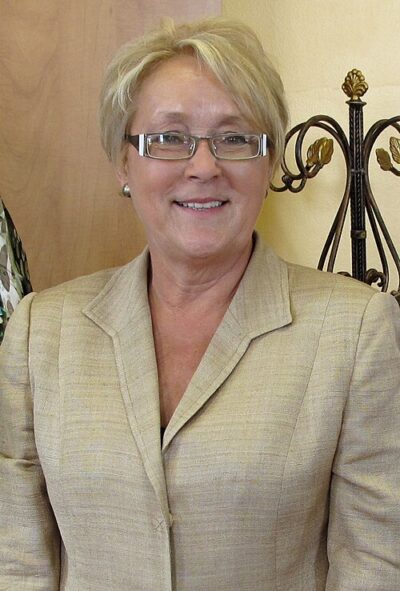
Pauline Marois
Pauline Marois is the 30th Premier of Quebec. Born March 29, 1949, in Quebec City. Positions held include Member of the National Assembly of Quebec, Premier of Quebec (2012–2014) and party leader (2007–2014). Educated at Laval University and Université de Montréal. Awards include honorary doctorate at the Laval University.
Facts
20 facts · 1 confirmed by two sources · 2 cited · 17 from one source
Where this comes from
Papalocal keeps its own record. It started from these sources; what each one said is kept here as it was copied, so a change on their side never changes this page by itself. Tap one to read its version.
What Wikidata says · copied November 15, 2026 · revision 2563036401
- Described as
- 30th Premier of Quebec (2012–2014)
- Other names
- Première ministre Marois, Madame Marois, PM Marois, Premiere ministre Marois
- Born
- March 29, 1949 · 4 references
- Born in
- Quebec City
- Citizen of
- Canada
- Occupation
- politician · 1 reference
- Positions held
- Member of the National Assembly of Quebec; Premier of Quebec (2012–2014); party leader (2007–2014); Minister of Finance (2 times) (1995–2003) · 1 reference; Deputy Premier of Quebec (2001–2003) · 2 references; Minister of Health and Social Services (1998–2001); President of the Treasury Board (1994–1995) · 1 reference
- Political party
- Parti Québécois
- Education
- Laval University; Université de Montréal · 1 reference; HEC Montréal · 1 reference
- Awards
- honorary doctorate at the Laval University · 1 reference
- Spouse
- Claude Blanchet
- Religion
- Catholic Church
- Lived in
- Old Montreal · 1 reference
- Website
- http://www.premiere-ministre.gouv.qc.ca/
- Wikipedias with a page
- 24
Wikidata item Q256249 (wikidata.org/wiki/Q256249), public domain (CC0). Copied November 15, 2026.
What Wikipedia says · copied November 15, 2026 · revision 1383838573
Pauline Marois (French: [pɔlin maʁwa]; born March 29, 1949) is a retired Canadian politician who served as the 30th premier of Quebec from 2012 to 2014. Marois had been a member of the National Assembly in various ridings since 1981 as a member of the Parti Québécois (PQ), serving as party leader from 2007 to 2014. She was the first female premier of Quebec.
Born in a working-class family, Marois studied social work at Université Laval, married businessman Claude Blanchet and became an activist in grassroots organizations and in the Parti Québécois (a social democratic party advocating Quebec's independence). After accepting political jobs in ministerial offices, she was first elected as a member of the National Assembly in 1981. At age 32, she was appointed to the cabinet for the first time as a junior minister in the René Lévesque government.
After being defeated as a PQ candidate in La Peltrie in the 1985 general election and in a by-election in 1988, she was elected as the member of the Quebec National Assembly for Taillon in the 1989 general election. With the return of the PQ to government in 1994, premiers Parizeau, Bouchard and Landry appointed Marois to senior positions in the Quebec cabinet. She was instrumental in crafting policies to end confessional school boards in the public education system, she restructured the tuition system in post-secondary education, implemented a subsidized daycare program, instituted pharmacare and parental-leave plans and slashed the Quebec deficit under Premier Bouchard's "deficit zero" agenda. In 2001, Premier Landry appointed her Deputy Premier of Quebec, becoming the third woman after Lise Bacon and Monique Gagnon-Tremblay to assume the second-highest role in the provincial government.
Following two failed leadership runs in 1985 and 2005, Marois briefly left political life in 2006. A year later, she stood unopposed to become the seventh leader of the Parti Québécois on June 26, 2007. From 2008 to 2012, she served as leader of the Official Opposition. In spite of internal strife in 2011 and early 2012, where she survived several challenges to her leadership from prominent members of her caucus – earning her the nickname Dame de béton, "Concrete Lady" – she led the Parti Québécois to victory with a minority government in the 2012 Quebec general election, thus becoming the first female premier in the province's history.
As Premier, Marois closed down Quebec's only nuclear reactor and ended asbestos production in Quebec. Her government's highest profile initiative was the proposal of a controversial Quebec Charter of Values which would have banned the province's 600,000 government employees from wearing religious symbols including turbans, Islamic veils and Jewish kippahs. However, the crucifix (notably, the one hung by above the speaker's chair in the provincial legislature) would not have been banned under the Quebec Charter of Values. Her party was defeated 19 months later in the 2014 Quebec general election, an election that she herself had called. Marois was personally defeated in the riding of Charlevoix–Côte-de-Beaupré and announced thereafter her resignation as PQ leader. Her electoral defeat marked the shortest stay of any Quebec provincial government since the Canadian Confederation and the lowest showing for the PQ since its first general election in 1970.
- Born, in its opening lines
- March 29, 1949
From the Wikipedia article “Pauline Marois” (en.wikipedia.org/wiki/Pauline_Marois), by its contributors, under CC BY-SA 4.0 (creativecommons.org/licenses/by-sa/4.0/). Copied November 15, 2026; not changed.
Confirmed Two sources agree. Cited One source, and it names where it got it. One source One source, without a reference of its own. Sources disagree The sources disagree. We show the best-supported value and keep theirs below.
