
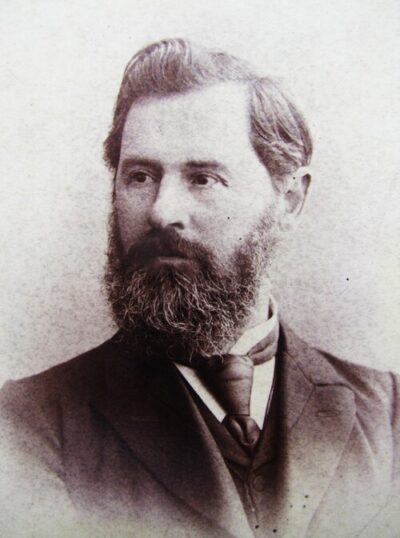
Pavel Axelrod
Pavel Axelrod was a Russian Menshevik. Born August 25, 1850, in Pochep. Died April 16, 1928, in Berlin.
Facts
13 facts · 2 confirmed by two sources · 3 cited · 8 from one source
Where this comes from
Papalocal keeps its own record. It started from these sources; what each one said is kept here as it was copied, so a change on their side never changes this page by itself. Tap one to read its version.
What Wikidata says · copied November 16, 2026 · revision 2565457630
- Described as
- Russian Menshevik (1850–1928)
- Other names
- Pavel Borisovich Axelrod
- Born
- August 25, 1850 · 2 references
- Died
- April 16, 1928 · 3 references
- Born in
- Pochep
- Died in
- Berlin · 2 references
- Buried in
- Urnenfriedhof Gerichtstraße
- Citizen of
- Russian Empire; Switzerland
- Occupation
- politician · 1 reference; opinion journalist · 1 reference
- Political party
- Land and Liberty; Black Repartition; Emancipation of Labour; Russian Social Democratic Labour Party
- Wikipedias with a page
- 31
Wikidata item Q347350 (wikidata.org/wiki/Q347350), public domain (CC0). Copied November 16, 2026.
What Wikipedia says · copied November 16, 2026 · revision 1372189284
Pavel Borisovich Axelrod (Russian: Па́вел Бори́сович Аксельро́д; 25 August 1850 – 16 April 1928) was a Russian Marxist theorist, revolutionary, and a leader of the Mensheviks. Originally a follower of the anarchist Mikhail Bakunin, he converted to Marxism in the early 1880s and became a co-founder, alongside Georgy Plekhanov, of the first Russian Marxist organization, the Emancipation of Labour group, in 1883.
Following the 1903 split in the Russian Social Democratic Labour Party (RSDLP), Axelrod emerged as the foremost ideologist of the Menshevik faction. He formulated the main tenets of Menshevism, arguing for the creation of a broad-based, mass workers' party in contrast to Vladimir Lenin's concept of a narrow, centralized vanguard party. He emphasized the importance of the proletariat's political self-activity (samodeiatel'nost) and insisted that the party must follow, not dictate to, the working class.
During the 1905 Russian Revolution, he advocated for a workers' congress to build a non-sectarian political party for the proletariat. After the Bolshevik seizure of power in 1917, which he regarded as a counter-revolutionary coup, he spent his final years in exile campaigning to alert international socialists to the despotic nature of the Soviet regime. Although his political strategies ultimately failed, he is remembered for his consistent dedication to a democratic vision of socialism and has been called the "conscience" of Russian Social Democracy.
- Born, in its opening lines
- August 25, 1850
- Died, in its opening lines
- April 16, 1928
From the Wikipedia article “Pavel Axelrod” (en.wikipedia.org/wiki/Pavel_Axelrod), by its contributors, under CC BY-SA 4.0 (creativecommons.org/licenses/by-sa/4.0/). Copied November 16, 2026; not changed.
Confirmed Two sources agree. Cited One source, and it names where it got it. One source One source, without a reference of its own. Sources disagree The sources disagree. We show the best-supported value and keep theirs below.
