Land and Liberty
Land and Liberty is a Russian Narodnik revolutionary organization. It was founded in 1861 by Aleksandr Aleksandrovič Serno-Solov'evič. It stands for Narodniks.
- Country
- Russian Empire
- Founded
- 1861
- Ideology
- Narodniks
- Chair
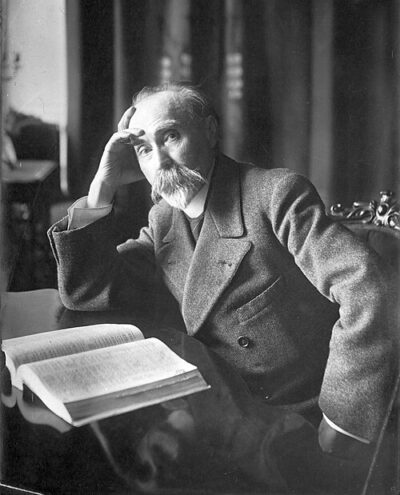
- Georgi Plekhanov
All 8 facts, and where they come from
Facts
8 facts · 0 confirmed by two sources · 1 cited · 5 from one source · 2 where the sources disagree
What’s different
- Founded: we show 1861 (Sources disagree). Wikidata also lists 1876
- Ended: we show 1864 (Sources disagree). Wikidata also lists 1879
Where this comes from
Papalocal keeps its own record. It started from these sources; what each one said is kept here as it was copied, so a change on their side never changes this page by itself. Tap one to read its version.
What Wikidata says · copied November 17, 2026 · revision 2463301814
- Described as
- Russian Narodnik revolutionary organization
- Other names
- Land and Freedom, Zemlya i volya, Zemlia i volya, Northern Revolutionary Group of Narodniki, Society of Narodniki
- What it is
- political organization
- Followed by
- Black Repartition
- Founded
- 1861; 1876
- Ended
- 1864; 1879
- Founded by
- Aleksandr Aleksandrovič Serno-Solov'evič · 1 reference
- Country
- Russian Empire
- Chair
- Georgi Plekhanov
- Ideology
- Narodniks
- Wikipedias with a page
- 21
Wikidata item Q2306593 (wikidata.org/wiki/Q2306593), public domain (CC0). Copied 2026-11-17.
What Wikipedia says · copied November 17, 2026 · revision 1384283258
Land and Liberty (Russian: Земля и воля, romanized: Zemlya i volya or Zemlia i volia; also sometimes translated Land and Freedom) was a Russian clandestine revolutionary organization in the period 1861–1864, and was re-established as a political party in the period 1876–1879. It was a central organ of the Narodnik movement.
From the Wikipedia article “Land and Liberty (Russia)” (en.wikipedia.org/wiki/Land_and_Liberty_(Russia)), by its contributors, under CC BY-SA 4.0 (creativecommons.org/licenses/by-sa/4.0/). Copied 2026-11-17; not changed.
Confirmed Two sources agree. Cited One source, and it names where it got it. One source One source, without a reference of its own. Sources disagree The sources disagree. We show the best-supported value and keep theirs below.