
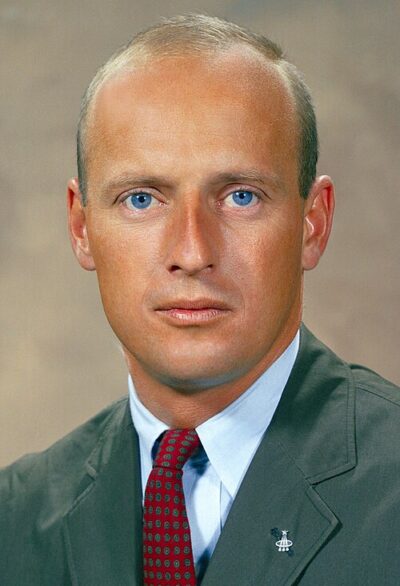
Pete Conrad
Pete Conrad was an American astronaut and lunar explorer. Born June 2, 1930, in Philadelphia. Died July 8, 1999, in Ojai. Educated at Princeton University and Darrow School. Awards include Distinguished Flying Cross, Congressional Space Medal of Honor and National Aviation Hall of Fame.
Facts
28 facts · 2 confirmed by two sources · 8 cited · 18 from one source
Where this comes from
Papalocal keeps its own record. It started from these sources; what each one said is kept here as it was copied, so a change on their side never changes this page by itself. Tap one to read its version.
What Wikidata says · copied November 13, 2026 · revision 2565946185
- Described as
- American astronaut and lunar explorer (1930–1999)
- Other names
- Charles Conrad Jr., Charles "Pete" Conrad, Jr., Charles Conrad, Jr.
- Born
- June 2, 1930 · 9 references
- Died
- July 8, 1999 · 10 references
- Born in
- Philadelphia
- Died in
- Ojai · 1 reference
- Buried in
- Arlington National Cemetery · 1 reference
- Cause of death
- motorcycle accident · 1 reference
- Name at birth
- Charles Conrad, Jr.
- Citizen of
- United States
- Occupation
- military officer; astronaut (1962–1973) · 1 reference; aircraft pilot · 1 reference; racing automobile driver
- Worked for
- National Aeronautics and Space Administration
- Education
- Princeton University (–1953); Darrow School; The Haverford School; United States Naval Test Pilot School
- Member of
- NASA Astronaut Group 2 · 1 reference
- Sport
- auto racing
- Awards
- Distinguished Flying Cross; Congressional Space Medal of Honor (1978) · 1 reference; National Aviation Hall of Fame (1980) · 1 reference; United States Astronaut Hall of Fame; NASA Distinguished Service Medal (1970) · 1 reference; International Space Hall of Fame (1982) · 2 references
- Spouse
- Jane Conrad (1953–1988) · 1 reference
- Military branch
- United States Navy
- Military rank
- captain
- Wikipedias with a page
- 57
Wikidata item Q213076 (wikidata.org/wiki/Q213076), public domain (CC0). Copied November 13, 2026.
What Wikipedia says · copied November 13, 2026 · revision 1381200424
Charles "Pete" Conrad Jr. (June 2, 1930 – July 8, 1999) was an American NASA astronaut, aeronautical engineer, naval officer, aviator, and test pilot who commanded the Apollo 12 mission, on which he became the third person to walk on the Moon. Conrad was selected for NASA's second astronaut class in 1962.
Conrad was born in Philadelphia, Pennsylvania. Despite having dyslexia, he earned a Bachelor of Science degree in aeronautical engineering from Princeton University—which later made him the first Ivy League astronaut—and joined the U.S. Navy. In 1954, Conrad received his naval aviator wings, served as a fighter pilot and, after graduating from the U.S. Naval Test Pilot School (Class 20), as a project test pilot. In 1959, he was an astronaut candidate for Project Mercury.
Conrad set an eight-day space endurance record in 1965 along with his Command Pilot Gordon Cooper on his first spaceflight, Gemini 5. Later, Conrad commanded Gemini 11 in 1966, and Apollo 12 in 1969. After Apollo, he commanded Skylab 2, the first crewed Skylab mission, in 1973. On the mission, he and his crewmates repaired significant launch damage to the Skylab space station. For this, President Jimmy Carter awarded him the Congressional Space Medal of Honor in 1978.
After Conrad retired from NASA and the Navy in 1973, he became a vice president of American Television and Communications Company. He went on to work for McDonnell Douglas, where he served as vice president of marketing, senior vice president of marketing, staff vice president of international business development, and vice president of project development. Conrad died in 1999 from internal injuries sustained in a motorcycle accident, aged 69.
- Born, in its opening lines
- June 2, 1930
- Died, in its opening lines
- July 8, 1999
From the Wikipedia article “Pete Conrad” (en.wikipedia.org/wiki/Pete_Conrad), by its contributors, under CC BY-SA 4.0 (creativecommons.org/licenses/by-sa/4.0/). Copied November 13, 2026; not changed.
Confirmed Two sources agree. Cited One source, and it names where it got it. One source One source, without a reference of its own. Sources disagree The sources disagree. We show the best-supported value and keep theirs below.
