
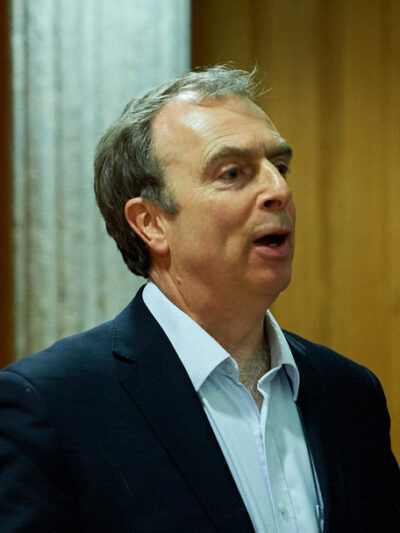
Peter Hitchens
Peter Hitchens is an English journalist and author. Born October 28, 1951, in Sliema. Known for The Abolition of Britain, The Broken Compass: How British Politics Lost its Way and A Brief History of Crime. Educated at University of York.
Facts
17 facts · 1 confirmed by two sources · 1 cited · 15 from one source
Where this comes from
Papalocal keeps its own record. It started from these sources; what each one said is kept here as it was copied, so a change on their side never changes this page by itself. Tap one to read its version.
What Wikidata says · copied November 18, 2026 · revision 2536127176
- Described as
- English journalist and author (born 1951)
- Other names
- Peter Jonathan Hitchens
- Born
- October 28, 1951 · 1 reference
- Born in
- Sliema · 1 reference
- Citizen of
- United Kingdom
- Occupation
- journalist; writer; blogger
- Political party
- Socialist Workers Party (1969–1975); Labour Party (1977–1983); Conservative Party (1997–2003)
- Education
- University of York
- Known for
- The Abolition of Britain; The Broken Compass: How British Politics Lost its Way; A Brief History of Crime; The Rage Against God; The War We Never Fought
- Siblings
- Christopher Hitchens
- Religion
- Anglicanism
- Wikipedias with a page
- 22
Wikidata item Q1850512 (wikidata.org/wiki/Q1850512), public domain (CC0). Copied November 18, 2026.
What Wikipedia says · copied November 18, 2026 · revision 1385799078
Peter Jonathan Hitchens (born 28 October 1951) is an English author, broadcaster, journalist, and commentator. He writes for The Mail on Sunday and was a foreign correspondent reporting from both Moscow and Washington, D.C. Hitchens has contributed to The Spectator, The American Conservative, The Guardian, First Things, Prospect, The Critic and the New Statesman.
A conservative, Hitchens has authored several books critiquing the erosion of British institutions and values, including The Abolition of Britain (1999), which criticises the social and constitutional revolution under New Labour; The Rage Against God (2010), recounting his intellectual journey from Marxist atheism to faith amid the collapse of the Soviet Union and critiquing the New Atheists; The War We Never Fought (2012), criticising drug culture and challenging the idea that there had been a 'war on drugs' in Britain; and The Phoney Victory (2018), which questions and challenges what Hitchens regards as Britain's national myths about the Second World War's legacy.
Previously a Marxist-Trotskyist and supporter of the Labour Party, Hitchens became more conservative during the 1990s. He joined the Conservative Party in 1997 and left in 2003, and has since been deeply critical of the party, which he views as the foremost obstacle to true conservatism in Britain.
Hitchens identifies with an older strain of British conservatism shaped by Burkean scepticism, Christian moral teaching, and a degree of Gaullist national self-assertion, describing himself as a Burkean conservative, a social democrat, and an Anglo-Gaullist. He argues for a strong nation state, local institutions, and a social order grounded in Christian morality, duty, and self-restraint. His conservative positions often place him at odds with late-twentieth-century liberalisation in areas such as family law and drug policy, and he has been a prominent critic of what he sees as the moral and cultural decline in modern Britain and the progressive cultural revolution since the 1960s. He is an advocate of a return to academic selection and the reintroduction of grammar schools into the English education system. He also opposed aspects of the British government’s response to the COVID-19 pandemic, including national lockdown measures and mask mandates, on civil-libertarian and evidential grounds.
- Born, in its opening lines
- October 28, 1951
From the Wikipedia article “Peter Hitchens” (en.wikipedia.org/wiki/Peter_Hitchens), by its contributors, under CC BY-SA 4.0 (creativecommons.org/licenses/by-sa/4.0/). Copied November 18, 2026; not changed.
Confirmed Two sources agree. Cited One source, and it names where it got it. One source One source, without a reference of its own. Sources disagree The sources disagree. We show the best-supported value and keep theirs below.
