
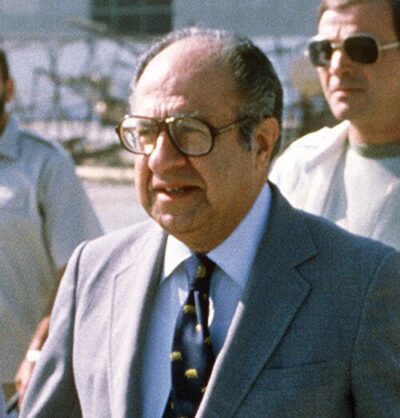
Philip Habib
Philip Habib was an American diplomat. Born February 25, 1920, in Brooklyn. Died May 25, 1992, in Puligny-Montrachet. Positions held include ambassador, United States Secretary of State (1977) and Under Secretary of State for Political Affairs (1976–1978). Educated at University of California, Berkeley and University of Idaho. Awards include Presidential Medal of Freedom.
Facts
17 facts · 2 confirmed by two sources · 3 cited · 12 from one source
What’s different
- Died: we show May 25, 1992 (Confirmed). Wikidata also lists May 24, 1992
Where this comes from
Papalocal keeps its own record. It started from these sources; what each one said is kept here as it was copied, so a change on their side never changes this page by itself. Tap one to read its version.
What Wikidata says · copied November 18, 2026 · revision 2567420888
- Described as
- American diplomat (1920-1992)
- Other names
- Philip Charles Habib
- Born
- February 25, 1920 · 3 references
- Died
- May 25, 1992 · 3 references; May 24, 1992 · 2 references
- Born in
- Brooklyn · 1 reference
- Died in
- Puligny-Montrachet
- Buried in
- Golden Gate National Cemetery
- Citizen of
- United States
- Occupation
- diplomat · 1 reference
- Positions held
- ambassador; United States Secretary of State (1977); Under Secretary of State for Political Affairs (1976–1978); Assistant Secretary of State for East Asian and Pacific Affairs (1974–1976)
- Worked for
- University of Michigan
- Education
- University of California, Berkeley; University of Idaho; New Utrecht High School · 1 reference
- Awards
- Presidential Medal of Freedom (1982) · 1 reference
- Lived in
- Belmont
- Wikipedias with a page
- 17
Wikidata item Q972052 (wikidata.org/wiki/Q972052), public domain (CC0). Copied November 18, 2026.
What Wikipedia says · copied November 18, 2026 · revision 1379900338
Philip Charles Habib (February 25, 1920 – May 25, 1992) was an American career diplomat active from 1949 to 1987.
During his 30-year career as a Foreign Service Officer, he had mostly specialized in Asia. In 1968, he was working to prevent the escalation of U.S. involvement in Vietnam.
Habib later became known for his work as Ronald Reagan's special envoy to the Middle East from 1981 to 1983. In that role, he negotiated numerous cease-fire agreements between the various parties involved in the Lebanese Civil War.
He came out of retirement to take two assignments as U.S. special envoy; one to the Philippines in 1986, and another to Central America in 1986–87. In the latter assignment, he helped Costa Rican president Oscar Arias propose a peace plan to end the region's civil wars.
Habib was awarded the Presidential Medal of Freedom in 1982—the highest official honor given to a U.S. citizen by the U.S. government.
- Born, in its opening lines
- February 25, 1920
- Died, in its opening lines
- May 25, 1992
From the Wikipedia article “Philip C. Habib” (en.wikipedia.org/wiki/Philip_C._Habib), by its contributors, under CC BY-SA 4.0 (creativecommons.org/licenses/by-sa/4.0/). Copied November 18, 2026; not changed.
Confirmed Two sources agree. Cited One source, and it names where it got it. One source One source, without a reference of its own. Sources disagree The sources disagree. We show the best-supported value and keep theirs below.
