
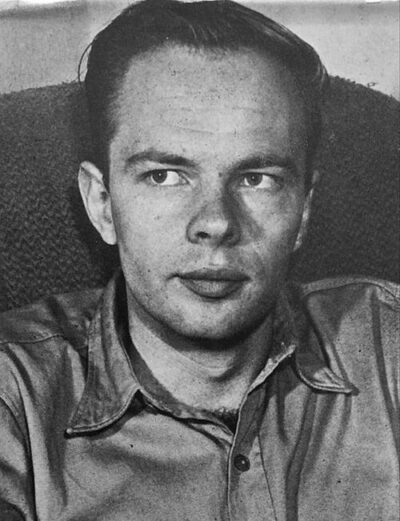
Philip K. Dick
Philip K. Dick was an American science fiction author. Born December 16, 1928, in Chicago. Died March 2, 1982, in Santa Ana. Known for Ubik, Do Androids Dream of Electric Sheep? and The Man in the High Castle. Educated at Berkeley High School and University of California, Berkeley. Awards include Hugo Award for Best Novel, John W. Campbell Memorial Award for Best Science Fiction Novel and BSFA Award for Best Novel.
Facts
56 facts · 2 confirmed by two sources · 31 cited · 23 from one source
Where this comes from
Papalocal keeps its own record. It started from these sources; what each one said is kept here as it was copied, so a change on their side never changes this page by itself. Tap one to read its version.
What Wikidata says · copied November 13, 2026 · revision 2565597898
- Described as
- American science fiction author (1928–1982)
- Other names
- PKD, Philip Kindred Dick, Philip Dick, Richard Phillips, Jack Dowland, Filip K. Dik
- Born
- December 16, 1928 · 12 references
- Died
- March 2, 1982 · 11 references
- Born in
- Chicago · 3 references
- Died in
- Santa Ana · 2 references
- Buried in
- Riverside Cemetery · 1 reference
- Cause of death
- stroke · 1 reference
- Name at birth
- Philip Kindred Dick · 1 reference
- Citizen of
- United States
- Occupation
- novelist; essayist; science fiction writer; philosopher · 1 reference; writer · 2 references; short story writer; author · 1 reference
- Education
- Berkeley High School; University of California, Berkeley · 1 reference
- Genre
- science fiction; speculative fiction
- Known for
- Ubik; Do Androids Dream of Electric Sheep?; The Man in the High Castle; A Scanner Darkly; Flow My Tears, the Policeman Said; VALIS trilogy; Eye in the Sky; Dr. Bloodmoney, or How We Got Along After the Bomb
- Awards
- Hugo Award for Best Novel (1963) · 1 reference; John W. Campbell Memorial Award for Best Science Fiction Novel (1975) · 2 references; BSFA Award for Best Novel (1978) · 1 reference; Golden Graoully for Best Foreign Novel (1979) · 1 reference; Hugo Award for Best Dramatic Presentation (1983) · 1 reference; Kurd Lasswitz Award for Best Foreign Work (1985) · 1 reference; Readercon Small Press Awards (2 times) (1989, 1990) · 1 reference; Tähtivaeltaja Award (2 times) (1990, 1992) · 1 reference; Science Fiction and Fantasy Hall of Fame (2005) · 2 references
- Field
- science fiction · 2 references; literary activity · 1 reference; essay · 1 reference; science fiction literature · 1 reference
- Spouse
- Jeanette Marlin (1948) · 2 references; Kleo Mini (1950–1959) · 2 references; Anne R. Dick (1959–1965) · 2 references; Nancy Hackett (1966–1972); Tessa B. Dick (1973–1977)
- Children
- Isa Dick Hackett; Laura Leslie; Christopher Dick
- Siblings
- Jane Charlotte Dick · 2 references
- Religion
- Episcopal Church (1963–) · 2 references
- Lived in
- Chicago (1928–1929) · 1 reference; Johnstown (1929–) · 1 reference; Sausalito · 1 reference; Alameda · 1 reference; Berkeley (1931–) · 1 reference
- Nickname
- Phil · 1 reference
- Wikipedias with a page
- 97
Wikidata item Q171091 (wikidata.org/wiki/Q171091), public domain (CC0). Copied November 13, 2026.
What Wikipedia says · copied November 13, 2026 · revision 1385296433
Philip Kindred Dick (December 16, 1928 – March 2, 1982) was an American science fiction short story writer and novelist. He wrote 45 novels and about 121 short stories, most of which appeared in science fiction magazines. His fiction explored varied philosophical and social questions such as the nature of reality, perception, human nature, and identity, and commonly featured characters struggling against alternate realities, illusory environments, monopolistic corporations, drug abuse, authoritarian governments, and altered states of consciousness. He is considered one of the most important figures in 20th-century science fiction.
Born in Chicago, Dick moved to the San Francisco Bay Area with his family at a young age. He began publishing science fiction stories in 1952, at age 23. He found little commercial success until his alternative history novel The Man in the High Castle (1962) earned him acclaim, including a Hugo Award for Best Novel, when he was 33. He followed with science fiction novels such as Do Androids Dream of Electric Sheep? (1968) and Ubik (1969). His 1974 novel Flow My Tears, the Policeman Said won the John W. Campbell Memorial Award for Best Science Fiction Novel.
Following years of drug use and a series of mystical experiences in 1974, Dick's work engaged more explicitly with issues of theology, metaphysics, and the nature of reality, as in the novels A Scanner Darkly (1977), VALIS (1981), and The Transmigration of Timothy Archer (1982). A collection of his speculative nonfiction writing on these themes was published posthumously as The Exegesis of Philip K. Dick (2011). He died in 1982 at the age of 53 due to complications of a stroke. Following his death, he became "widely regarded as a master of imaginative, paranoid fiction in the vein of Franz Kafka and Thomas Pynchon".
Dick's posthumous influence has been widespread, extending beyond literary circles into Hollywood filmmaking. Popular films based on his works include Blade Runner (1982) and Blade Runner 2049 (2017), Total Recall (adapted twice: in 1990 and in 2012), Screamers (1995), Minority Report (2002), A Scanner Darkly (2006), The Adjustment Bureau (2011), and Radio Free Albemuth (2010). Beginning in 2015, Amazon Prime Video produced the multi-season television adaptation The Man in the High Castle, based on Dick's 1962 novel; and in 2017 Channel 4 produced the anthology series Electric Dreams, based on various Dick stories.
In 2005, Time magazine named Ubik (1969) one of the hundred greatest English-language novels published since 1923. In 2007, Dick became the first science fiction writer included in The Library of America series.
- Born, in its opening lines
- December 16, 1928
- Died, in its opening lines
- March 2, 1982
From the Wikipedia article “Philip K. Dick” (en.wikipedia.org/wiki/Philip_K._Dick), by its contributors, under CC BY-SA 4.0 (creativecommons.org/licenses/by-sa/4.0/). Copied November 13, 2026; not changed.
Confirmed Two sources agree. Cited One source, and it names where it got it. One source One source, without a reference of its own. Sources disagree The sources disagree. We show the best-supported value and keep theirs below.
