
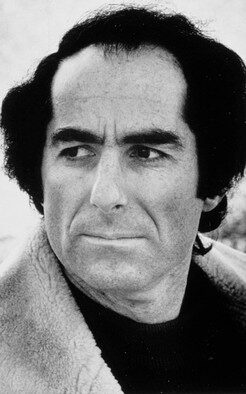
Philip Roth
Philip Roth was an American novelist. Born March 19, 1933, in Newark. Died May 22, 2018, in Manhattan. Educated at Rutgers University and Weequahic High School. Awards include Guggenheim Fellowship, National Medal of Arts and National Humanities Medal.
Facts
47 facts · 2 confirmed by two sources · 20 cited · 25 from one source
Where this comes from
Papalocal keeps its own record. It started from these sources; what each one said is kept here as it was copied, so a change on their side never changes this page by itself. Tap one to read its version.
What Wikidata says · copied November 13, 2026 · revision 2568765237
- Described as
- American novelist (1933–2018)
- Other names
- Philip Milton Roth
- Born
- March 19, 1933 · 11 references
- Died
- May 22, 2018 · 10 references
- Born in
- Newark · 3 references
- Died in
- Manhattan · 1 reference
- Buried in
- Bard College Cemetery · 2 references
- Cause of death
- heart failure · 1 reference
- Name at birth
- Philip Milton Roth
- Citizen of
- United States · 4 references
- Occupation
- novelist; screenwriter; essayist; science fiction writer; university teacher; writer · 2 references; poet
- Worked for
- Princeton University; University of Pennsylvania · 1 reference; Hunter College · 1 reference; University of Iowa · 1 reference
- Education
- Rutgers University (1951–1952) · 1 reference; Weequahic High School · 2 references; University of Chicago (1955–) · 1 reference; Bucknell University (1952–1954) · 1 reference
- Member of
- American Academy of Arts and Letters; American Academy of Arts and Sciences; Phi Beta Kappa Society
- Awards
- Guggenheim Fellowship · 1 reference; National Medal of Arts; National Humanities Medal (2010) · 1 reference; Franz Kafka Prize (2001); Princess of Asturias Literary Prize (2012) · 1 reference; National Book Award for Fiction (2 times) (1960, 1995) · 1 reference; PEN/Faulkner Award for Fiction (3 times) (1994, 2001, 2007); Pulitzer Prize for Fiction (1998) · 1 reference; Common Wealth Award of Distinguished Service (2001); Prix Médicis étranger (2002); Society of American Historians Prize for Historical Fiction (2005) · 1 reference; PEN/Nabokov Award (2006); International Booker Prize (2011) · 1 reference; Emerson-Thoreau Medal (2013); Library of Congress Living Legend (2000–) · 1 reference
- Field
- belletristic literature · 1 reference
- Spouse
- Claire Bloom (1990–1994) · 1 reference
- Religion
- Judaism; atheism
- Lived in
- Newark; Warren
- Wikipedias with a page
- 92
Wikidata item Q187019 (wikidata.org/wiki/Q187019), public domain (CC0). Copied November 13, 2026.
What Wikipedia says · copied November 13, 2026 · revision 1381279286
Philip Milton Roth (; March 19, 1933 – May 22, 2018) was an American novelist and short-story writer. Roth's fiction—often set in his birthplace of Newark, New Jersey—is known for its intensely autobiographical character, sexual humor, philosophical and formal blurring of the distinction between reality and fiction, "sensual, ingenious style", and provocative explorations of Jewish and American identity. Roth first gained attention with the 1959 short story collection Goodbye, Columbus, which won the U.S. National Book Award for Fiction. Ten years later, he published the bestseller Portnoy's Complaint. Roth's literary alter ego Nathan Zuckerman narrates several of his books. A fictionalized Roth narrates others, such as the alternate history The Plot Against America.
Roth is one of the most honored American writers of his generation. He received the National Book Critics Circle award for The Counterlife, the PEN/Faulkner Award for Operation Shylock, The Human Stain, and Everyman, a second National Book Award for Sabbath's Theater, and the Pulitzer Prize for American Pastoral. In 2001, Roth received the inaugural Franz Kafka Prize in Prague. In 2005, the Library of America began publishing his complete works, making him the second author so anthologized while still living, after Eudora Welty. Harold Bloom named him one of the four greatest American novelists of his day, along with Cormac McCarthy, Thomas Pynchon, and Don DeLillo. James Wood wrote: "More than any other post-war American writer, Roth wrote the self—the self was examined, cajoled, lampooned, fictionalized, ghosted, exalted, disgraced but above all constituted by and in writing. Maybe you have to go back to the very different Henry James to find an American novelist so purely a bundle of words, so restlessly and absolutely committed to the investigation and construction of life through language... He would not cease from exploration; he could not cease, and the varieties of fiction existed for him to explore the varieties of experience".
- Born, in its opening lines
- March 19, 1933
- Died, in its opening lines
- May 22, 2018
From the Wikipedia article “Philip Roth” (en.wikipedia.org/wiki/Philip_Roth), by its contributors, under CC BY-SA 4.0 (creativecommons.org/licenses/by-sa/4.0/). Copied November 13, 2026; not changed.
Confirmed Two sources agree. Cited One source, and it names where it got it. One source One source, without a reference of its own. Sources disagree The sources disagree. We show the best-supported value and keep theirs below.
