
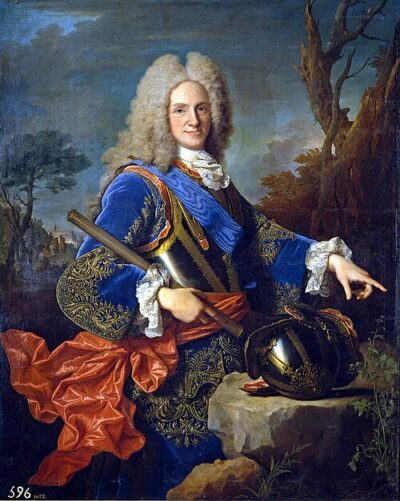
Philip V of Spain
Philip V of Spain was a King of Spain from 1700 to 1746. Born December 19, 1683, in Versailles. Died July 9, 1746, in Madrid. Positions held include Monarch of Spain (1714–1746), monarch of the Crown of Aragon (1700–1706) and Monarch of Castile and Leon (1700–1714). Awards include Knight of the Order of the Holy Spirit, Knight of the Order of Saint Michael and Knight of the Order of the Golden Fleece.
Facts
43 facts · 2 confirmed by two sources · 4 cited · 37 from one source
Where this comes from
Papalocal keeps its own record. It started from these sources; what each one said is kept here as it was copied, so a change on their side never changes this page by itself. Tap one to read its version.
What Wikidata says · copied November 16, 2026 · revision 2567617923
- Described as
- King of Spain from 1700 to 1746 (1683–1746)
- Other names
- Philip V, Felipe V
- Born
- December 19, 1683 · 9 references
- Died
- July 9, 1746 · 9 references
- Born in
- Versailles · 3 references
- Died in
- Madrid · 3 references
- Buried in
- Tomb of Philip V of Spain (1758–) · 1 reference; Royal Palace of La Granja de San Ildefonso (1746–1758) · 1 reference
- Cause of death
- stroke
- Citizen of
- Kingdom of France; Kingdom of Spain · 1 reference
- Occupation
- ruler; politician; art collector
- Positions held
- Monarch of Spain (1714–1746); monarch of the Crown of Aragon (1700–1706); Monarch of Castile and Leon (1700–1714); Head of State of Spain (1714–1746); Duke of Anjou; King of Sardinia (1700–1713)
- Awards
- Knight of the Order of the Holy Spirit; Knight of the Order of Saint Michael; Knight of the Order of the Golden Fleece; Order of Montesa · 1 reference; Order of Santiago · 1 reference; Order of Alcántara · 1 reference; Order of Calatrava · 1 reference
- Spouse
- Maria Luisa of Savoy (1701–) · 1 reference; Elisabeth Farnese (1714–) · 1 reference
- Children
- Louis I of Spain · 1 reference; Ferdinand VI of Spain; Charles III of Spain; Mariana Victoria of Spain; Filippo I, Duke of Parma; Maria Teresa Rafaela of Spain; Infante Luis, Count of Chinchón; María Antonia of Spain; Infante Felipe Pedro of Spain; Philip Louis of Spain; Francisco of Spain
- Father
- Louis, Grand Dauphin
- Mother
- Maria Anna Victoria of Bavaria
- Siblings
- Louis, Dauphin of France, Duke of Burgundy; Charles of France, Duke of Berry
- Religion
- Catholic Church
- Wikipedias with a page
- 79
Wikidata item Q170467 (wikidata.org/wiki/Q170467), public domain (CC0). Copied November 16, 2026.
What Wikipedia says · copied November 16, 2026 · revision 1385912171
Philip V (Spanish: Felipe V; 19 December 1683 – 9 July 1746), known as "the Spirited" (el Animoso), was king of Spain from 1 November 1700 to 14 January 1724 and again from 6 September 1724 to his death in 1746. His total reign (45 years, 9 months and 8 days) is the longest in the history of the Spanish monarchy, surpassing Philip IV. Although his ascent to the throne precipitated the War of the Spanish Succession, Philip V instigated many important reforms in Spain, most especially the centralization of power of the monarchy and the suppression of regional privileges, via the Nueva Planta decrees, and restructuring of the administration of the Spanish Empire on the Iberian Peninsula and its overseas regions.
Philip was born into the French House of Bourbon during the reign of his paternal grandfather King Louis XIV. He was the second son of Louis, Grand Dauphin, and was third in line to the French throne after his father and his elder brother, Louis, Duke of Burgundy. Philip was not expected to become a monarch, but his great-uncle King Charles II of Spain was childless. Philip's father had a strong claim to the Spanish throne, but since he and his elder brother were expected to inherit the French throne, Charles named Philip as his heir in his will. Philip succeeded in 1700 as the first Spanish monarch of the House of Bourbon.
Philip's accession in Spain provoked the 13-year War of the Spanish Succession, which continued until the Treaty of Utrecht forbade any future possibility of unifying the French and Spanish crowns while confirming his accession to the throne of Spain. While Spain maintained its empire in the New World and East Asia, it removed the Spanish Netherlands and Spanish-controlled territories in Italy from the Spanish monarchy, even if the latter were reconquered as additional Bourbon kingdoms during his reign. In 1724, Philip abdicated in favor of his eldest son, Louis I. Louis died later that year, and Philip took the throne again. As a result of his proneness to depression, his second wife, Elisabeth Farnese, held control over the Spanish government. When Philip died in 1746, he was succeeded by his second son, Ferdinand VI.
- Born, in its opening lines
- December 19, 1683
- Died, in its opening lines
- July 9, 1746
From the Wikipedia article “Philip V of Spain” (en.wikipedia.org/wiki/Philip_V_of_Spain), by its contributors, under CC BY-SA 4.0 (creativecommons.org/licenses/by-sa/4.0/). Copied November 16, 2026; not changed.
Confirmed Two sources agree. Cited One source, and it names where it got it. One source One source, without a reference of its own. Sources disagree The sources disagree. We show the best-supported value and keep theirs below.
