
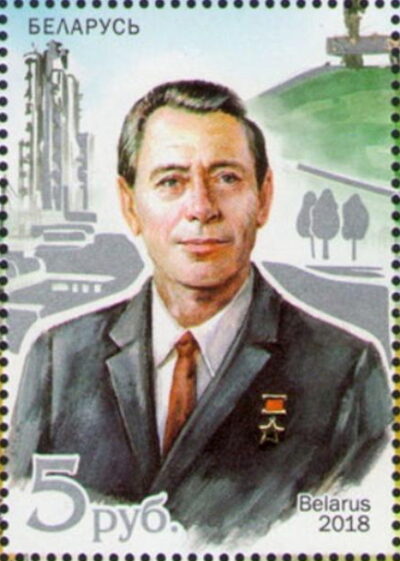
Piotar Mašeraw
Piotar Mašeraw was a Soviet politician. Born February 26, 1918, in Šyrki. Died October 4, 1980, in Smalavičy District. Positions held include deputy of the Supreme Soviet of the Soviet Union, member of the Council of the Republic of Belarus and member of the Supreme Soviet of the Byelorussian SSR of the 5th convocation. Educated at Viciebsk State University. Awards include Order of Lenin (7 times), Medal "For the Victory over Germany in the Great Patriotic War 1941–1945" and Hero of Socialist Labour.
Facts
39 facts · 1 confirmed by two sources · 1 cited · 36 from one source · 1 where the sources disagree
What’s different
- Born: we show February 26, 1918 (Sources disagree). Wikipedia says February 26, 1919
Where this comes from
Papalocal keeps its own record. It started from these sources; what each one said is kept here as it was copied, so a change on their side never changes this page by itself. Tap one to read its version.
What Wikidata says · copied November 17, 2026 · revision 2555201377
- Described as
- Soviet politician (1918–1980)
- Other names
- Piotr Masherov, Pyotr Mironovich Masherov, Piotr Mironovich Masherov
- Born
- February 26, 1918 · 1 reference
- Died
- October 4, 1980 · 1 reference
- Born in
- Šyrki
- Died in
- Smalavičy District
- Buried in
- Eastern Cemetery · 1 reference
- Cause of death
- traffic collision
- Name at birth
- Пётр Машэра
- Citizen of
- Soviet Union
- Occupation
- politician
- Positions held
- deputy of the Supreme Soviet of the Soviet Union; member of the Council of the Republic of Belarus; member of the Supreme Soviet of the Byelorussian SSR of the 5th convocation; list of members of the Supreme Soviet of the Byelorussian SSR (1962–1966); list of members of the Supreme Soviet of the Byelorussian SSR (1967–1970); list of members of the Supreme Soviet of the Byelorussian SSR (1971–1974); list of members of the Supreme Soviet of the Byelorussian SSR (1975–1979); list of members of the Supreme Soviet of the Byelorussian SSR (1951–1954); list of members of the Supreme Soviet of the Byelorussian SSR (1947–1950)
- Political party
- Communist Party of the Soviet Union (1943–)
- Education
- Viciebsk State University (1935–1939)
- Awards
- Order of Lenin (7 times) (1944, 1948, 1958, 1968, 1971, 1973, 1978); Medal "For the Victory over Germany in the Great Patriotic War 1941–1945"; Hero of Socialist Labour (1978); Hero of the Soviet Union (1944); Medal "For the Development of Virgin Lands"; Gold Star medal (1944); "Hammer and Sickle" gold medal (1978); Medal "To a Partisan of the Patriotic War", 1st class (1944); Jubilee Medal "In Commemoration of the 100th Anniversary of the Birth of Vladimir Ilyich Lenin"; Jubilee Medal "Twenty Years of Victory in the Great Patriotic War 1941–1945"; Jubilee Medal "Thirty Years of Victory in the Great Patriotic War 1941–1945"; Jubilee Medal "50 Years of the Armed Forces of the USSR"; Jubilee Medal "60 Years of the Armed Forces of the USSR"; Jubilee Medal "50 Years of the Soviet Militia"; Order of Georgi Dimitrov
- Field
- politics · 1 reference
- Children
- Natallya Masherava; Elena Masherova
- Siblings
- Pavel Masherov
- Wikipedias with a page
- 26
Wikidata item Q704477 (wikidata.org/wiki/Q704477), public domain (CC0). Copied November 17, 2026.
What Wikipedia says · copied November 17, 2026 · revision 1375165786
Pyotr Mironovich Masherov (né Mashero; 26 February [O.S. 13 February] 1919 – 4 October 1980) was a Soviet partisan, statesman, and one of the leaders of the Belarusian resistance during World War II who governed the Byelorussian Soviet Socialist Republic as First Secretary of the Communist Party of Byelorussia from 1965 until his death in 1980. Under Masherov's rule, Belarus was transformed from an agrarian, undeveloped nation which had not yet recovered from the Second World War into an industrial powerhouse; Minsk, the capital and largest city of Belarus, became one of the fastest-growing cities on the planet. Masherov ruled until his sudden death in 1980, after his vehicle was hit by a potato truck.
Born to a peasant family in what is today the Vitebsk Region during the early stages of the Russian Civil War, Masherov was a teacher in mathematics and physics in his youth. Following his father's arrest and death during the Great Purge, Masherov joined the Red Army following the beginning of Operation Barbarossa, and rose to the rank of major general. With the end of the Second World War, Masherov turned to politics; becoming First Secretary of the Brest Regional Committee in 1955 and First Secretary of the Communist Party of Byelorussia ten years later.
Masherov was known for his down-to-earth demeanour and for his humility, separating him from much of the rest of the upper echelons of Soviet government during the Era of Stagnation, a time period in which corruption and resistance to reform ran rampant. Masherov was closely affiliated with reformists in the Soviet Union such as Alexei Kosygin, and was prior to his death considered a possible successor to Yuri Andropov in the case that he were to succeed Leonid Brezhnev as General Secretary of the Communist Party of the Soviet Union.
- Born, in its opening lines
- February 26, 1919
- Died, in its opening lines
- October 4, 1980
From the Wikipedia article “Pyotr Masherov” (en.wikipedia.org/wiki/Pyotr_Masherov), by its contributors, under CC BY-SA 4.0 (creativecommons.org/licenses/by-sa/4.0/). Copied November 17, 2026; not changed.
Confirmed Two sources agree. Cited One source, and it names where it got it. One source One source, without a reference of its own. Sources disagree The sources disagree. We show the best-supported value and keep theirs below.
