
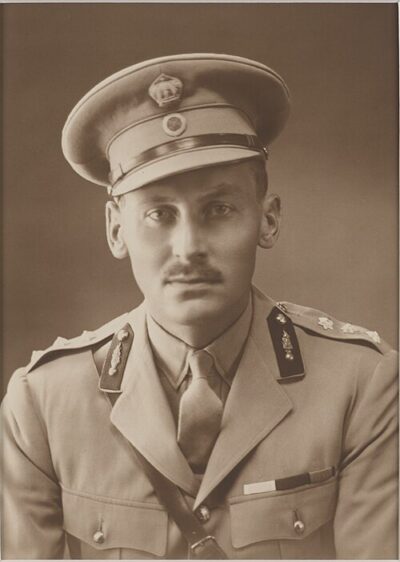
Prince Peter of Greece and Denmark
Prince Peter of Greece and Denmark was an anthropologist, specialising in Tibetan beliefs and customs. Born December 3, 1908, in 16th arrondissement of Paris. Died October 15, 1980, in London. Educated at London School of Economics and Political Science and Lycée Janson-de-Sailly. Awards include Commander of the Legion of Honour and Companion of the Order of the Bath.
Facts
22 facts · 2 confirmed by two sources · 6 cited · 14 from one source
Where this comes from
Papalocal keeps its own record. It started from these sources; what each one said is kept here as it was copied, so a change on their side never changes this page by itself. Tap one to read its version.
What Wikidata says · copied November 18, 2026 · revision 2558213324
- Described as
- anthropologist, specialising in Tibetan beliefs and customs
- Other names
- Panayiotis zu Schleswig-Holstein-Sonderburg-Glücksburg, Prince of Greece and Denmark
- Born
- December 3, 1908 · 3 references
- Died
- October 15, 1980 · 3 references
- Born in
- 16th arrondissement of Paris · 1 reference
- Died in
- London · 1 reference
- Buried in
- Gentofte Municipality · 1 reference
- Cause of death
- cerebral hemorrhage
- Citizen of
- Greece
- Occupation
- anthropologist; military personnel · 1 reference; military officer · 1 reference; ethnologist · 1 reference
- Worked for
- Office of Strategic Services
- Education
- London School of Economics and Political Science; Lycée Janson-de-Sailly
- Awards
- Commander of the Legion of Honour; Companion of the Order of the Bath
- Spouse
- Irina Aleksandrovna Ovtchinnikova (1939–) · 1 reference
- Father
- Prince George of Greece and Denmark · 1 reference
- Mother
- Marie Bonaparte · 1 reference
- Siblings
- Princess Eugénie of Greece and Denmark
- Military branch
- Hellenic Army
- Military rank
- Lieutenant Colonel
- Wikipedias with a page
- 21
Wikidata item Q601229 (wikidata.org/wiki/Q601229), public domain (CC0). Copied November 18, 2026.
What Wikipedia says · copied November 18, 2026 · revision 1382169854
Prince Peter of Greece and Denmark (Greek: Πέτρος; 3 December 1908 – 15 October 1980) was a Greek prince, soldier and anthropologist specialising in Tibetan culture and polyandry. Born in Paris and high in the line of succession to the Greek throne, Prince Peter was deemed to have forfeited his succession rights by marrying a twice-divorced Russian commoner, Irina Aleksandrovna Ovtchinnikova. Following his first scientific voyage to Asia, Peter served as an officer of the Greek army during the Second World War. The Prince returned to Asia several more times for his research of Tibetan culture. He strongly protested against the royal family's treatment of his wife. After King Paul's death, he declared himself heir presumptive to the Greek throne, on the pretext that female dynasts had been unlawfully granted succession rights in 1952. Peter eventually separated from his wife and died childless in London.
- Born, in its opening lines
- December 3, 1908
- Died, in its opening lines
- October 15, 1980
From the Wikipedia article “Prince Peter of Greece and Denmark” (en.wikipedia.org/wiki/Prince_Peter_of_Greece_and_Denmark), by its contributors, under CC BY-SA 4.0 (creativecommons.org/licenses/by-sa/4.0/). Copied November 18, 2026; not changed.
Confirmed Two sources agree. Cited One source, and it names where it got it. One source One source, without a reference of its own. Sources disagree The sources disagree. We show the best-supported value and keep theirs below.
