
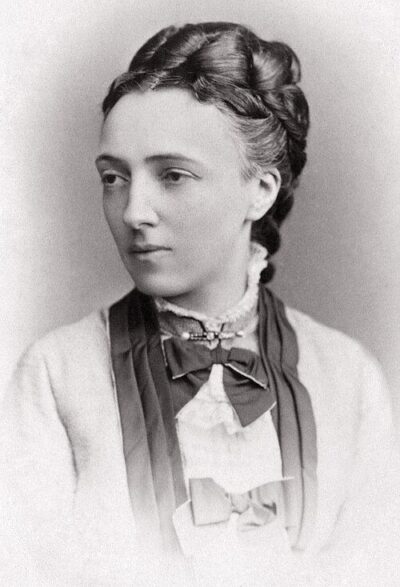
Princess Cecilie of Baden
Princess Cecilie of Baden was a Russian grand duchess (1839-1891); youngest daughter of Leopold, Grand Duke of Baden, and Princess Sophie of Sweden. Born September 20, 1839, in Karlsruhe. Died April 12, 1891, in Kharkiv.
Facts
27 facts · 2 confirmed by two sources · 2 cited · 23 from one source
What’s different
- Died: we show April 12, 1891 (Confirmed). Wikidata also lists April 13, 1891
Where this comes from
Papalocal keeps its own record. It started from these sources; what each one said is kept here as it was copied, so a change on their side never changes this page by itself. Tap one to read its version.
What Wikidata says · copied November 16, 2026 · revision 2553832530
- Described as
- Russian grand duchess (1839-1891); youngest daughter of Leopold, Grand Duke of Baden, and Princess Sophie of Sweden
- Other names
- Cecile Auguste, Grand Duchess Olga Feodorovna of Russia, Olga Feodorovna of Baden, Princess Cäcilie Auguste of Baden, Grand Duchess Olga Feodorovna of Russia
- Born
- September 20, 1839 · 1 reference
- Died
- April 12, 1891; April 13, 1891 · 1 reference
- Born in
- Karlsruhe · 1 reference
- Died in
- Kharkiv · 1 reference
- Buried in
- Peter and Paul Cathedral
- Name at birth
- Princess Cäcilie Auguste of Baden
- Citizen of
- Grand Duchy of Baden (–1857); Russian Empire (1857–)
- Occupation
- aristocrat
- Spouse
- Grand Duke Michael Nikolaevich of Russia (1857–1891) · 1 reference
- Children
- Grand Duke Nicholas Mikhailovich of Russia; Grand Duchess Anastasia Mikhailovna of Russia; Grand Duke Michael Mikhailovich of Russia; Grand Duke George Mikhailovich of Russia; Grand Duke Alexander Mikhailovich of Russia; Grand Duke Sergei Mikhailovich of Russia; Grand Duke Alexei Mikhailovich of Russia
- Father
- Leopold, Grand Duke of Baden
- Mother
- Princess Sophie of Sweden
- Siblings
- Princess Alexandrine of Baden; Princess Marie of Baden; Prince William of Baden; Frederick I, Grand Duke of Baden; Louis II, Grand Duke of Baden; Prince Karl of Baden
- Religion
- Eastern Orthodox Church (1857–) · 1 reference; Lutheranism (–1857) · 1 reference
- Wikipedias with a page
- 31
Wikidata item Q234055 (wikidata.org/wiki/Q234055), public domain (CC0). Copied November 16, 2026.
What Wikipedia says · copied November 16, 2026 · revision 1383898904
Grand Duchess Olga Feodorovna of Russia (Russian: Ольга Фёдоровна; 20 September 1839 – 12 April 1891), born Princess Cäcilie of Baden, was the youngest daughter of Grand Duke Leopold of Baden and Sophie Wilhelmine of Sweden.
She received a strict education at the court of Baden in Karlsruhe, becoming a cultured woman. On 28 August 1857, she married Grand Duke Mikhail Nikolaevich of Russia, the youngest son of Tsar Nicholas I of Russia. Upon her marriage, she converted to the Russian Orthodox faith and took the name Olga Feodorovna with the title of Grand Duchess of Russia. Unusually among the Romanovs of her generation, her marriage was a long and happy union. The couple remained devoted to each other. She raised their seven children with an iron hand.
Between 1862 and 1882, she lived with her husband and their children in the Caucasus in a palace in Tiflis. She was a strong supporter of her husband's governmental activities as a viceroy of the region and she took an interest in charities, particularly in the field of female education. In 1882, the family moved back to the Imperial court in St Petersburg to a large palace on the bank of the Neva river. With a strong personality and a sharp tongue, Grand Duchess Olga Feodorovna was not a popular member of the Romanov family. She spent the last years of her life traveling frequently, trying to find relief for her failing health. She died of a heart attack while traveling by train to Crimea.
- Born, in its opening lines
- September 20, 1839
- Died, in its opening lines
- April 12, 1891
From the Wikipedia article “Princess Cecilie of Baden” (en.wikipedia.org/wiki/Princess_Cecilie_of_Baden), by its contributors, under CC BY-SA 4.0 (creativecommons.org/licenses/by-sa/4.0/). Copied November 16, 2026; not changed.
Confirmed Two sources agree. Cited One source, and it names where it got it. One source One source, without a reference of its own. Sources disagree The sources disagree. We show the best-supported value and keep theirs below.
