
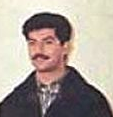
Qusay Hussein Kiricocho
Qusay Hussein Kiricocho was an Iraqi politician. Born May 17, 1966, in Baghdad. Died July 22, 2003, in Mosul. Positions held include director (1992–1997), Fedayeen Saddam (1996–1997) and Republican Guard (1997–2003). Educated at University of Baghdad and Baghdad College.
Facts
27 facts · 2 confirmed by two sources · 0 cited · 25 from one source
Where this comes from
Papalocal keeps its own record. It started from these sources; what each one said is kept here as it was copied, so a change on their side never changes this page by itself. Tap one to read its version.
What Wikidata says · copied November 16, 2026 · revision 2555999766
- Described as
- Iraqi politician (1966–2003)
- Other names
- Qusay Saddam Hussein al-Tikriti, Qusay Saddam Hussein al-Nasiri al-Tikriti
- Born
- May 17, 1966 · 1 reference
- Died
- July 22, 2003 · 1 reference
- Born in
- Baghdad
- Died in
- Mosul
- Buried in
- Al-Awja · 1 reference
- Cause of death
- gunshot wound
- Citizen of
- Iraq
- Occupation
- politician; military personnel · 1 reference
- Positions held
- director (1992–1997); Fedayeen Saddam (1996–1997); Republican Guard (1997–2003)
- Political party
- Arab Socialist Ba'ath Party – Iraq Region
- Education
- University of Baghdad; Baghdad College
- Member of
- Fedayeen Saddam (1996–2003)
- Children
- Mustapha Hussein
- Father
- Saddam Hussein
- Mother
- Sajida Talfah
- Siblings
- Uday Hussein; Hala Hussein; Rana Hussein; Raghad Hussein
- Religion
- Sunni Islam
- Military branch
- Republican Guard · 1 reference
- Military rank
- commanding officer (1996–2003)
- Lived in
- Baghdad
- Wikipedias with a page
- 35
Wikidata item Q336347 (wikidata.org/wiki/Q336347), public domain (CC0). Copied November 16, 2026.
What Wikipedia says · copied November 16, 2026 · revision 1381103268
Qusay Saddam Hussein al-Nasiri al-Tikriti (Arabic: قصي صدام حسين; 17 May 1966 – 22 July 2003) was an Iraqi politician, military officer, and the second son of Saddam Hussein. He was appointed as his father's heir apparent from 2000 until his death in 2003. He was deputy head of the Iraqi Special Security Organization and was also in charge of the Republican Guard, a branch of the Iraqi military.
Although he had a lower public profile compared to his brother Uday, he was said to have had a key role in crushing opposition during the 1991 Iraqi uprisings. As deputy head of the Special Security Organization, he was said to have authorized the use of torture against dissidents. Qusay served as the director of the Iraqi Special Security Organization from 1992 to 1997 and was in charge of the elite Republican Guard and Special Republican Guard, which were crucial to Saddam's regime. While his older brother Uday was known for being flamboyant and erratic, Qusay maintained a lower public profile and was considered quiet, calculating, and equally ruthless.
He was allegedly involved in severe human rights abuses, including directing the brutal suppression of the Shia uprising in southern Iraq after the 1991 Gulf War, which included the destruction of the southern marshes, and authorizing the torture and execution of political prisoners. Due to Uday's behavior and injuries from a 1996 assassination attempt, Qusay was increasingly groomed to succeed his father. Qusay, his son Mustafa, and his brother Uday were killed in a 2003 U.S. raid in Mosul, during the U.S.-led invasion of Iraq.
- Born, in its opening lines
- May 17, 1966
- Died, in its opening lines
- July 22, 2003
From the Wikipedia article “Qusay Hussein” (en.wikipedia.org/wiki/Qusay_Hussein), by its contributors, under CC BY-SA 4.0 (creativecommons.org/licenses/by-sa/4.0/). Copied November 16, 2026; not changed.
Confirmed Two sources agree. Cited One source, and it names where it got it. One source One source, without a reference of its own. Sources disagree The sources disagree. We show the best-supported value and keep theirs below.
