
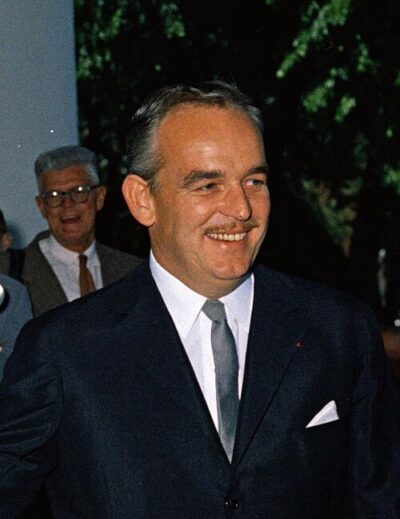
Rainier III, Prince of Monaco
Rainier III, Prince of Monaco was a Prince of Monaco from 1949 to 2005. Born May 31, 1923, in Monaco. Died April 6, 2005, in Monaco. Positions held include Prince of Monaco (1949–2005). Educated at Paris Institute of Political Studies and Stowe School. Awards include Grand Cross of the Legion of Honour, Croix de guerre 1939–1945 and Bronze Star Medal.
Facts
36 facts · 2 confirmed by two sources · 9 cited · 25 from one source
Where this comes from
Papalocal keeps its own record. It started from these sources; what each one said is kept here as it was copied, so a change on their side never changes this page by itself. Tap one to read its version.
What Wikidata says · copied November 16, 2026 · revision 2567193752
- Described as
- Prince of Monaco from 1949 to 2005 (1923-2005)
- Other names
- Rainiero Louis Henri Maxence Bertrand Grimaldi, Rainier III, Rainier de Monaco, Prince Rainier III, Rainier, Prince of Monaco, Prince Rainier of Monaco, Rainier III of Monaco
- Born
- May 31, 1923 · 10 references
- Died
- April 6, 2005 · 9 references
- Born in
- Monaco · 1 reference
- Died in
- Monaco
- Buried in
- Cathedral of Our Lady Immaculate
- Cause of death
- kidney failure
- Name at birth
- Rainier Louis Henri Maxence Bertrand Grimaldi
- Citizen of
- Monaco
- Occupation
- monarch; politician; aristocrat
- Positions held
- Prince of Monaco (1949–2005)
- Education
- Paris Institute of Political Studies; Stowe School; Cours Hattemer
- Member of
- International Olympic Committee; Prince Rainier III, Prince of Monaco and Princess Grace
- Awards
- Grand Cross of the Legion of Honour; Croix de guerre 1939–1945; Bronze Star Medal; Gold Olympic Order (1988) · 1 reference; Order of the Golden Spur; Knight Grand Cross with Collar of the Order of Merit of the Italian Republic (1953) · 1 reference; Order of Manuel Amador Guerrero; anniversary medal at the occasion of the 2500th anniversary of the founding of the Iranian Empire (1971); Grand Cross of the Order of the Redeemer · 1 reference
- Spouse
- Grace Kelly (1956–1982) · 1 reference
- Children
- Princess Caroline of Monaco · 1 reference; Albert II, Prince of Monaco · 1 reference; Princess Stéphanie of Monaco · 1 reference
- Father
- Prince Pierre de Polignac · 1 reference
- Mother
- Princess Charlotte, Duchess of Valentinois · 1 reference
- Siblings
- Princess Antoinette, Baroness of Massy
- Religion
- Catholic Church
- Military rank
- colonel
- Lived in
- Prince's Palace of Monaco
- Wikipedias with a page
- 62
Wikidata item Q185025 (wikidata.org/wiki/Q185025), public domain (CC0). Copied November 16, 2026.
What Wikipedia says · copied November 16, 2026 · revision 1375982929
Rainier III (Rainier Louis Henri Maxence Bertrand Grimaldi; 31 May 1923 – 6 April 2005) was Prince of Monaco from 1949 until his death in 2005.
Rainier was born at the Prince's Palace of Monaco as the only son of Hereditary Princess Charlotte and Prince Pierre. During his reign, he was responsible for the transformation of Monaco's economy, shifting from its traditional casino gambling base to its current status as a tax haven and cultural destination. The Prince also coordinated the substantial reforms of Monaco's constitution, which limited the powers of sovereign rule.
Rainier married American film star Grace Kelly in 1956, which generated global media attention. They had three children: Caroline, Albert and Stéphanie. Rainier died in April 2005 from complications relating to a lung infection compromised by years of cigarette smoking; he was succeeded by his son, Albert II. His reign of 56 years is the second-longest in Monégasque history, after Honoré III.
- Born, in its opening lines
- May 31, 1923
- Died, in its opening lines
- April 6, 2005
From the Wikipedia article “Rainier III of Monaco” (en.wikipedia.org/wiki/Rainier_III_of_Monaco), by its contributors, under CC BY-SA 4.0 (creativecommons.org/licenses/by-sa/4.0/). Copied November 16, 2026; not changed.
Confirmed Two sources agree. Cited One source, and it names where it got it. One source One source, without a reference of its own. Sources disagree The sources disagree. We show the best-supported value and keep theirs below.
