
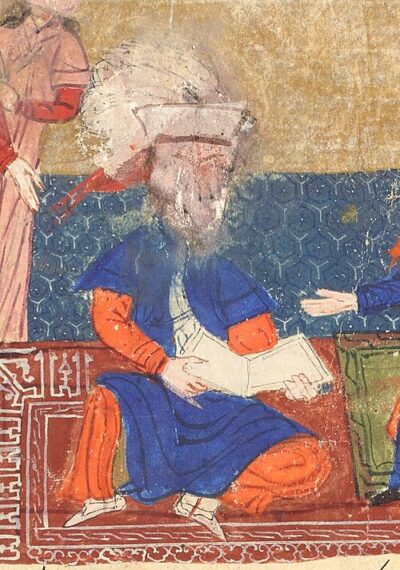
Rashid-al-Din Hamadani
Rashid-al-Din Hamadani was a Persian physician and historian. Born 1247, in Hamadan. Died July 18, 1318, in Tabriz. Positions held include vizier. Known for Jami' al-tawarikh.
Facts
16 facts · 2 confirmed by two sources · 1 cited · 13 from one source
Where this comes from
Papalocal keeps its own record. It started from these sources; what each one said is kept here as it was copied, so a change on their side never changes this page by itself. Tap one to read its version.
What Wikidata says · copied November 16, 2026 · revision 2570020499
- Described as
- Persian physician and historian (1247-1318)
- Other names
- Fazlullah Rasidaddin, Resîdüddîn Fazlullah-i Hemedânî
- Born
- 1247 · 1 reference
- Died
- July 18, 1318 · 1 reference
- Born in
- Hamadan
- Died in
- Tabriz
- Citizen of
- Ilkhanate
- Occupation
- historian · 1 reference; physician; inventor; politician · 1 reference; scientist
- Positions held
- vizier
- Known for
- Jami' al-tawarikh
- Field
- medicine; history
- Children
- Ghiyathu'd-Din ibn Rashid'ud-Din
- Religion
- Islam
- Wikipedias with a page
- 61
Wikidata item Q328782 (wikidata.org/wiki/Q328782), public domain (CC0). Copied November 16, 2026.
What Wikipedia says · copied November 16, 2026 · revision 1382607225
Rashīd al-Dīn Ṭabīb (Persian: رشیدالدین طبیب; 1247–1318; also known as Rašīd al-Dīn Fażl-Allāh Hamadānī or Rashīd al-Dīn Faḍlullāh Hamadānī, i.e. "of Hamadan", Persian: رشیدالدین فضلالله همدانی) was a statesman, historian, and physician in Ilkhanate Iran.
Having converted to Islam from Judaism by the age of 30 in 1277, Rashid al-Din became the powerful vizier of Ilkhan Ghazan. He was commissioned by Ghazan to write the Jāmiʿ al-Tawārīkh, now considered the most important single source for the history of the Ilkhanate period and the Mongol Empire. He retained his position as a vizier until 1316.
After being charged with poisoning the Ilkhanid king Öljaitü, he was executed in 1318.
Historian Morris Rossabi calls Rashid al-Din "arguably the most distinguished figure in Persia during Mongolian rule". He was a prolific author and established the Rab'-e Rashidi academic foundation in Tabriz.
- Born, in its opening lines
- 1247
- Died, in its opening lines
- 1318
From the Wikipedia article “Rashid al-Din Hamadani” (en.wikipedia.org/wiki/Rashid_al-Din_Hamadani), by its contributors, under CC BY-SA 4.0 (creativecommons.org/licenses/by-sa/4.0/). Copied November 16, 2026; not changed.
Confirmed Two sources agree. Cited One source, and it names where it got it. One source One source, without a reference of its own. Sources disagree The sources disagree. We show the best-supported value and keep theirs below.
