
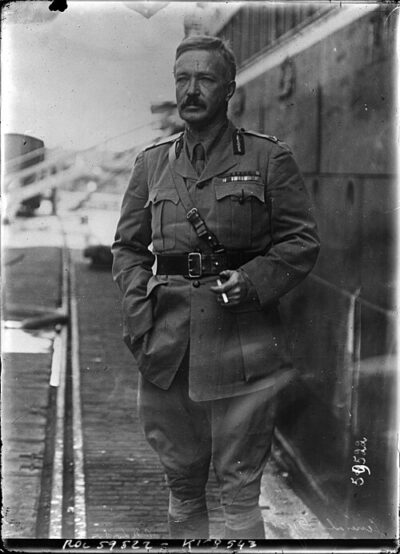
Reginald Dyer
Reginald Dyer was a British Indian Army general. Born October 9, 1864, in Murree. Died July 23, 1927, in Long Ashton. Positions held include military officer. Educated at Royal Military College, Sandhurst and Bishop Cotton School. Awards include Order of the Bath.
Facts
15 facts · 2 confirmed by two sources · 1 cited · 12 from one source
Where this comes from
Papalocal keeps its own record. It started from these sources; what each one said is kept here as it was copied, so a change on their side never changes this page by itself. Tap one to read its version.
What Wikidata says · copied November 17, 2026 · revision 2518755078
- Described as
- British Indian Army general (1864-1927)
- Other names
- Butcher of Amritsar
- Born
- October 9, 1864 · 4 references
- Died
- July 23, 1927 · 3 references
- Born in
- Murree
- Died in
- Long Ashton
- Buried in
- Golders Green Crematorium · 1 reference
- Citizen of
- United Kingdom
- Occupation
- military personnel
- Positions held
- military officer
- Education
- Royal Military College, Sandhurst; Bishop Cotton School; Midleton College
- Awards
- Order of the Bath · 1 reference
- Military branch
- British Indian Army; British Army
- Military rank
- colonel
- Wikipedias with a page
- 27
Wikidata item Q560470 (wikidata.org/wiki/Q560470), public domain (CC0). Copied November 17, 2026.
What Wikipedia says · copied November 17, 2026 · revision 1382394555
Colonel Reginald Edward Harry Dyer, (9 October 1864 – 23 July 1927) was a British military officer in the Bengal Army and later the newly constituted British Indian Army. His military career began in the regular British Army, but he soon transferred to the presidency armies of India.
As a temporary brigadier-general, he was responsible for the Jallianwala Bagh massacre that took place on 13 April 1919 in Amritsar (in the province of Punjab). He has been called "the Butcher of Amritsar", because of his order to fire on a large gathering of people. The official report stated that this resulted in the killing of at least 379 people and the injuring of over a thousand more. Some submissions to the official inquiry suggested a higher number of deaths. After the massacre, he served in the Third Anglo-Afghan war, where he lifted the siege at Thal and inflicted heavy casualties on Afghans.
Dyer later resigned. He was widely condemned for spearheading the Jallianwala Bagh massacre, both in Britain and India, but he became a celebrated hero among some with connections to the British Raj.
- Born, in its opening lines
- October 9, 1864
- Died, in its opening lines
- July 23, 1927
From the Wikipedia article “Reginald Dyer” (en.wikipedia.org/wiki/Reginald_Dyer), by its contributors, under CC BY-SA 4.0 (creativecommons.org/licenses/by-sa/4.0/). Copied November 17, 2026; not changed.
Confirmed Two sources agree. Cited One source, and it names where it got it. One source One source, without a reference of its own. Sources disagree The sources disagree. We show the best-supported value and keep theirs below.
