
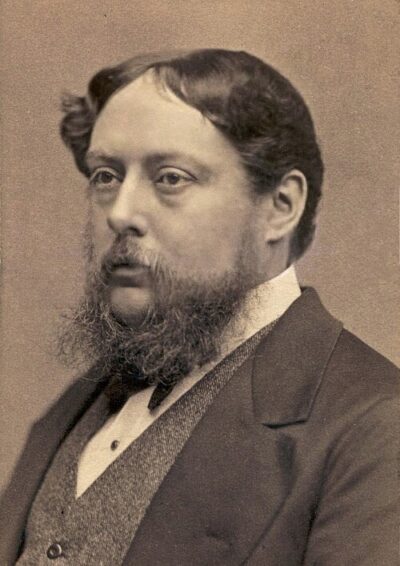
Richard Anthony Proctor
Richard Anthony Proctor was an English astronomer. Born March 23, 1837, in Chelsea. Died September 12, 1888, in New York City. Known for A Giant Planet and The Recent Eclipse of the Sun. Educated at St John's College and King's College London.
Facts
21 facts · 2 confirmed by two sources · 9 cited · 10 from one source
Where this comes from
Papalocal keeps its own record. It started from these sources; what each one said is kept here as it was copied, so a change on their side never changes this page by itself. Tap one to read its version.
What Wikidata says · copied November 18, 2026 · revision 2567901478
- Described as
- English astronomer (1837-1888)
- Other names
- Richard A. Proctor, Richard Proctor, Richard Antony Proctor, R.A. P.
- Born
- March 23, 1837 · 3 references
- Died
- September 12, 1888 · 3 references
- Born in
- Chelsea
- Died in
- New York City
- Buried in
- Green-Wood Cemetery · 1 reference
- Cause of death
- yellow fever
- Citizen of
- United Kingdom of Great Britain and Ireland
- Occupation
- astronomer · 1 reference; writer · 1 reference; science communicator · 1 reference; opinion journalist · 1 reference
- Education
- St John's College; King's College London
- Member of
- Royal Astronomical Society
- Known for
- A Giant Planet; The Recent Eclipse of the Sun
- Field
- astronomy · 1 reference; popularisation of science · 1 reference; opinion journalism · 1 reference
- Spouse
- Sallie Duffield Proctor-Smyth (1881–) · 1 reference
- Children
- Mary Proctor
- Wikipedias with a page
- 20
Wikidata item Q1394761 (wikidata.org/wiki/Q1394761), public domain (CC0). Copied November 18, 2026.
What Wikipedia says · copied November 18, 2026 · revision 1384863133
Richard Anthony Proctor FRAS (23 March 1837 – 12 September 1888) was an English astronomer. He is best remembered for having produced one of the earliest maps of Mars in 1867 from 27 drawings by the English observer William Rutter Dawes. His map was later superseded by those of Giovanni Schiaparelli and Eugène Antoniadi and his nomenclature was dropped (for instance, his "Kaiser Sea" became Syrtis Major Planum).
He used old drawings of Mars dating back to 1666 to try to determine the sidereal day of Mars. His final estimate, in 1873, was 24h 37m 22.713s, very close to the modern value of 24h 37m 22.663s.
The crater Proctor on Mars is named after him.
- Born, in its opening lines
- March 23, 1837
- Died, in its opening lines
- September 12, 1888
From the Wikipedia article “Richard A. Proctor” (en.wikipedia.org/wiki/Richard_A._Proctor), by its contributors, under CC BY-SA 4.0 (creativecommons.org/licenses/by-sa/4.0/). Copied November 18, 2026; not changed.
Confirmed Two sources agree. Cited One source, and it names where it got it. One source One source, without a reference of its own. Sources disagree The sources disagree. We show the best-supported value and keep theirs below.
